Coca Leaves in Our Ceremonies
 By
PumAdventures
By
PumAdventures

Coca Leaf Among the most holy and old spiritual activities in the Andes is reading. This traditional rite is still performed in Cusco, formerly the seat of the Inca Empire, as a strong source of spiritual guidance, energy balance, and connection with Pachamama (Mother Earth) and the Apus (mountain spirits).
Not a performance or a sight for tourists, a coca leaf reading in Cusco is Under the direction of an Andean spiritual practitioner called a Paqo, it is an intimate, symbolic conversation with nature. For those looking for answers, direction, or spiritual alignment, this event provides perspective, clarity, and grounding.
In the majestic Andean mountains, where the earth meets the sky and the spirit of the land is palpable, coca leaves are far more than just a plant—they are a sacred part of our life. For us, coca leaves hold a special place in our hearts and in our ceremonies. They are a living link to our ancestors, a bridge to the spiritual world, and a symbol of deep connection with Pachamama, or Mother Earth.
History of Coca Leaf Reading
Ancient pre-Inca origins
Long before the Inca empire grew, coca leaves were used religiously for more than three thousand years. The coca plant was considered a holy entity by civilizations of the past including the Chavín, Wari, and Tiwanaku, who employed it in religious rituals, healing treatments, and farming offerings.
Coca was never seen as a leisure drug in Andean culture. It was seen rather as a living messenger between the human world and the spiritual realms.
Coca leaves in the Inca Empire
During the height of the Inca Empire, coca leaves were regarded as a divine gift from the gods. Their use was strictly ceremonial and deeply spiritual. Coca leaves were employed for:
- Spiritual divination
- Communication with the Apus
- Offerings to Pachamama
- Guidance in important decisions
- Ritual healing and protection
The Incas believed that the spirits spoke through the coca leaves, revealing information about the present energy, unresolved issues, and the path ahead.
Survival through colonization
Because of their spiritual importance, coca rituals were subdued with the arrival of the Spanish. Despite this persecution, Andean villages kept the custom covertly and passed it orally across generations.
Coca Leaf Today Surviving as a living ancestral habit, reading is protected by Andean families and above all by the Q’ero lineage, thought to be the spiritual descendants of the Incas. This custom is still a foundation of Andean spirituality in Cusco and the Sacred Valley.

Spiritual Meaning of Coca Leaf Reading
A sacred language of nature
In the Andean worldview, everything is alive and conscious—mountains, rivers, stones, wind, and plants. Coca leaves are believed to possess spirit and wisdom. When read with intention, they become a symbolic language through which Pachamama and the Apus communicate.
Unlike predictive fortune-telling, Coca Leaf Reading focuses on:
- Understanding your current spiritual and energetic state
- Identifying imbalances or blockages
- Offering guidance rather than fixed outcomes
The three Andean worlds
The interpretation of coca leaves is rooted in the Andean cosmology of three interconnected worlds:
- Hanan Pacha – the upper world (spirit, ancestors, higher wisdom)
- Kay Pacha – the present world (daily life, relationships, actions)
- Uku Pacha – the inner or lower world (subconscious, emotions, inner healing)
The way the leaves fall, overlap, or separate reveals how these worlds interact in your life.
Balance, reciprocity, and harmony
A central Andean principle is Ayni—sacred reciprocity. Coca Leaf Reading is not about demanding answers but about listening, giving thanks, and restoring balance between the human being and nature.
The reading may reveal:
- Areas of life that require healing or attention
- Energetic misalignments
- Messages of protection, confirmation, or caution
- Guidance for decisions or transitions
Connecting with Pachamama
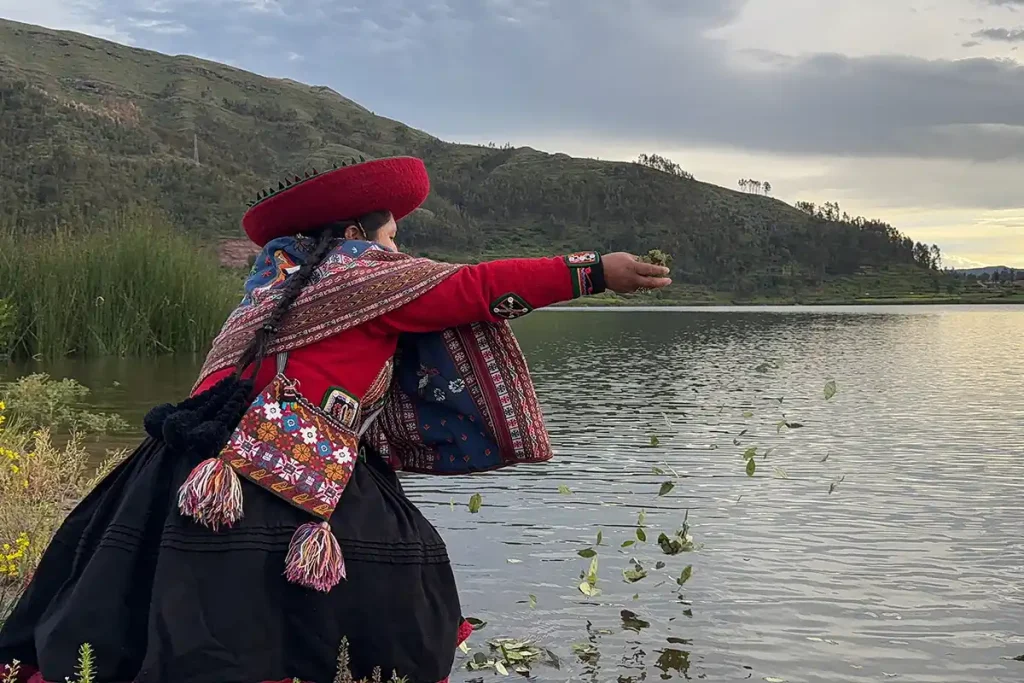
Coca leaves are a gift from Pachamama, the Earth Mother who nourishes all life. In Andean ceremonies, offering coca leaves is a way to say thank you to Pachamama for her endless generosity. It’s a way to connect with her, to honor the earth beneath our feet, and to ask for her blessings. This simple act of offering coca leaves is a reminder that we are all connected to the earth and that everything we have comes from her.
The Principle of Ayni: A Dance of Reciprocity
In Andean culture, everything is about balance and reciprocity, a principle known as Ayni. Coca leaves are a symbol of this balance. When people offer coca leaves in ceremonies, they are participating in a sacred exchange, giving back to the earth and the spirits in return for their blessings and guidance. This practice of reciprocity helps maintain harmony in the world, reminding us that life is a constant dance of giving and receiving.

A Pathway to the Spirit World
Coca leaves are also seen as a gateway to the spiritual world. In ceremonies, they are used to communicate with the Apus (mountain spirits), Ñustas (female spirits), and other sacred beings. The leaves are often used in a special practice called Coca Leaf Reading, where they help reveal messages and insights from the spirit world. This practice is deeply respected, as it allows people to align themselves with the divine forces that guide life.
Healing and Protection: The Power of Coca Leaves
Coca leaves are not just used for physical health—they are also powerful tools for spiritual healing and protection. In ceremonies, coca leaves are used to cleanse and protect people and places, transforming heavy, negative energy into light, positive energy. Whether chewed, brewed into tea, or used in ritual, coca leaves are believed to bring healing, balance, and a deeper connection to the spiritual world.
Building Community and Unity
One of the beautiful things about coca leaves is how they bring people together. In ceremonies, sharing coca leaves is a way of building community and strengthening bonds. This simple act of passing around the leaves creates a sense of unity and shared purpose, reminding everyone of their connection to one another and to the larger community.
The Heart of the Despacho Ceremony
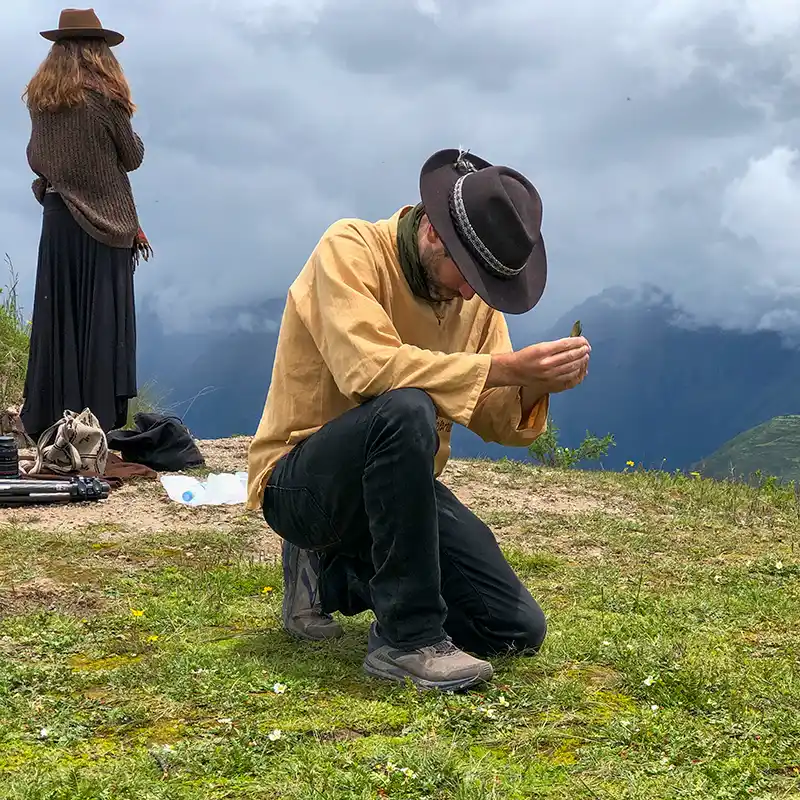
In one of the most important Andean ceremonies, the Despacho, coca leaves play a central role. The Despacho is an offering made to Pachamama and the spiritual forces of the universe, filled with symbolic items that represent prayers, intentions, and gratitude. Coca leaves are carefully placed in this bundle, carrying the hopes and prayers of the participants to the spiritual world.
A Living Connection to Ancestral Heritage
For us, coca leaves are a living link to our ancestors. Using coca leaves in ceremonies honors the traditions and wisdom passed down through generations. In a world that is constantly changing, these rituals help keep the connection to the past alive.
In Andes, coca leaves are much more than a plant. They are a sacred symbol of connection to the earth, the spirit world, and the ancestors. Whether used in offerings, healing, or to bring people together, coca leaves carry a deep sense of respect for the natural world and the sacredness of life. As we continue to honor our traditions, coca leaves remain at the heart of our spiritual practices, embodying the ancient wisdom and blessings of Pachamama.
Pumadventures Agency
The most trusted travel company for Spiritual journeys to Machu Picchu and the sacred lands of Peru. Our success flows from our deep connection to Pachamama and ancestral wisdom, allowing us to share authentic and transformative experiences that resonate with the soul. We don’t just guide you – we share the journey with you.