A 7-Day Spiritual Itinerary in Cusco: How to Space Your Ceremonies
 By PumAdventures
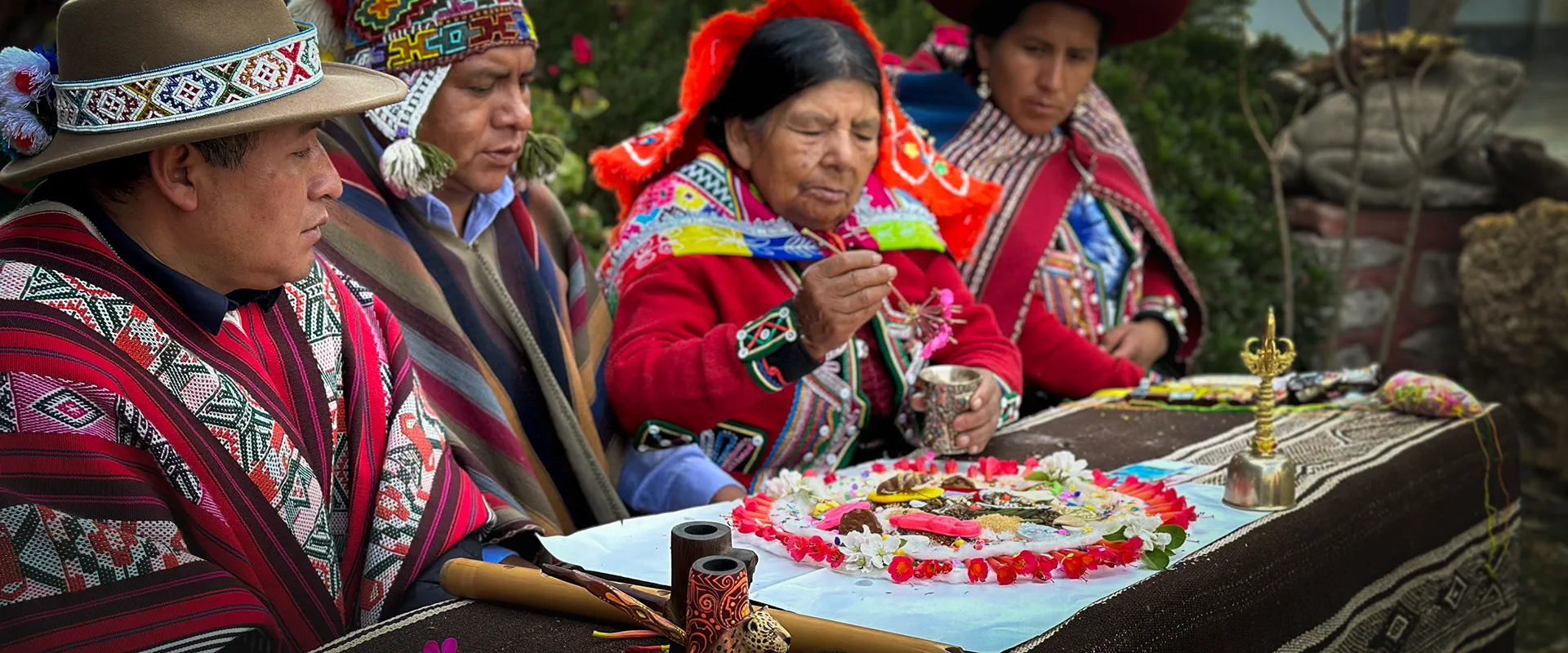
Every few weeks a message lands in our inbox that reads more or less the same. We arrive Monday night. Can we do San Pedro Tuesday, ayahuasca Wednesday, Machu Picchu Thursday, and fly out Friday morning?
We always answer honestly, and the answer is usually no.
Not because we don’t want the booking. Because that plan asks your body to absorb two powerful plant medicines and a 3,400-metre altitude gain inside seventy-two hours, and it asks your mind to make sense of all of it while sitting on a train. People who travel that way often go home with a blur instead of a memory.
This Spiritual Itinerary Cusco 7 Days is the shape we’ve settled on after years of watching what works and, more instructively, what doesn’t. It fits four distinct ceremonies — coca leaf reading, a despacho to Pachamama, wachuma, and ayahuasca — into a week without stacking them. There are deliberate empty days in it. Those empty days are not padding. They are the part of the itinerary doing the most work.
If you take nothing else from this article, take this: the spacing between ceremonies matters more than the number of ceremonies.
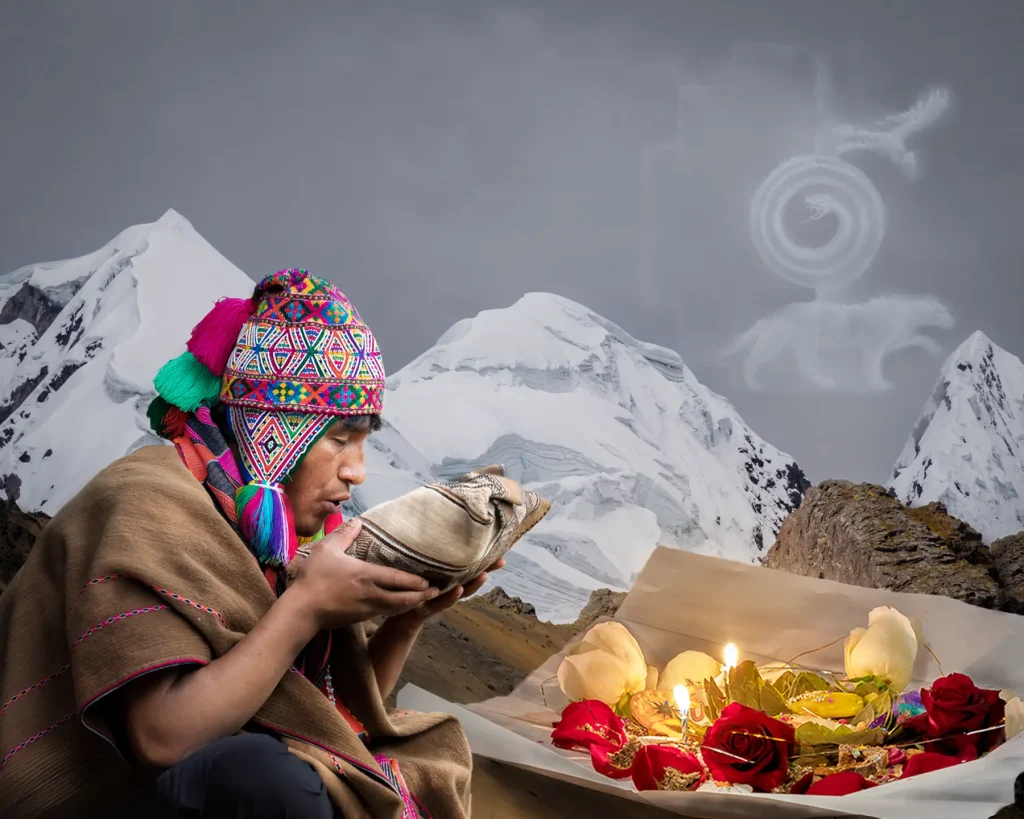
Table of Contents
Why Spacing Matters More Than Fitting Everything In
Three separate things are happening to you during a week of ceremony in the Andes, and they compete for the same reserves.
Your body is already working hard at 3,400 metres
Cusco sits at 3,399 m (11,152 ft). Chinchero, where most of our ceremonies take place, is higher still at roughly 3,762 m. The CDC Yellow Book classes sleeping altitudes above 3,400 m as high-risk for altitude illness in unacclimatised travellers, and notes that symptoms typically appear between two and twelve hours after arrival — often during or just after the first night.
Flying Lima to Cusco takes you from sea level to 3,399 m in about ninety minutes. That is an enormous, abrupt ascent by any standard. Your blood chemistry starts adjusting immediately, your sleep is disrupted, you’re mildly dehydrated, and your appetite drops. Adding a plant medicine on top of that on day one is asking a system that’s already recalibrating to do something else difficult at the same time.
The pharmacology nobody mentions in the brochure
This part rarely gets discussed openly, and it should be.
Ayahuasca works because the Banisteriopsis caapi vine contains harmala alkaloids — harmine, harmaline, tetrahydroharmine — which act as reversible inhibitors of monoamine oxidase A. That enzyme inhibition is what allows the DMT in the chacruna leaf to become orally active. It is also why the pharmacological interactions of ayahuasca are taken seriously in the research literature and why serious centres screen so carefully.
Reversible MAO inhibition doesn’t last for weeks the way older pharmaceutical MAOIs do. But it doesn’t clear the moment the ceremony ends either. Mescaline, the principal alkaloid in wachuma, is a phenethylamine — a class of compound that monoamine oxidase is directly involved in breaking down. Drinking ayahuasca and then taking wachuma the following morning puts those two things in the same window, and the result is unpredictable in a way nobody should volunteer for.
There’s a second, quieter reason. Mescaline and DMT both act on the same serotonin 5-HT2A receptors, and tolerance at those receptors carries across between compounds and takes several days to reset. Practically, this means the second ceremony in a tightly packed pair often feels muted. And what happens next is the actual danger: someone feels nothing, assumes the medicine is weak, and asks for more.
Integration is not a wellness buzzword
The word gets overused, so here is what it means in plain terms. A ceremony gives you material. Integration is the unglamorous work of turning that material into something you can carry — usually over a walk, a long silence, a conversation, or a night of ordinary sleep.
Skip it and the experience stays sealed. Our masters in Chinchero have a way of putting it that translates roughly as: the seed was planted, but nobody watered the ground. You’ll have had an intense night. You won’t have had a journey.
Before You Book: The Altitude Problem
A few practical decisions made before you arrive will improve this entire week.
Sleep lower than Cusco on your first nights if you can. The Sacred Valley floor — Urubamba, Ollantaytambo, Yucay — sits between 2,800 and 2,900 m, roughly 500 metres below the city. It’s a meaningfully easier place to spend your first two nights. Many of our multi-day journeys, including Essence of Cusco – 5 Days, are built around Sacred Valley accommodation for exactly this reason.
Give up alcohol before you land, not after. Standard altitude guidance is to avoid alcohol for the first 48 hours. Our ayahuasca preparation also asks for a week without it. Combine the two and the answer is simple: stop drinking before you get on the plane.
Talk to your doctor about acetazolamide before travelling. The preventive dose commonly used is 125 mg twice daily, but this is a prescription decision that belongs with your physician — particularly relevant here, because acetazolamide is one of several medications worth reviewing against a ceremony plan.
Understand that the diets overlap. The ayahuasca preparation asks you to drop red meat, pork, fermented foods, alcohol, caffeine and sugar for a week beforehand. Altitude already suppresses your appetite. Plan light, warm, simple meals — soups, quinoa, cooked vegetables — rather than arriving with the assumption that you’ll be eating well at restaurants. Our ayahuasca diet guide covers the full list.
Coca tea is not a ceremony. You’ll be offered mate de coca at every hotel in Cusco, and you should drink it. It genuinely helps with the altitude. It has nothing to do with the coca leaf reading described below, which is a different practice entirely.
The 7-Day Spiritual Itinerary in Cusco, Day by Day
What follows is the sequence we recommend most often. It assumes arrival in Cusco on day one and departure on day eight, with all ceremonies in and around Chinchero and the Sacred Valley.
Day 1 — Arrive, and do nothing on purpose
Airport pickup, transfer, unpack, and then genuinely nothing. Walk slowly if you walk at all. Drink far more water than feels necessary. Eat something warm around six and go to bed early.
The first night at altitude is usually the worst one. Broken sleep, a dull headache, strange dreams, waking at three in the morning slightly breathless — all common, all normally gone within 24 to 48 hours if you don’t climb higher.
Resist the urge to fill this day. We’ve had guests book a city tour for the afternoon of arrival and spend the following two days recovering from it.
Day 2 — Coca leaf reading: the doorway
This is where the week properly begins, and there’s a reason it comes first.
A coca leaf reading is not a psychoactive experience. It’s a conversation — an hour, seated, with a Master from Chinchero who casts leaves onto an unkuña cloth and reads what the arrangement shows. From $70, and available at your hotel, in Chinchero itself, or online if you want to do it before you even travel.
Placing it on day two does two useful things. It costs your body nothing while you’re still acclimatising. And it clarifies your intention for everything that follows. Most people arrive with a vague sense of why they’ve come — something needs to change, I’m not sure what. A reading tends to sharpen that into something specific enough to actually carry into ceremony.
Our masters often say the coca opens the door and the other medicines walk through it. Of all the weeks we’ve arranged, we can’t think of a guest who regretted starting here.
Afternoon: free. Sleep.
Day 3 — Despacho to Pachamama
By day three most people are breathing normally and sleeping through the night. Good timing for the Offering to Pachamama — two to three hours in Chinchero, from $350, guided by Masters of the Rainbow Lineage.
A despacho is a mandala built by hand from coca k’intus, seeds, flowers, shells, sweets, wool and llama fat, each element carrying a meaning, all of it assembled around intentions you weave in yourself. It’s then given to the sacred fire.
Physically this is undemanding. Emotionally it is not, and that surprises people. Something about spending two hours placing small objects with deliberate care, naming what you’re grateful for and what you’re asking to release, tends to loosen things. We’ve watched composed adults come apart over a coca leaf. That’s fine. That’s the ceremony working, and it’s far better for it to happen here, on a hillside in daylight, than for the first time in the dark on day six.
There’s another reason this ceremony sits where it does. The despacho is a reciprocity ritual — ayni — and in Andean practice you don’t ask the mountains for anything before you’ve offered something. Approaching wachuma and ayahuasca having already made an offering is the correct order of operations, culturally and, we’d argue, psychologically.
Rest of the day: free. Consider Moray or Chinchero’s market if you have energy, or nothing at all if you don’t.
Day 4 — Wachuma (San Pedro) at Quillarumiyoq
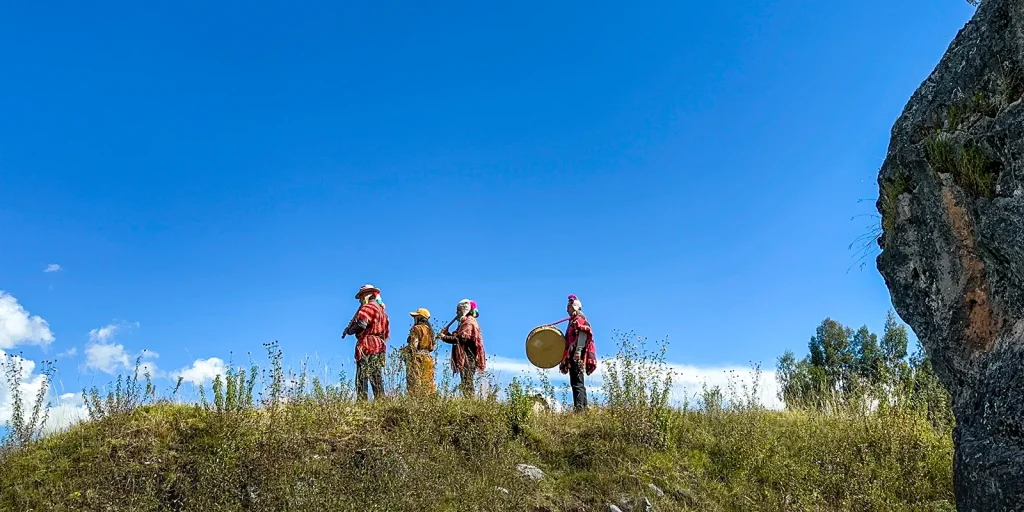
The first plant medicine of the week, and a long day: pickup at 8 AM, eight to twelve hours in total, return in the late afternoon. From $250. Our wachuma ceremony takes place at Quillarumiyoq, a carved-rock sacred site near Chinchero, with a family lunch included.
Wachuma before ayahuasca, not after. This ordering is deliberate and we hold to it firmly.
The pharmacological reason is above: you do not want mescaline entering a body whose monoamine oxidase is still inhibited from an ayahuasca night. Running wachuma first removes that problem entirely.
The experiential reason matters just as much. Wachuma is a daytime medicine. You are outdoors, walking, warm, able to see the Apus — the mountain spirits — that the ceremony addresses. It tends to be gentler in its arrival and more lucid in its middle hours than ayahuasca, and it leaves most people feeling opened rather than emptied. It’s a considerably kinder introduction to plant medicine, and if you discover that this territory isn’t for you after all, you’ll have discovered it in sunlight with an exit available.
Come with an empty stomach. Bring a hat, sunscreen, water and a warm layer for the descent — the temperature swing at 3,700 m between two in the afternoon and five in the evening is severe.
Day 5 — The empty day
Nothing scheduled. This is the single most important day in the itinerary and the one guests most often try to negotiate away.
Two things are happening. The first is chemical: those 5-HT2A receptors need time, and a day of separation makes a real difference to how the ayahuasca ceremony lands. The second is that wachuma frequently keeps working for 24 to 48 hours afterwards, in a quieter register — clarity arriving in fragments, sleep unusually vivid, emotions closer to the surface than normal.
Walk somewhere gentle. Sit in the Plaza de Armas. Write. Our facilitators are available if you want to talk something through, and often that conversation is where the previous day’s material finally makes sense.
What not to do: Machu Picchu. We’ll come back to this, but a 4 AM start, a train, a bus up switchbacks and four hours in a crowd is the opposite of what day five is for.
Day 6 — Ayahuasca in Chinchero
Pickup at 4 PM. Transfer to Chinchero, roughly thirty minutes from Cusco. Settling in as the light goes. The space is opened at dusk with prayer and invocation, intentions are set, and the medicine is served individually. The journey itself runs three to four hours through the night, held with icaros and one-to-one support as needed. From $350, with the one-day ceremony including transport, a bilingual guide in English, Spanish and Quechua, and an integration circle the following morning.
You’ll have eaten nothing for at least six hours. You’ll have kept the preparation diet for a week. Both of those things are non-negotiable, and both are far easier to manage on day six of a well-paced week than on day two of a rushed one.
If you’d prefer to stay overnight rather than return to Cusco in the small hours, the 2-day ayahuasca retreat from $400 includes accommodation and a slower morning. On a seven-day plan we usually recommend it — waking up where the ceremony happened, in silence, with mountains outside, is a meaningfully different morning from waking in a hotel room in the city.
Day 7 — Integration, and only then, closing
The integration circle happens in the morning: everyone sits, everyone speaks if they want to, and the facilitators help make sense of the night. It is not optional in our view, and we’ve stopped treating it as an add-on.
Afternoon is yours. Some people want Sacsayhuamán or the Temple of the Moon — quiet, close, undemanding. Some want to sleep. Both are correct.
Fly out on day eight, not day seven. Flying out of Cusco the same day you close a week like this is an unkind thing to do to yourself, and if the morning flight is cancelled — which happens more often than the airlines like to admit — you’ll spend the last hours of your journey arguing at a check-in desk.
How Many Days Between Ayahuasca and San Pedro?
This is the question we get asked most, so here is our direct answer.
Minimum 48 hours. We prefer 72. In the itinerary above, wachuma is on day four and ayahuasca on the evening of day six — a full clear day between them, and closer to 58 hours from the end of one to the start of the other.
Wachuma first, always. For the MAOI reason explained earlier. If your dates genuinely only allow ayahuasca before wachuma, we will extend the gap rather than reverse the risk, or we’ll recommend dropping one.
Never on consecutive days. We don’t offer this and we won’t arrange it. Some operators in Cusco will. That willingness tells you what you need to know about their screening.
Two of the same medicine is a different question. Two ayahuasca nights within one retreat is a long-established practice and works differently from mixing two medicines — the 2-day ayahuasca retreat is built for that.
One more thing worth saying plainly. If you can only fit one plant medicine into your week, fit one. A well-held single ceremony with three days of proper integration around it will do more for you than two rushed ceremonies and a plane to catch. We’d rather sell you less.
Variations on the Plan
Seven days is a comfortable frame, not a rule. Here’s how the same logic adapts.
If you only have five days
Drop wachuma, keep the coca reading, the despacho and ayahuasca, and preserve the empty day. Day 1 arrive, day 2 coca reading, day 3 despacho, day 4 rest, day 5 ayahuasca evening with the morning integration on day 6. Tight but honest. Our Essence of Cusco – 5 Days journey, from $1,950, follows a related structure built around a private Andean initiation, a despacho at Chinchero and a closing ceremony at Chakan.
If you want Machu Picchu as well
Then you need nine or ten days, not seven. Machu Picchu is a full day with an early start and a lot of logistics, and it does not belong in a gap between ceremonies. Put it at the front, before any medicine work begins, or at the very end after integration. Healing Peru – 10 Days is built precisely for people who want both without compressing either.
If this is a longer journey
The eleven- and fourteen-day formats give you room for two plant medicine ceremonies with genuine space around each, plus Ausangate or the Sacred Valley sites. See Spiritual Trip Peru – 11 Days and our broader spiritual journey collection.
If you’re travelling as a couple
The week above can be closed with an Andean wedding ceremony on day seven — a symbolic marriage or vow renewal in the Sacred Valley, from $1,500 per couple, led by native priestesses. As a closing to a week of ceremony, with everything the previous days have surfaced, it lands very differently than it would as a standalone booking. Not for everyone. Extraordinary for the couples it suits.
If you’re joining a group
Fixed-date group departures follow the same spacing principles with the ceremonies already arranged. Current dates are on Join a Journey.
What a Week Like This Costs
Ceremony costs only, based on our published starting rates. Accommodation, flights, meals and Machu Picchu are separate.
| Day | Ceremony | Duration | From |
| 2 | Coca leaf reading | 1 hour | $70 |
| 3 | Offering to Pachamama | 2–3 hours | $350 |
| 4 | Wachuma / San Pedro | Full day | $250 |
| 6 | Ayahuasca ceremony | 1 day / evening | $350 |
| Ceremony subtotal | $1,020 |
Rates are per person, generally based on a minimum of two travellers, and shown as starting prices — solo travellers and custom dates are quoted individually. Check the ceremonies page for current pricing.
Be sceptical of a $40 wachuma ceremony. What gets cut at that price is the facilitator-to-participant ratio, the medical screening, the transport, and the contingency plan if something goes wrong at 3,700 metres.
Mistakes We See Every Season
Booking a ceremony for the day you land. By some distance the most common one, and the source of most bad first experiences.
Treating the free days as wasted money. They are the reason the paid days work.
Keeping the antidepressants quiet. Ayahuasca’s MAOI content makes this genuinely dangerous, not merely inadvisable, and people conceal it because they’re afraid of being turned away. Tell us. There is often a workable path, and it always starts with the truth. Who should not drink ayahuasca goes through the full contraindication list.
Booking the return flight for the morning after the last ceremony.
Trying to squeeze in Rainbow Mountain. 5,200 m, freezing, crowded, and a hard day even when you haven’t been in ceremony. It’s a wonderful trip. It belongs in a different week.
Arriving with no intention at all. You don’t need certainty. You do need a question. If you don’t have one, that’s exactly what the day-two coca reading is for.
Who Should Not Follow This Itinerary
Some honesty, because this is health information and it matters more than a booking.
Ayahuasca and wachuma are not appropriate for everyone. Both are excluded for people with cardiac conditions, uncontrolled hypertension, epilepsy, or a personal or family history of psychosis, schizophrenia or bipolar disorder. Both are excluded during pregnancy and breastfeeding, and wachuma is not offered to women who are menstruating. Minimum age is 18.
Medications matter enormously. SSRIs, SNRIs, MAOIs, lithium, tramadol, stimulants and several others interact with these medicines, some severely. Never stop or taper a prescribed medication on your own or on our advice. That conversation belongs with the doctor who prescribed it, and it needs to start weeks before you travel, not days.
Everyone who books with us completes a health screening. We do turn people away, and we would rather lose a booking than hold a ceremony we’re not confident about. If we decline you, it isn’t a judgement — the coca reading and the despacho carry no such restrictions and remain open to almost everyone.
Nothing here is medical advice, and none of these ceremonies is a treatment for any condition. Read Is wachuma safe? and our ayahuasca preparation guide before you decide anything.
Frequently Asked Questions
Is seven days long enough for a spiritual itinerary in Cusco?
For two plant medicine ceremonies with proper acclimatisation and integration, yes — comfortably. Adding Machu Picchu pushes it to nine or ten.
Can I do ayahuasca and San Pedro on consecutive days?
No, and we won’t arrange it. Minimum 48 hours, ideally 72, with wachuma first. The reasons are pharmacological as well as practical.
How long should I acclimatise before my first ceremony?
Two full nights before anything psychoactive. A coca leaf reading on day two is fine; it asks nothing of your body.
Which ceremony should I do first?
Coca leaf reading, then despacho, then wachuma, then ayahuasca. Non-psychoactive to psychoactive, gentler to deeper.
Do I need to keep the diet for the whole week?
Keep the ayahuasca preparation diet from a week before arrival through to the morning after the ceremony. It overlaps almost entirely with sensible altitude eating.
Can I do this itinerary alone?
Yes. Most ceremonies are priced on a minimum of two travellers, so solo bookings are quoted individually. Many of our guests travel alone.
What if I get altitude sickness on day one or two?
We reschedule. The ceremony moves, or we drop one and extend the gaps. Nobody sits in ceremony while unwell — tell us early and we’ll adjust.
Is the coca leaf reading available in English?
Yes. Our masters work in Quechua with translation into English or Spanish. Remote sessions are also possible before you travel.
When is the best time of year for this?
The dry season, roughly May to September, gives the most reliable weather for outdoor daytime ceremony. The wet season is quieter and greener, with afternoon rain to plan around.
A Last Word
The temptation with a week in Cusco is to treat it as a menu and order everything. We understand it — the flight is long, the trip is expensive, and it’s hard to justify a day spent walking around a plaza doing nothing.
But the people who come back to us years later, the ones who write to say something actually changed, are almost never the ones who did the most ceremonies. They’re the ones who left room around them.
Four ceremonies, three quiet days, one week. That’s the shape we’d defend.
If you want help building it around your own dates, get in touch or take a look at who you’d be sitting with first. Both are reasonable places to start.Participation in any ceremony is undertaken on the basis of informed personal responsibility. Consult your physician before travelling to high altitude or participating in plant medicine ceremonies, particularly if you take prescribed medication or have any cardiac, neurological or psychiatric condition. This article is general information and not medical advice.