Ausangate Trek vs Salkantay Trek: Which One Is Right for You? (2027 Guide)
 By PumAdventures
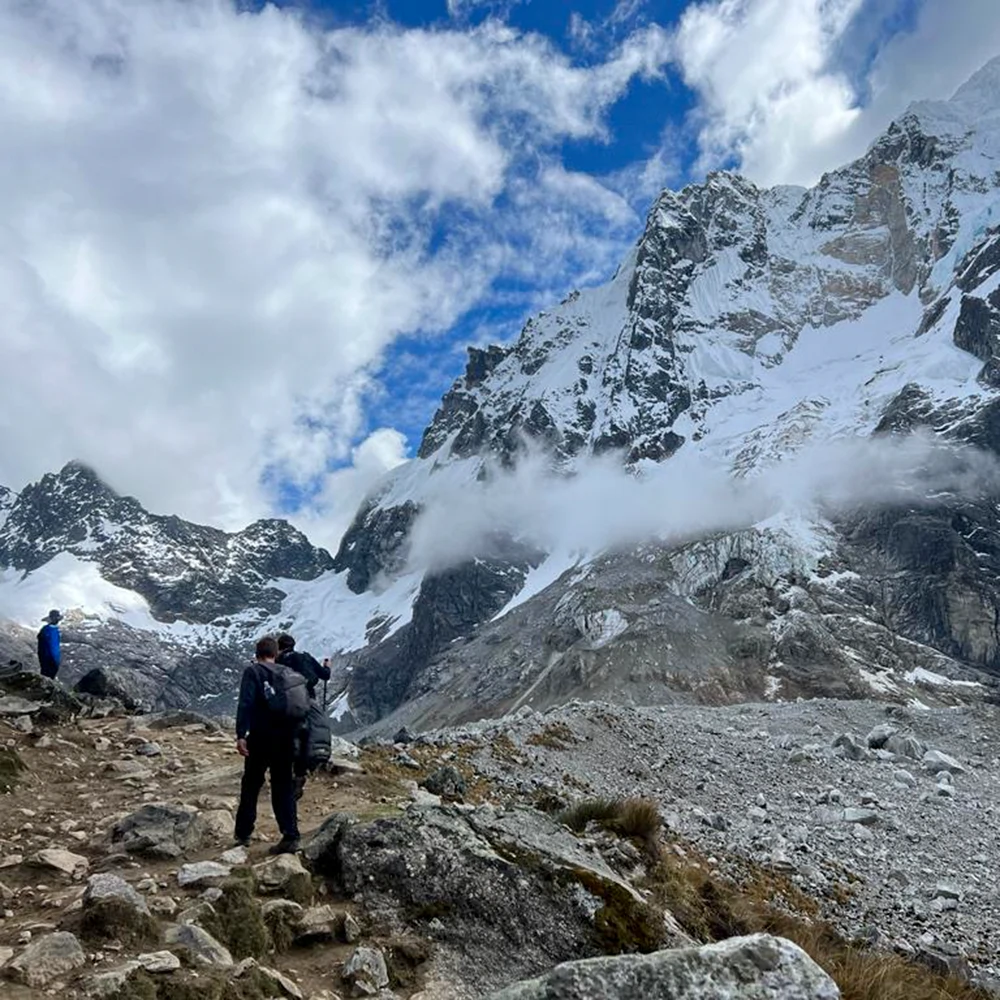
By PumAdventures — Local guides and Andean Masters from Chinchero, Cusco, since 2013
Every year, thousands of travelers arrive in Cusco and face the same question: if not the Inca Trail, then which trek?
The Salkantay Trek and the Ausangate Trek consistently rise to the top of the list. Both involve snow-capped peaks, turquoise lakes, remote Andean landscape, and multi-day commitment. Both are alternatives to the Inca Trail that are widely considered to surpass it in terms of raw natural beauty. Both require preparation, respect for altitude, and a genuine willingness to be physically challenged.
And yet they are profoundly different experiences — in terrain, in altitude, in cultural depth, in what they ask of you, and in what they give back.
This guide is our honest comparison, written from the perspective of a local operator who has guided both treks for over a decade. We are not trying to sell you one over the other. We are trying to help you choose correctly — because the right trek for your body, your time, your intentions, and your travel style is the one that will actually deliver the experience you are seeking.
We will also answer a question that no other comparison guide addresses: for travelers interested in plant medicine, spiritual ceremonies, or the living sacred traditions of the Andes — which trek opens that dimension most fully, and what is possible when you combine either trek with a ceremony?
The Short Answer — Before the Details
The Ausangate Trek vs Salkantay Trek debate is one of the most common questions among hikers visiting Cusco. Some travelers seek comfort, variety, and a clear route to Machu Picchu, while others dream of wild landscapes, solitude, and high-altitude adventure far from the crowds.
Here is the honest short version:
Choose Salkantay if: Machu Picchu is part of your plan, you want diversity of landscape (high alpine to cloud forest to jungle), this is your first major high-altitude trek, or you prefer trekking infrastructure with more support along the route.
Choose Ausangate if: You want the most remote, visually extraordinary, and spiritually resonant mountain landscape in the Cusco region, you are comfortable with sustained high altitude, you are not focused on Machu Picchu as an endpoint, and you want an experience that very few travelers have had.
Choose both if: You have the time. They are complementary, not interchangeable — and many travelers who do both describe them as two of the most significant experiences of their lives in Peru.
Now the details.

The Two Mountains — Understanding What You Are Walking Toward
Before comparing logistics, it is worth understanding what each mountain actually is — because in the Andean tradition, these are not simply geological features.
Salkantay — The Savage Mountain
Both Salkantay Mountain and Ausangate Mountain are considered “Apus” in the Andean worldview: sacred spirits that protect communities and nature, helping to maintain the balance of the natural world. In Cusco, the energy of these mountains is felt both in the imperial city and its surroundings.
Salkantay rises to approximately 6,271 meters (20,574 feet) in the Vilcabamba Range, northwest of Cusco. Its name in Quechua — Sallqa Antiy — translates roughly as “Savage Mountain” or “Wild Peak.” It is considered the most powerful Apu of the western Cusco region: unpredictable, forceful, associated with lightning, storms, and raw creative power. The Salkantay Trek does not circle this mountain — it crosses through its shadow, ascending to the Salkantay Pass at 4,630 meters before descending into entirely different terrain on the other side.
Apu Ausangate — The Guardian of Cusco
Ausangate is considered a sacred mountain by local communities and remains one of Peru’s most impressive natural landmarks. At 6,384 meters, it is the highest peak in the Cusco region. In Quechua cosmology, Apu Ausangate is considered the most powerful protective mountain spirit of the entire southern Andes — the guardian of water, fertility, and the spiritual life of the Quechua communities who have lived under its gaze since before the Inca Empire existed.
The Ausangate Trek, while not leading to Machu Picchu, offers a deeper connection to Andean spirituality. The mountain is considered a powerful deity, or “Apu,” and the trek is a pilgrimage of sorts, offering insight into the spiritual traditions and rituals of the indigenous Quechua people. The journey around Ausangate is more than a physical trek; it is a spiritual exploration of the mountains’ sacredness.
This distinction matters for how you experience each trek. The Salkantay Trek passes through the mountain’s domain — it is a crossing. The Ausangate Trek circles the mountain — it is an orbit, a circumambulation, more akin to a pilgrimage than a transit.
Head-to-Head Comparison
Route & Landscape
Salkantay:
One of the biggest attractions of the Salkantay Trek is the constant change in scenery. Travelers begin in high mountain terrain before descending into cloud forests, subtropical valleys, and warmer regions closer to Machu Picchu. The route traverses five distinct ecosystems — from glacial alpine terrain at the pass to humid cloud forest and coffee plantations in the lower sections. This diversity is the Salkantay’s most distinctive quality: in five days, you walk through what feels like five different countries.
Ausangate:
The Ausangate Trek is ideal for travelers who love dramatic mountain scenery and remote wilderness. The landscape does not change in the same way the Salkantay does. You are in the high Andes throughout — above 4,000 meters for the entire circuit. What changes is the mountain itself: each face of Ausangate presents a different glacier, a different set of lagoons, a different quality of light. The visual drama is extreme and sustained, but it is a single-ecosystem experience. There is no jungle. There is no warmth until you reach the Pacchanta hot springs.
Verdict: Salkantay for landscape variety. Ausangate for landscape intensity and remote mountain immersion.
Altitude
The Salkantay Trek ranges from moderate to challenging. The primary hurdle is the dramatic change in altitude and environment.
| Ausangate | Salkantay | |
| Highest point | 5,100–5,400 m | 4,630 m |
| Average trekking altitude | 4,400–4,800 m | 3,500–4,200 m |
| Starting altitude | 4,400 m (Pacchanta/Tinki) | 2,900 m (Mollepata) |
| Lowest point | 4,200 m | 1,600 m (Santa Teresa) |
| Days above 4,000 m | All | Days 1–2 primarily |
The Ausangate Trek is considered highly challenging, primarily because of its extreme altitude. The trail ascends above 5,200 meters, surpassing most other trekking routes in Peru.
Although altitude still matters with the pass being the hardest part, the maximum elevation at Salkantay is generally less than Ausangate. The trail is better trodden, with more support, making it more accessible to a wider range of trekkers.
The practical implication: on the Salkantay, you ascend to the pass, cross it, and then descend progressively into warmer air. Altitude sickness, if it occurs, is most likely at the pass and then improves. On the Ausangate, you are at serious altitude every single day of the trek. There is no descent into warmth. The cumulative effect of sustained altitude — even at 4,400 meters, well below the passes — is what causes most Ausangate trekkers to feel the mountain’s demands more deeply than they expected.
Verdict: Salkantay is significantly more accessible altitude-wise. Ausangate requires greater acclimatization, stronger fitness, and genuine respect for sustained high altitude.
Difficulty
Salkantay: The Salkantay Trek is perfect for the traveler who wants variety. It is physically demanding but rewarding, offering a mix of high-alpine challenges and lush jungle trails. Rated moderate to challenging. The hardest section is the Salkantay Pass on Day 2 — a steep ascent to 4,630 meters. After crossing, the daily terrain becomes progressively easier as you descend. First-time high-altitude trekkers can successfully complete the Salkantay with proper acclimatization and fitness.
Ausangate: The Classic Ausangate Trek is a deep dive into the remote high-alpine wilderness. Unlike Salkantay, this route is a circuit that focuses on the sacred “Apu” Ausangate, offering a level of solitude and geological wonder that is hard to find elsewhere. Rated moderate to hard — more demanding than the Salkantay primarily due to sustained altitude rather than technical terrain. The Ausangate Trek is generally harder because of its higher altitude and remote trails. The Salkantay Trek is challenging but more manageable for first-time hikers.

What the difficulty actually feels like in practice:
On Salkantay, the hardest day (Day 2) is followed by easier days of progressive descent. You earn your difficulty early and then recover. On Ausangate, there is no recovery day at lower altitude. The body adapts — or it does not — and the adaptation happens on the mountain, not after it. This is why 4–5 days of acclimatization in Cusco before Ausangate is not a guideline but a genuine safety requirement.
Verdict: Salkantay is the better choice for first-time high-altitude trekkers. Ausangate demands prior experience at altitude or exceptional preparation.
Crowds & Solitude
Salkantay: The most popular alternative to the Inca Trail. Salkantay is the most popular alternative trek to Machu Picchu and is known for its striking landscapes and eco-lodges. In peak season (June–August), the trail can feel busy, particularly around Humantay Lake and in the lower jungle sections near Machu Picchu. You will share the trail with other groups. The infrastructure — lodges, established campsites, support services — has grown to accommodate this popularity.
Ausangate: In Ausangate, crowds are non-existent; you will likely have the entire trail to yourself or share it with only one other small group. Even in peak season, the Ausangate circuit remains one of the least crowded multi-day treks in the Cusco region. The exception is Rainbow Mountain (Vinicunca), which can be very busy as a day trip destination from Cusco — but the bulk of the Ausangate circuit remains genuinely remote.
One of Ausangate’s big draws is its low crowd levels. You will often have large stretches of trail to yourself. Also you will interact with Quechua-speaking herding communities, giving you cultural depth beyond nature.
Verdict: Ausangate wins decisively on solitude. If walking without other trekking groups is important to you, Ausangate is the choice.
Cultural Experience
Salkantay: The cultural highlights of the Salkantay are primarily historical — the trek ends at Machu Picchu, one of the most significant archaeological sites in the Americas. Along the route, you pass through communities in the cloud forest and subtropical valleys, with opportunities to see local agriculture and buy coffee and cacao from small farms. The primary cultural encounter is with Inca history at the trail’s endpoint.
Ausangate: Unlike many trekking routes focused on archaeological attractions, the Ausangate Trek is all about nature, adventure, and culture. Hikers spend several days surrounded by glaciers, turquoise lakes, colorful valleys, and traditional villages where local families continue to preserve ancient Andean traditions.
The cultural encounter on Ausangate is with living tradition rather than archaeological remains. Trekkers on the Ausangate route often encounter local Quechua communities who maintain their traditional ways of life. In Pacchanta — the community where our 3-day trek is based — the Quechua families who host trekkers are the same families whose grandparents made offerings to Apu Ausangate, who graze alpacas at 4,400 meters, who weave textiles using techniques unchanged for centuries. This is not a cultural performance. It is daily life, shared with visitors who pass through.
Verdict: Salkantay for archaeological and historical culture. Ausangate for living Andean tradition and direct encounter with contemporary Quechua community life.
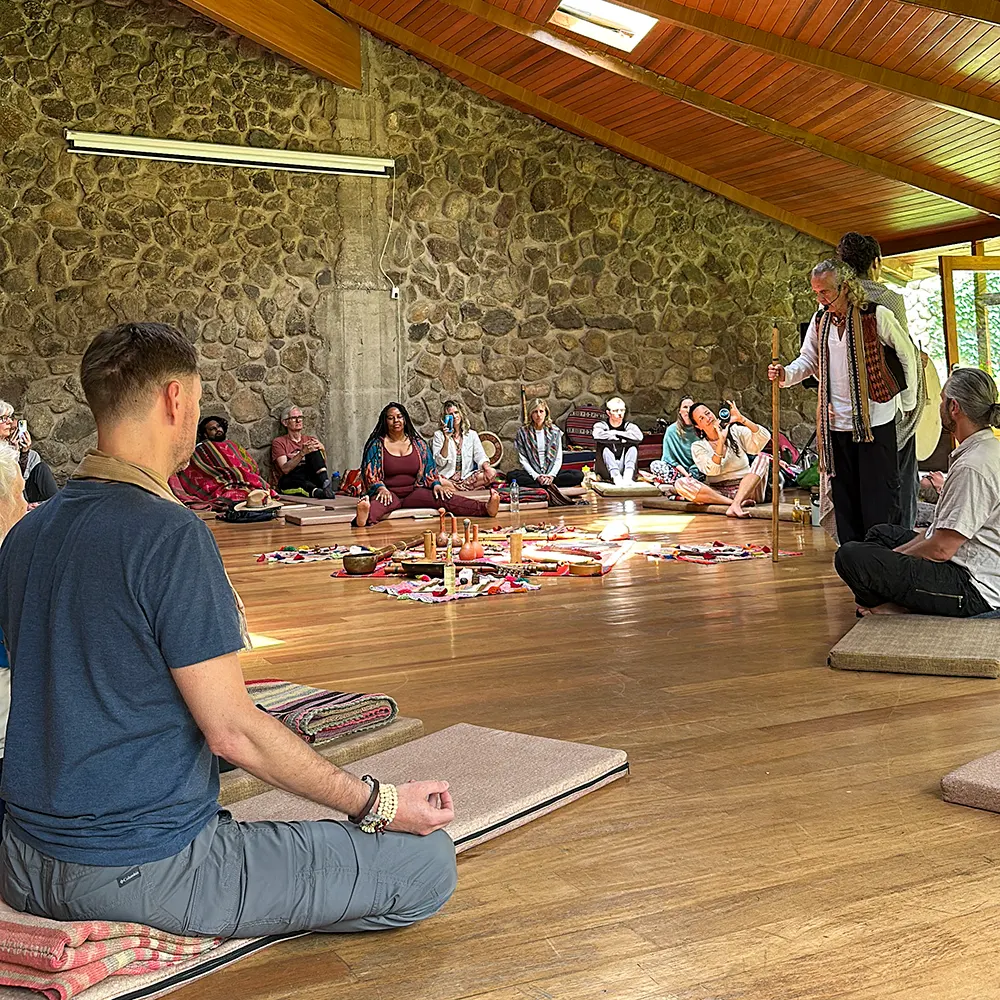
The Spiritual Dimension — What No Other Comparison Guide Addresses
This is the section that exists nowhere else in the “Ausangate vs Salkantay” conversation, but that matters most to a significant proportion of travelers who arrive in Cusco.
Both mountains are Apus — sacred mountain deities in the Andean cosmological tradition. Both carry genuine spiritual significance. But they are not equivalent in the Quechua hierarchy of sacred mountains.
Apu Ausangate is considered the most powerful Apu of the entire Cusco region — the guardian of the south, the keeper of the water, the protector of the Quechua people across the entire Sacred Valley and beyond. Walking the Ausangate circuit is, in Andean tradition, a pilgrimage to the most powerful sacred mountain in the region. The annual Qoyllur Riti Festival draws more than 10,000 pilgrims on foot to honor Ausangate — one of the largest indigenous pilgrimages in the Americas.
For travelers seeking a trek with genuine spiritual resonance — not as tourism, but as actual encounter with living sacred tradition — the Ausangate has no equivalent in the Cusco region.
For those interested in plant medicine ceremonies:
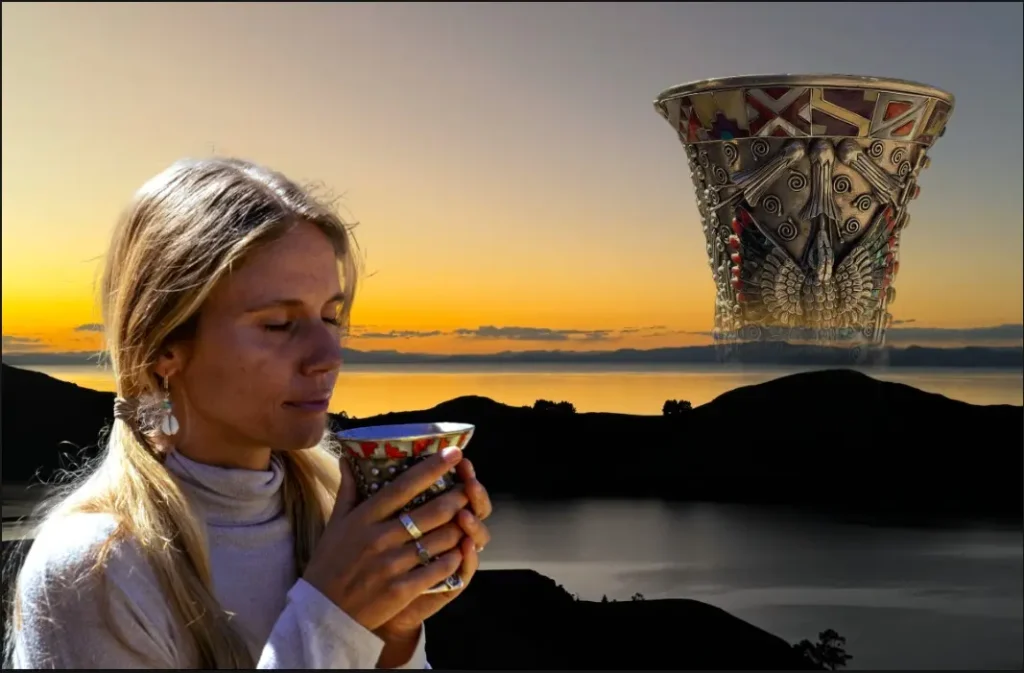
At PumAdventures, we offer something that exists nowhere else in Peru: a 3-Day Ausangate Trek with a Wachuma (San Pedro) ceremony held at the foot of the Apu on Day 2. The Wachuma ceremony — the sacred plant medicine of the Andes, used for at least 3,000 years in the Andean tradition — is understood in Quechua cosmology as the spirit of the Apus themselves. Holding a Wachuma ceremony in direct relationship with Apu Ausangate, at 4,400 meters, beside its sacred lagoons, creates a ceremonial container that is qualitatively different from any other setting in Peru.
For travelers combining trekking with Ayahuasca ceremonies in Cusco or San Pedro ceremonies in the Sacred Valley, the Ausangate Trek offers a natural integration — the medicine and the mountain in direct conversation.
No equivalent combination exists on the Salkantay.
Verdict: For spiritual travelers and those interested in plant medicine, Ausangate is in a category of its own.
Machu Picchu — The Decisive Factor for Many
This is the simplest part of the comparison.
The Salkantay Trek is one of the most popular alternatives to the Classic Inca Trail. Named after the impressive Salkantay Mountain, the route eventually leads hikers to Machu Picchu while passing through a variety of ecosystems.
If your priority is reaching Machu Picchu through a famous trekking route, Salkantay is an excellent option. If your goal is experiencing some of the most spectacular mountain scenery in South America while avoiding crowds, Ausangate is often considered the better choice.
The Ausangate Trek does not lead to Machu Picchu. It is a circuit — it begins and ends in the same area. If visiting Machu Picchu is a non-negotiable part of your time in Peru, the Salkantay is the natural trekking vehicle to get you there. Machu Picchu can also be visited independently from Cusco by train — which means Ausangate trekkers can do both, in sequence, without choosing one over the other.
Verdict: Salkantay if Machu Picchu by foot is the goal. Ausangate if you are open to visiting Machu Picchu by train after the trek as a separate day.
Rainbow Mountain (Vinicunca) — A Note
Rainbow Mountain is one of the most searched attractions in the Cusco region, and it is geographically associated with the Ausangate area. Many operators include it in Ausangate itineraries. A few important things worth knowing:
Rainbow Mountain can be visited on a day trip from Cusco, without doing the Ausangate circuit at all. The day trip is widely available, relatively affordable, and gets you to the mountain.
If you choose a variation of the Ausangate route, you can visit the famous Rainbow Mountain (Vinicunca), a place every tourist wants to see on their trip to Peru. Including it in the multi-day Ausangate trek adds at least one day and means passing through the Rainbow Mountain area during the busiest hours when day-trippers arrive from Cusco.
Our honest recommendation: if seeing Rainbow Mountain is your primary goal, do the day trip. If the Ausangate circuit is your goal, consider whether adding Rainbow Mountain enhances or dilutes the wilderness experience you came for.
Cost Comparison
| Ausangate (guided) | Salkantay (guided) | |
| Budget operator | $250–400 | $300–450 |
| Quality operator | $600–900+ | $550–800+ |
| PumAdventures 3-Day | From $900 (includes Wachuma ceremony) | N/A |
| Independent | $50–100 | $50–100 |
| Permits required | None | None (Machu Picchu entrance separate) |
| Peak season premium | Minimal | Moderate |
Neither trek requires advance permits, unlike the classic Inca Trail which sells out months ahead. Both can be booked with relatively short notice outside of peak season.
The cost difference between operators in both treks is primarily explained by: guide quality and language skills, food quality, gear provided, group size limits, and — in our case — the inclusion of the Wachuma ceremony with an Andean Master.
Choosing by lowest price in either trek almost always means cutting something important: logistics, warmth, food, safety, or the cultural depth that makes these experiences what they are.
Logistics Comparison
| Ausangate | Salkantay | |
| Start point from Cusco | 3-hour drive southeast | 1.5-hour drive northwest |
| Permits | No | No |
| Best duration | 3–7 days | 4–5 days |
| Accommodation | Homestay (PumAdventures) or camping | Lodges or camping |
| Trail markings | Minimal — guide essential | Better marked |
| Rescue access | Remote — limited | More accessible |
| Best season | May–October | May–October |
| Rainy season risk | High — passes dangerous | Moderate — muddy but passable |
| Group size (PumAdventures) | Private | Private |
The remoteness of Ausangate is a genuine logistics factor. The trail may be less maintained, and weather can turn worse. Best between May and September in the dry season. Nights are cold. You will want very good gear, fitness, and ideally spend time in Cusco for acclimatization.
On Salkantay, the trail infrastructure is more developed — there are lodges along the route, the path is better marked, and in an emergency, access is more straightforward. On Ausangate, you are genuinely remote. Your guide, your gear, and your preparation are your primary safety system. This is part of what makes it extraordinary. It is also a reason to choose your operator carefully.
The Honest Decision Framework
After a decade of guiding both treks, here is how we actually advise travelers who ask us this question:
Choose Salkantay if any of these are true:
- You have not done significant high-altitude trekking before
- Visiting Machu Picchu by foot is important to you
- You want diversity of landscape and ecosystem within a single trek
- You prefer established infrastructure with lodge options
- You have 4–5 days and want a complete, satisfying experience without requiring exceptional altitude tolerance
Choose Ausangate if any of these are true:
- Solitude and raw mountain landscape matter more to you than diversity
- You have previous experience at altitude and have acclimatized properly in Cusco
- Machu Picchu is either not on your itinerary or you plan to visit it separately by train
- You are drawn to the spiritual and sacred dimensions of the Andean landscape
- You want an experience that the vast majority of travelers to Peru have never had
- You are interested in combining trekking with a plant medicine ceremony — specifically our Ausangate Trek & Wachuma Ceremony
Choose both if:
- You have 10 or more days in the Cusco region
- You want the complete picture of what high-altitude trekking in Peru offers
- You are willing to allow adequate rest and acclimatization between treks
- You understand that doing both back to back without recovery time is a mistake at these altitudes

Combining Either Trek with Sacred Ceremonies in Cusco
For travelers interested in plant medicine or Andean spiritual traditions, both treks exist within a broader landscape of sacred experiences that PumAdventures offers in the Cusco region.
Before either trek: A Coca Leaf Reading is a natural preparation — connecting with the land, the Apus, and your intention before entering the mountain environment. The Andean Master reads the sacred leaves to offer guidance for the journey ahead.
Combined with Ausangate: Our 3-Day Ausangate Trek & Wachuma Ceremony integrates the San Pedro medicine directly into the trek on Day 2 — the only experience of its kind in Peru.
Before or after either trek: An Ayahuasca Retreat in Cusco — 1 or 2 days — works on the inner dimension that the physical landscape of the trek opens. Many travelers find that Ayahuasca before trekking deepens their relationship with the mountain landscape. Others prefer it after, as a way of integrating what the altitude and the Apus stirred up.
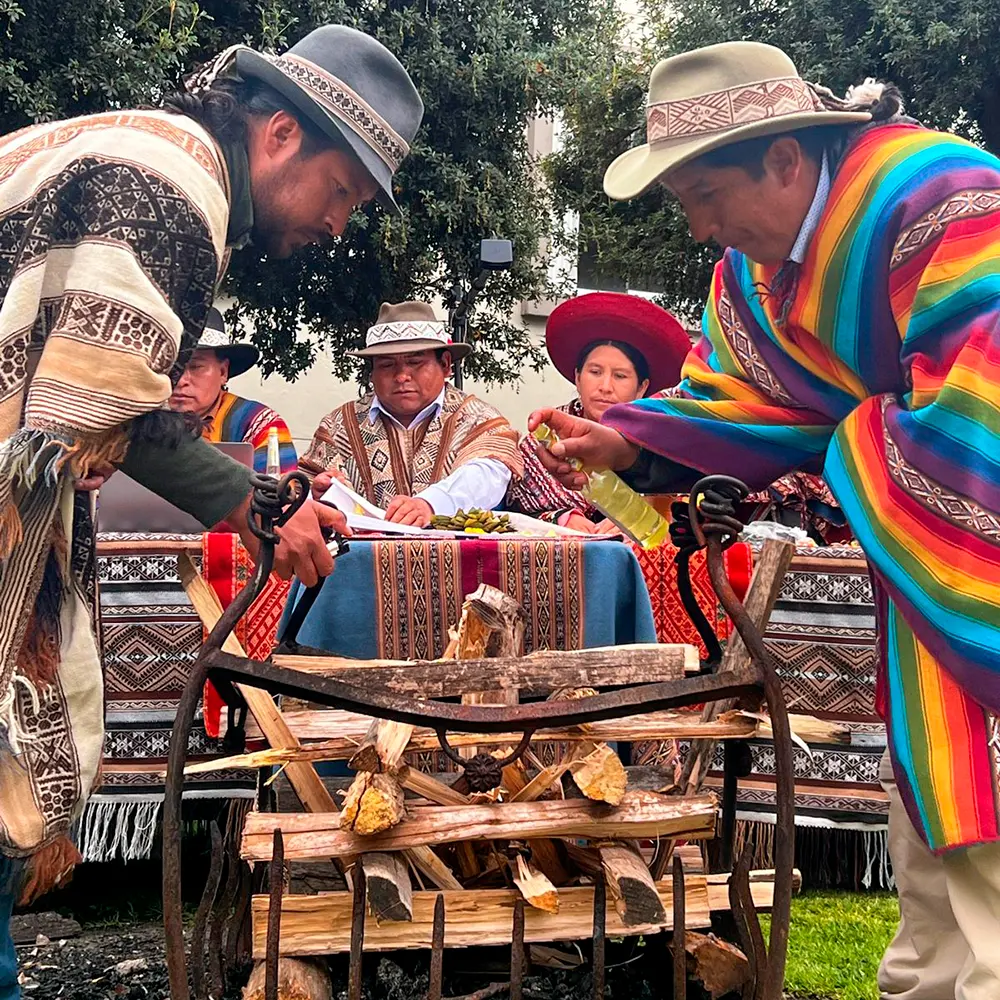
Closing either journey: An Offering to Pachamama (Despacho Ceremony) is a natural way to close time spent in the sacred mountains — a formal act of gratitude and reciprocity to the land that held the trek.
A complete itinerary in Cusco combining both dimensions might look like:
- Days 1–3: Arrive Cusco, acclimatize, Coca Leaf Reading
- Days 4–5: Ayahuasca Retreat Cusco 2 Days in Chinchero
- Day 6: Rest and integration in the Sacred Valley
- Days 7–9: Ausangate Trek & Wachuma Ceremony
- Day 10: Offering to Pachamama — closing ceremony
- Day 11–12: Machu Picchu by train (optional)
This is not a fixed package — it is a template. Every itinerary we design is built around your specific dates, intentions, and physical condition. Contact us to design yours.
Frequently Asked Questions
Which trek is harder — Ausangate or Salkantay?
The Ausangate Trek is generally harder because of its higher altitude and remote trails. The Salkantay Trek is challenging but more manageable for first-time hikers. The key difference is not peak altitude but sustained altitude: Ausangate keeps you above 4,400 meters for the entire trek, while Salkantay brings you down into warmer terrain after the first two days.
Do I need a permit for either trek?
You don’t need permits for either trek, unlike the Inca Trail. For the Salkantay, your Machu Picchu entrance ticket is a separate purchase and should be booked in advance in peak season. For Ausangate, there is only a small area entrance fee of approximately 10–20 soles.
Can I see Rainbow Mountain on the Ausangate Trek?
Yes — some routes of the Ausangate circuit include Rainbow Mountain as an optional extension. That said, Rainbow Mountain can also be visited as a day trip from Cusco without doing the full trek. We recommend deciding which experience you are actually seeking before combining them: the Ausangate circuit for its own sake, or Rainbow Mountain as a destination.
Which trek is better for a first-time visitor to Peru?
Salkantay. The trail is better trodden, with more support, making it more accessible to a wider range of trekkers. It reaches a lower maximum altitude, has more established infrastructure, and ends at Machu Picchu — a natural narrative endpoint for a first Peru visit. Ausangate is the better second Peru trek, when you already have a feel for the altitude and the landscape.
Can I combine the Ausangate Trek with an Ayahuasca ceremony in the same trip?
Yes, and we regularly design itineraries that combine both. The most important consideration is sequencing and recovery time. We recommend at least one full rest day between any plant medicine ceremony and a high-altitude trek. Our team designs combined itineraries that honor both the physical demands of the trek and the integration needs after ceremony. Contact us to discuss your specific dates and intentions.
Which trek has better scenery?
For pure mountain scenery, glacial lakes, and spectacular panoramic views, Ausangate stands out as one of the most beautiful treks in Peru. For diversity of scenery — alpine to jungle — Salkantay is unmatched. The question is which type of beauty you are seeking: intensity and consistency, or variety and contrast.
Is the Wachuma ceremony available on the Salkantay Trek?
No. Our Ausangate Trek & Wachuma Ceremony is exclusive to the Ausangate format because the ceremony is inseparable from the presence of Apu Ausangate — the sacred mountain that gives it its particular power and context. A standalone San Pedro ceremony at Quillarumiyoq is available separately and can be combined with either trek.
The Bottom Line
The Ausangate Trek and the Salkantay Trek are not competitors. They are different answers to different questions.
If you are asking: “How do I get to Machu Picchu through the most beautiful alternative route?” — the answer is Salkantay.
If you are asking: “What is the most extraordinary, remote, and spiritually resonant mountain experience available in Peru?” — the answer is Ausangate.
If you are asking: “Where can I combine high-altitude trekking with a genuine plant medicine ceremony at the foot of one of the most sacred mountains in the Americas?” — the answer is our Ausangate Trek & Wachuma Ceremony. Nowhere else in Peru offers this.
We have been guiding both treks from Cusco since 2013. Our team is native to the region — our guides are from Chinchero, our Wachuma Master is from Pacchanta. If you want help deciding which experience is right for you, or designing a custom itinerary that combines trekking with ceremonies, we are here.
Contact us to plan your journey →
Continue Exploring
- Ausangate Trek & Wachuma Ceremony — 3 Days from Cusco
- Ayahuasca Retreat Cusco — 1 Day
- Ayahuasca Retreat Cusco — 2 Days
- San Pedro (Wachuma) Ceremony in Cusco
- Coca Leaf Reading in Cusco
- Offering to Pachamama — Despacho Ceremony
- Ausangate Trek Complete Guide 2027
- Ausangate Trek & Wachuma: The Only Spiritual Trek of Its Kind in Peru
PumAdventures is a licensed tour operator based in Chinchero, Sacred Valley, Cusco, Peru. We have offered authentic Andean ceremonies and guided treks since 2013. All guides are native to the region. All ceremonies are led by Andean Masters with genuine ancestral lineage from Chinchero and Pacchanta.