Ausangate Trek & Wachuma Ceremony: The Only Spiritual Trek of Its Kind in Peru
 By PumAdventures
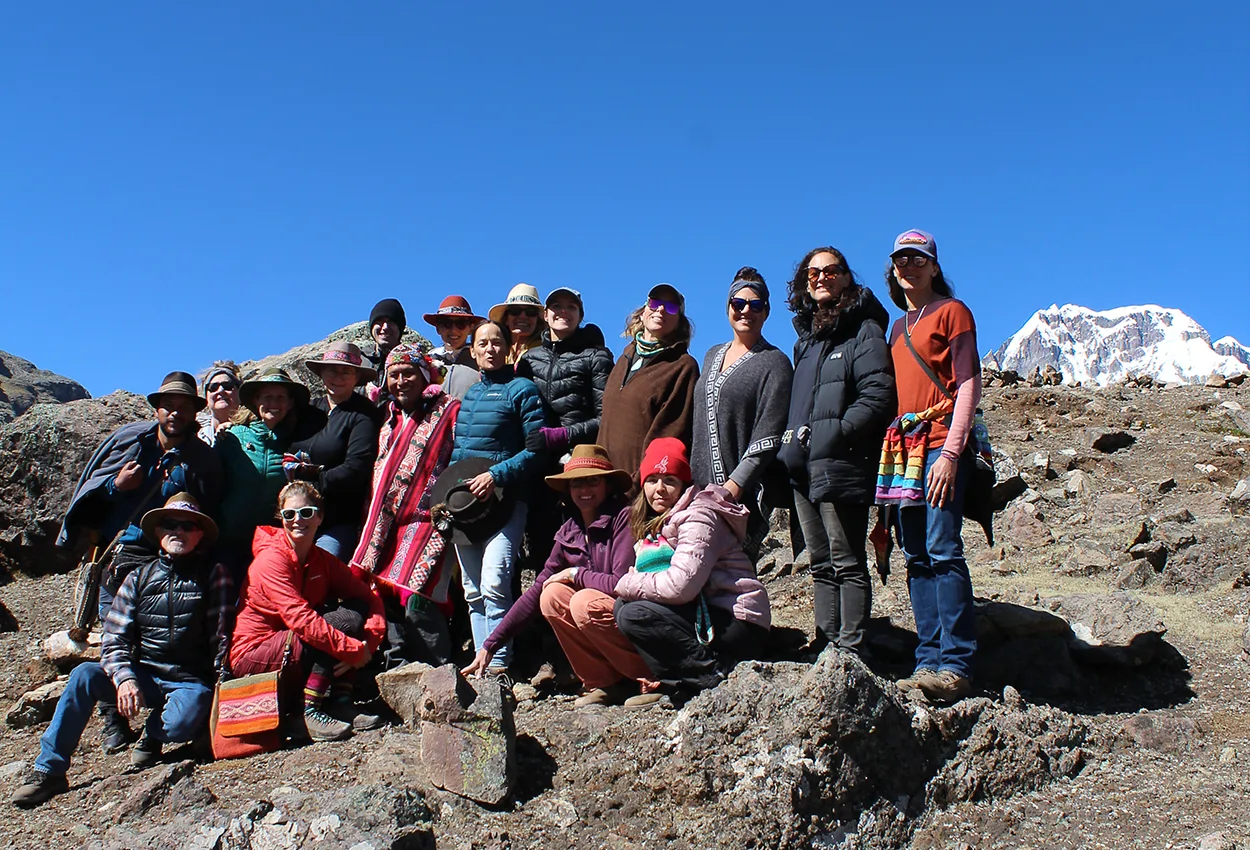
By PumAdventures — Andean Masters and local guides from Chinchero, Cusco, since 2013
There is no other trek like this in Peru.
That is not marketing language. It is a simple fact: no other operator in the country offers a guided Wachuma (San Pedro) ceremony held at the foot of Apu Ausangate — Peru’s most powerful sacred mountain — as an integrated part of a multi-day trek.
The question worth asking is why. The answer reveals something important not just about this experience, but about how plant medicine ceremonies work, what the Ausangate actually is in the Andean spiritual tradition, and why combining these two things — the mountain and the medicine — produces something that neither can produce alone.
This article is our attempt to answer that question honestly: what this experience is, what it is not, why we designed it this way, and whether it might be right for you.
Two Ancient Traditions, One Living Landscape
To understand the Ausangate Trek & Wachuma Ceremony, you first need to understand what each element is on its own terms — and then what happens when they meet.
Apu Ausangate — More Than a Mountain
Ausangate rises to 6,384 meters (20,945 feet) in the Vilcanota Mountain Range, approximately 100 kilometers southeast of Cusco. It is the highest peak in the Cusco region and the fifth highest in all of Peru.
But its significance has nothing to do with its height.
In Quechua cosmology, Ausangate is an Apu — a living mountain deity. Not a spirit that inhabits the mountain. Not a force that the mountain represents. The mountain itself is the being: a guardian of immense power and benevolence who has governed the water, the weather, the crops, and the spiritual life of the Andean communities in its shadow for longer than any written record exists.
The Quechua people of Cusco consider Apu Ausangate the most powerful of all the regional Apus — the guardian of the entire south, the keeper of the sacred waters that feed the rivers and agricultural systems of the region, the protector of every community that lives beneath its gaze. For centuries, no significant transition of life was undertaken without first making an offering to Ausangate: a new harvest, a marriage, a healing, a journey, a death.
This is not mythology. In Pacchanta — the highland community where our trek is based — the relationship with Apu Ausangate is active, daily, and entirely practical. The mountain’s glacier is melting. The water it provides is what the community drinks, irrigates with, and lives from. The ceremonies that maintain the spiritual relationship with the Apu are also, in a direct sense, the ceremonies that maintain the relationship with the water. Ceremony is not separate from survival here. It is the same thing.
The annual Qoyllur Riti Festival, held at the foot of Ausangate in late May, draws over 10,000 pilgrims on foot from communities across the Cusco region — one of the largest indigenous pilgrimages in the Americas, largely unknown outside Peru. Pilgrims travel for days. They climb in the dark. They make offerings at the glacier. They return home. They have done this, without interruption, for longer than any living person can remember.
When you walk the Ausangate Trek, you are walking into this living relationship. You are a guest in a spiritual landscape that has been actively maintained for millennia. That awareness changes the quality of the walk itself — even before the Wachuma ceremony begins.

Wachuma — The Sacred Plant of the Andes
Wachuma, also known as San Pedro or Huachuma, is a columnar cactus (Echinopsis pachanoa) native to the Andean highlands of Peru, Ecuador, and Bolivia. It contains mescaline and a range of other alkaloids, but its significance in Andean culture extends far beyond its pharmacological properties.
Thousands of years ago, Wachuma was used by various civilizations within Peruvian territory. The Chavín culture pioneered the use of this plant, with healing as its primary purpose. Research at Chavín de Huántar indicates that San Pedro would be the only psychoactive plant unequivocally represented in the site’s iconography, suggesting a central ceremonial role that predates the Inca Empire by at least 3,000 years.
In the Andean tradition, Wachuma is known as a masculine medicine — the medicine of the sun, of daylight, of clarity, and of the heart. Where Ayahuasca is spoken of as the grandmother — nocturnal, introspective, visionary — Wachuma is spoken of as the grandfather, or as the spirit of the Apus themselves: expansive, solar, grounding, and profoundly connected to the living Earth.
The Wachuma ceremony is conducted during the day, outdoors, in direct contact with nature. This is not incidental. It is fundamental to how the medicine works. Wachuma opens the senses rather than closing them — colors become more vivid, natural sounds more present, the felt sense of connection to the landscape more immediate. Working with Wachuma in an enclosed space, away from nature, produces a qualitatively different experience than working with it in a high-altitude mountain environment in direct relationship with glaciers, sacred lagoons, and sky.
Which is exactly why Ausangate changes everything.
Why Ausangate + Wachuma — The Cosmological Case
Most Wachuma ceremonies in Cusco are held in gardens, private outdoor spaces, or at sites like Quillarumiyoq in the Sacred Valley. These are valid, meaningful, and often profoundly powerful settings. We offer our standalone San Pedro ceremony at Quillarumiyoq for exactly that reason.
But Ausangate is something different.
In the Andean tradition, Wachuma is understood as the spirit of the Apus — the plant medicine that opens the channel of communication between the human world and the world of the mountain deities. The iconographic evidence from Chavín de Huántar shows San Pedro cactus appearing alongside jaguar imagery and fanged deities associated with the mountains — the living beings the Andean tradition has always understood the high peaks to be.
Working with Wachuma in the presence of Apu Ausangate — at 4,400 meters, at the foot of its glacier, beside its sacred lagoons, within the living landscape that the Quechua have maintained in sacred relationship for thousands of years — is not the same as working with Wachuma in a garden in Cusco city at 3,400 meters.
The difference is not primarily pharmacological. The mescaline in the plant is the same molecule at any altitude. The difference is contextual, energetic, and — for those open to the Andean cosmological framework — profoundly literal: the being the medicine opens communication with is physically present, visibly present, towering above the ceremony at 6,384 meters, its glacier audible in the quiet moments between songs.
Many participants describe the Ausangate Wachuma ceremony as unlike any other plant medicine experience they have had — including previous Wachuma or Ayahuasca ceremonies in other settings. The quality of presence they report is consistent: a sense of being held by something enormous, benevolent, and undeniably alive. The mountain as a living participant in the ceremony, not as scenery.
We cannot prove this is “more effective” than a Wachuma ceremony in a garden. We would not try to. What we can say is that it is different — in ways that consistently matter to participants, and in ways that are coherent with everything the Andean tradition has understood about these plants and these mountains for thousands of years.
The 3-Day Pilgrimage — How It Unfolds
The Ausangate Trek & Wachuma Ceremony is structured as a three-day journey that moves from arrival and grounding, through the ceremonial heart of the experience, to integration and return.
Day 1 — Arrival at the Foot of the Apu
The journey begins with a three-hour drive southeast from Cusco through the highland towns of the Quispicanchi province — a road that climbs steadily out of the Sacred Valley and into increasingly remote Andean landscape. As you approach Pacchanta, the Ausangate glacier comes into view for the first time, framed by the open puna grassland and the enormous blue sky of the high Andes.
This first sight of the mountain is, for many participants, already significant. The scale is unexpected. At 6,384 meters, Ausangate is not a mountain that allows indifference. It demands attention. It occupies the horizon.
You arrive at the local homestay in Pacchanta, a Quechua community at 4,400 meters whose families have lived in relationship with this mountain for generations. Lunch is prepared by a cook from the community — simple, nourishing, traditional Andean food. The afternoon is for settling, for resting, for beginning the quiet process of transition from the pace of daily life to the pace of the mountain.
In the late afternoon, you descend to the Pacchanta hot springs — natural thermal pools at the base of the glacier, fed by geothermal water that rises warm from the depths of the mountain. Soaking in warm water at high altitude, with the glacier face of Ausangate rising above you and the cold mountain air on your face, is an experience that most participants describe as immediately grounding — a physical encounter with the mountain before any ceremony begins.
Dinner is with the homestay family. The first night in Pacchanta, at 4,400 meters, tends to be quiet. The altitude is present. The stars, without light pollution, are extraordinary.
Day 2 — The Ceremonial Heart of the Pilgrimage
The second day is the reason for everything else.
You wake early to a mountain morning — cold air, the glacier visible from the window of the homestay, the sounds of alpacas outside. A special breakfast is prepared with intention — lighter than usual, suited to what the day will ask of the body.
Morning — The Ascent and the Sacred Lagoons
The trek begins on paths that Andean pilgrims have walked for centuries. The landscape opens immediately — no trees, no shelter from the sky, just open puna grassland extending in every direction, with Ausangate’s glacier dominating the horizon ahead.
As the altitude rises toward 5,000 meters, the body works harder for each step. The pace slows. The quality of attention shifts. There is a particular quality to high-altitude walking that most trekkers recognize: the mind quiets before the medicine even begins. The body becomes the immediate reality. The mountain fills the field of vision.
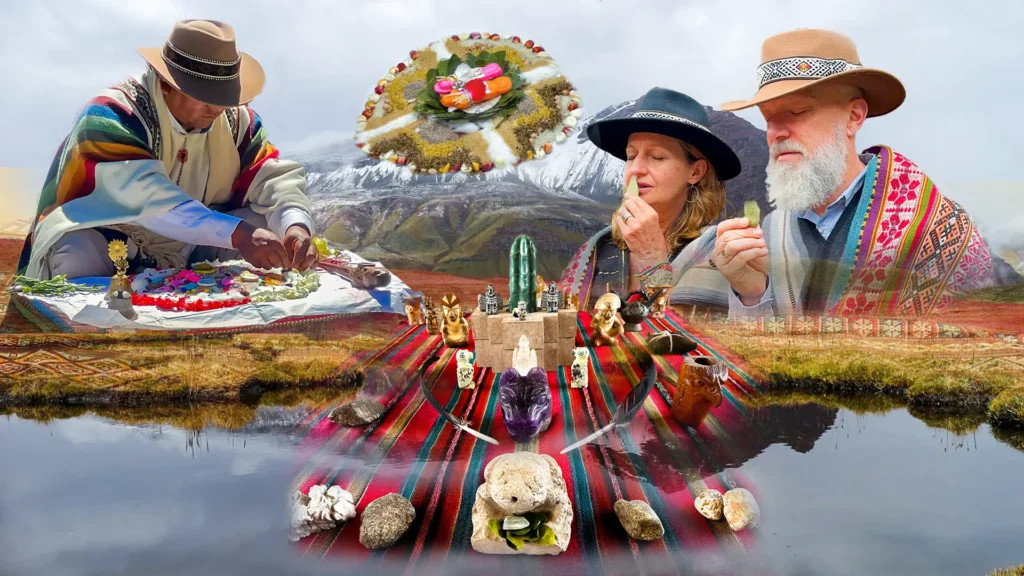
You reach the Apacheta — the sacred high pass where the Andean tradition locates a thinning of the boundary between the human world and the world of the Apus. Here, the Master leads a brief offering ceremony. Coca leaves are prepared and shared — the sacred messenger plant that the Quechua have used to communicate with the spirit world since before any written record. Each person makes their offering to the mountain: a prayer, an intention, a stone placed on the cairn that has accumulated here across generations of pilgrims.
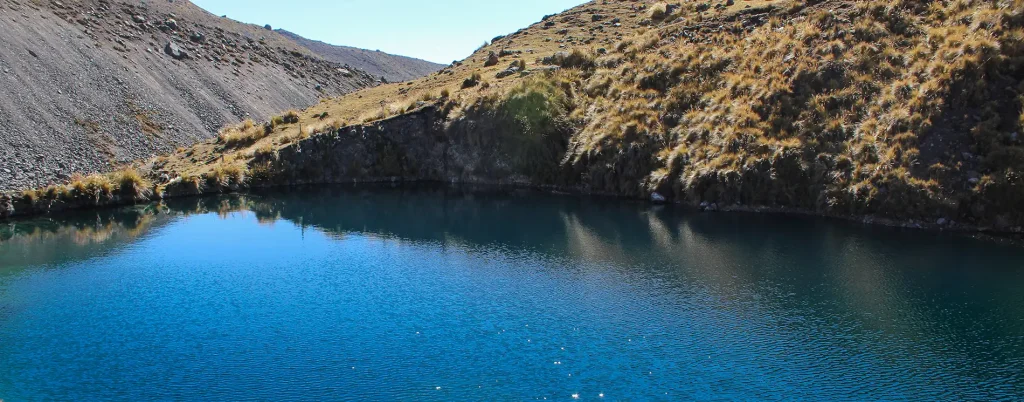
The descent to the glacial lagoons — Otorongo Cocha and Ancash Cocha — brings you into direct contact with one of the most visually extraordinary environments in Peru: turquoise water of a color that seems impossible, set directly beneath the glacier walls, surrounded by the high peaks of the Vilcanota range. The Master leads a cleansing and alignment practice at the water’s edge — connecting each participant with the Mamacochas, the sacred lagoon spirits of the Andean tradition, before the ceremony begins.
Afternoon — The San Pedro Wachuma Ceremony
The ceremony begins when the Master chooses — when the energy of the landscape, the group, and the moment are aligned. There is no fixed clock time. This is one of the first ways the ceremony departs from the rhythms of ordinary life.
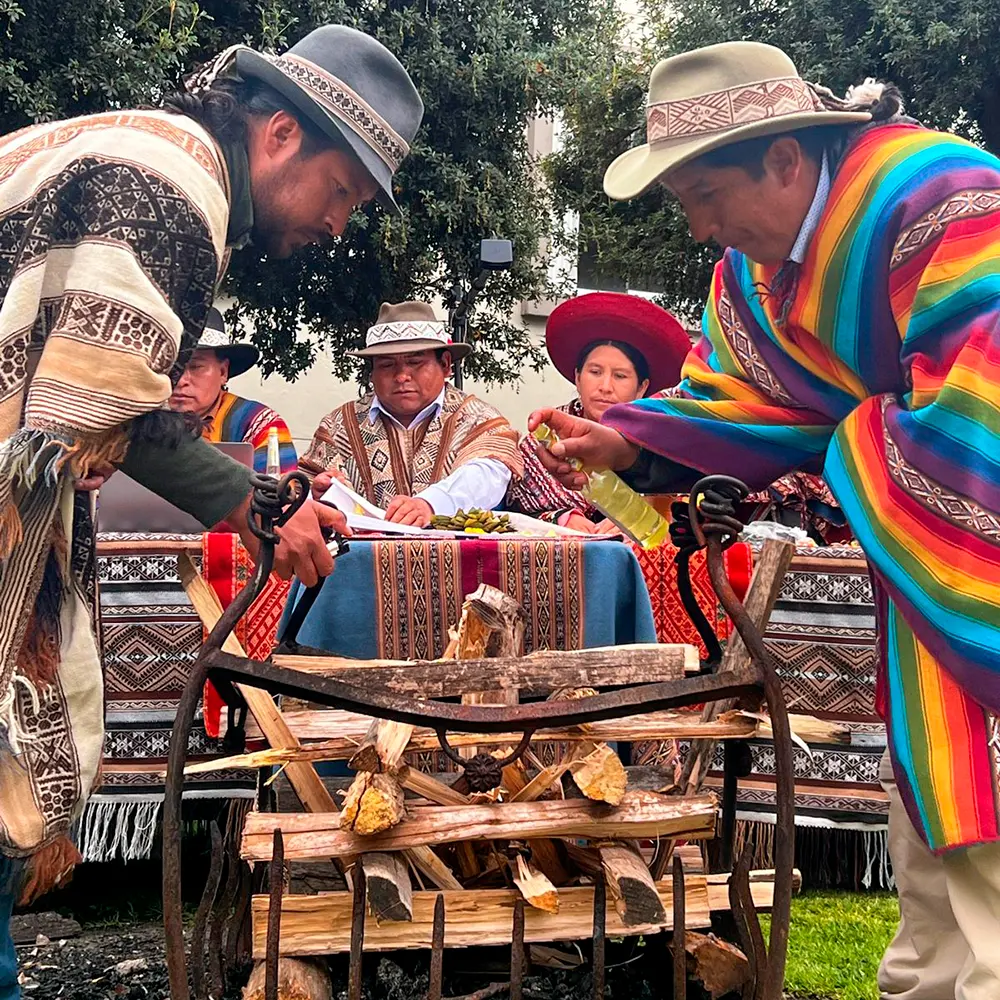
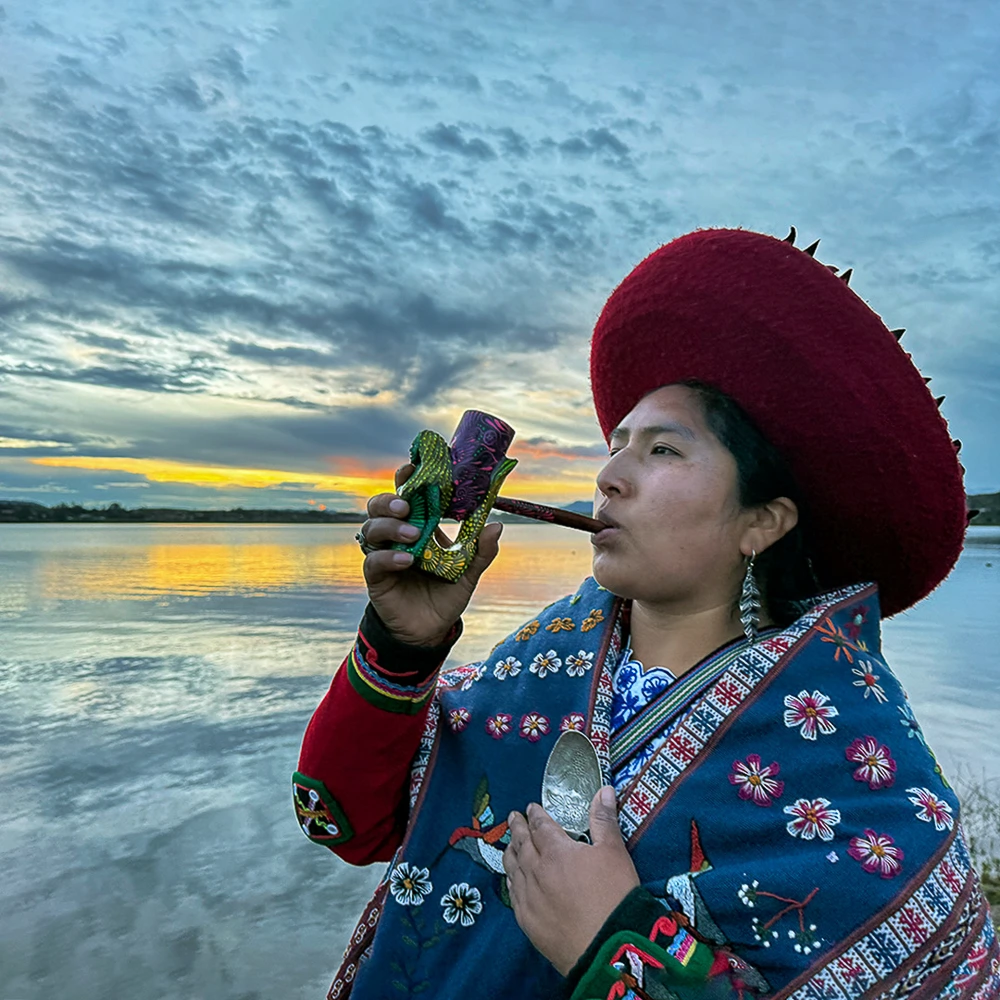
The Master opens the ceremonial space with prayer in Quechua — calling upon Apu Ausangate, Pachamama, the sacred lagoons, and the spirit of the Wachuma plant itself to guide and protect what is about to happen. Sacred mapacho (tobacco), flowers, coca leaves, and incense are used to prepare each participant and the ceremonial space.
The Wachuma medicine is prepared and blessed. It is offered to each participant individually, with full ceremony and presence. The Master looks at each person, speaks a few words in Quechua — a prayer specific to that individual — before the medicine is taken.
Then: waiting. The high-altitude landscape. The glacier. The sky. The sounds of the mountain.
Wachuma typically begins to take effect 1 to 2 hours after drinking, and builds gradually over the next several hours. The quality of the onset is different from Ayahuasca — there is no sudden shift, no dramatic threshold crossing. The medicine arrives the way the mountain arrived on the drive in: present before you realize it, enormous by the time you fully register it.
What typically arises in the Ausangate Wachuma ceremony:
Participants consistently describe a quality of presence that is distinct from other ceremony settings — an awareness of being inside something alive, rather than sitting in a natural setting. The mountain is not background. It is participant. The glacier’s sounds — the occasional crack and shift of ice — arrive as communication, not noise. The alpacas that wander through the ceremonial space are not interruptions.
Heart opening is the most consistent quality reported — the felt sense of love that the Wachuma tradition calls the medicine’s defining gift arrives here with an unusual directness, connected in participant descriptions to the presence of the Apu itself. Many describe weeping — not from sadness, but from a contact with something they can only describe as beautiful, or real, or true.
The Master is present and active throughout. He sings, he prays, he moves through the ceremonial space attending to each participant individually. When someone needs direct support — physically, emotionally, or energetically — he comes to them. Your bilingual guide is also present throughout, available for quiet support without interrupting the ceremonial space.
The ceremony lasts as long as it needs to. There is no clock. When it closes, it closes naturally — with gratitude, with prayer, with a formal farewell to the Apu and to the medicine.
A nourishing lunch is served when the group is ready. The afternoon in Pacchanta, after the ceremony, is time the participants themselves tend to use simply: sitting in the landscape, watching the mountain, writing, sleeping, or sitting with the community’s artisans who produce extraordinary textiles using ancient Quechua techniques.
Dinner and the second night at the homestay.
Day 3 — Integration and Return
The final morning opens with the mountain still present, still enormous, still the same. But something is different. Most participants describe the morning after the Ausangate Wachuma ceremony with a quality of clarity and settledness that is distinct from the morning after other plant medicine ceremonies — grounded rather than raw, clear rather than tender.
Breakfast with the homestay family. Time with your guide for the integration conversation — not a formal debrief, but a relaxed and honest exchange about what arose, what it might mean, and what you are carrying home.
Before departing, the Master leads the group to Lucio’s Temple — a sacred shrine in the Pacchanta area used for offerings and closing ceremonies since time out of memory. Here, the ceremony formally closes: gratitude to Apu Ausangate, to the sacred lagoons, to the medicine, and to the land that held the pilgrimage. A formal goodbye to the mountain — not a tourist formality, but a completion, a way of consciously ending what was opened on Day 2 so that the integration can begin cleanly.
After lunch, the three-hour drive back to Cusco. The mountain recedes in the rear window. Most participants describe the return drive as quiet in a way that is not uncomfortable — a natural transition between the mountain pace and the city pace, with the Wachuma still working gently through the system.
Who This Experience Is For
The Ausangate Trek & Wachuma Ceremony is not for everyone. Being clear about this upfront is more useful than trying to make it sound accessible to all.
This experience is designed for you if:
You have a genuine interest in plant medicine traditions — not primarily as a recreation or a novelty, but as a serious encounter with an ancestral healing practice. You are willing to prepare properly, to follow the dietary guidelines, and to bring an intention that is sincere rather than casual.
You are physically capable of a full day of hiking at altitude — 5 to 6 hours of walking reaching up to 5,100 meters. You do not need to be an athlete, but you need to be honest about your physical condition and committed to acclimatizing properly in Cusco before departure.
You are drawn to the Andean spiritual tradition specifically — to the Apus, to Pachamama, to the living sacred geography of the Andes — and you want to engage with plant medicine in direct relationship with that tradition in its own home landscape, rather than in a garden or a retreat center.
You understand that this is not a psychedelic tourism experience. The Master who leads this ceremony is from Pacchanta. The mountain the ceremony is held beneath is his mountain, his community’s guardian deity, his people’s living relationship with the source of their water and their spiritual orientation. Approaching this with respect for that reality is not optional — it is the condition under which the experience becomes what it is.
This experience may not be right for you if:
You have significant cardiovascular conditions or uncontrolled hypertension — both the altitude and the Wachuma medicine make demands on the cardiovascular system that require medical clearance.
You are currently taking SSRIs, MAOIs, or other psychiatric medications — these have interactions with Wachuma’s alkaloids that range from reduced efficacy to dangerous. Discuss this with your doctor and inform us before booking.
You have a personal or family history of schizophrenia, bipolar I disorder, or psychosis — plant medicine ceremonies of any kind are contraindicated in these circumstances.
You are not physically capable of hiking at 5,000 meters for 5 to 6 hours. This is not an experience where the physical challenge can be removed — the trek to the sacred lagoons and the Apacheta is part of the preparation for the ceremony. They are not separable.
How This Compares to Other Plant Medicine Experiences in Cusco
Many travelers who seek out the Ausangate Trek & Wachuma Ceremony have already had, or are also considering, other plant medicine experiences. Here is how this fits within the broader landscape of what PumAdventures offers:
Wachuma at Quillarumiyoq vs. Wachuma at Ausangate
Our standalone San Pedro ceremony takes place at Quillarumiyoq — an ancient Inca ceremonial site in the Sacred Valley with its own extraordinary energy, at 3,762 meters. It is a full, complete ceremony that does not require trekking. For participants who are not able to do the high-altitude physical work of the Ausangate trek, or who want to experience Wachuma without the 3-day commitment, Quillarumiyoq is the right format.
Ausangate adds: the physical preparation of the trek itself as part of the ceremonial arc, the extraordinary altitude and landscape of the Vilcanota range, the direct presence of Apu Ausangate — considered the most powerful Apu of the Cusco region — and the homestay immersion in the living Quechua community of Pacchanta.
Wachuma vs. Ayahuasca
The most common question from people considering both: which one, or in what order?
Both are sacred plant medicines. Both work with profound depth. The primary differences in terms of experience:
The Wachuma ceremony is a living tradition deeply tied to Andean cosmovision, practiced during the day in direct contact with nature. Ayahuasca is a nocturnal medicine — held at night, more inward, more visionary in the classic sense, and associated with the Amazonian rather than Andean tradition.
Participants who work with both consistently describe them as complementary: Wachuma opens the heart and the connection to the outer world — to nature, to the body, to the landscape. Ayahuasca opens the inner world — to memory, to the unconscious, to the visionary dimension. One solar, one lunar. One masculine, one feminine. Working with both during a trip to Cusco addresses dimensions of the healing journey that neither reaches alone.
For those combining both: most practitioners recommend Ayahuasca before Wachuma — the inner clearing that Ayahuasca produces creates space that the Wachuma’s heart-opening quality can fill. Some prefer the reverse. We design the sequence to fit your specific intention and dates.
Interested in combining ceremonies? See our Ayahuasca Retreat Cusco 1 Day and 2-Day Ayahuasca Retreat.

Preparing for the Ausangate Trek & Wachuma Ceremony
Preparation is not bureaucratic. It is the first act of the ceremony itself.
Physical preparation — acclimatization is everything
Spend at least 3 days in Cusco before departure — 4 to 5 is strongly preferred. This is the single most important preparation you can do. Altitude matters more than fitness. A professional athlete who arrives in Cusco and goes to Ausangate the next day will have a worse experience than a moderately fit traveler who has spent 5 days in the Sacred Valley.
During acclimatization days: drink 3 to 4 liters of water daily, avoid alcohol completely, eat light, and take short acclimatization hikes at increasing elevation. A Coca Leaf Reading before the trek is a natural complement to this period — it connects you with the land and the Apu before you arrive at the mountain, and it allows the Master to begin reading your energy and intention before Day 1.
The dietary preparation — dieta
For 3 days before the Wachuma ceremony, avoid: red meat and pork, alcohol, fermented foods, heavy processed foods, caffeine, and refined sugar. These are not arbitrary restrictions — they are the traditional preparation of the body for plant medicine work, refined across generations of practice. The lighter and cleaner the body, the more available it is to receive what the medicine has to offer.
On the morning of Day 2 (the ceremony day), eat a light breakfast only, and nothing for at least 3 hours before the ceremony begins.
Intentional preparation — the most important thing
Before you arrive at Ausangate, spend time with the question of why you are coming. Not a performed spiritual aspiration — an honest inquiry. What are you carrying? What is weighing on you? What do you hope to understand, release, or encounter? What is the question you are bringing to the mountain and to the medicine?
You do not need a perfect answer. The act of sitting with the question is itself preparation. The medicine and the Apu will work with whatever you bring — but they work more directly when the intention is clear.
Bring a journal. The integration days after the ceremony, and the weeks that follow, are rich with material for writing.
A Note on the Master Who Leads This Ceremony
Our primary guides Alfredo, Miguel, and Magally have led groups through the sacred sites of the Sacred Valley and up into the mountains for years, always supported by the kind and friendly drivers and support team.
The Wachuma ceremony on the Ausangate Trek is led by a Master from the Pacchanta community — a practitioner whose family has lived in relationship with Apu Ausangate for generations. He did not learn this practice from a course, a workshop, or a training program. He learned it from the community and landscape that formed him — from the mountain that is his mountain, from the tradition that has always been his tradition.
This distinction matters more than it might initially appear. A Wachuma ceremony held at Ausangate by a practitioner from Pacchanta is not the same ceremony as a Wachuma ceremony held at Ausangate by a practitioner from elsewhere who has visited the mountain. The relationship with the Apu is specific, established, and lived. The mountain knows its own.
All of our ceremonies — Ayahuasca, San Pedro, Coca Leaf Reading, Despacho — are led by practitioners with this quality of rooted lineage. It is not something we advertise as a marketing feature. It is simply what makes these ceremonies what they are.
Frequently Asked Questions
Do I need previous experience with plant medicine to do this?
No. First-time participants are welcome, provided the health screening is passed and the preparatory guidelines are followed. What matters more than previous experience is sincerity of intention and honest preparation. That said: if you have never worked with any plant medicine, you might also consider our standalone San Pedro ceremony at Quillarumiyoq or a 1-Day Ayahuasca Retreat as a first encounter, before combining the medicine with the demands of high-altitude trekking.
What if the weather is bad on Day 2?
Mountain weather in the Vilcanota range can shift quickly. In the dry season (May–October), Day 2 is almost always clear enough to complete the full ascent and ceremony as described. In the transition months, or if unexpected weather arrives, the itinerary can be adapted: the ceremony can be held at lower altitude in Pacchanta itself, in a sheltered outdoor setting. The ceremony is not weather-dependent — the Apu is present at all altitudes.
How does the San Pedro Wachuma Wachuma ceremony at Ausangate compare to Ayahuasca?
They are different medicines for different dimensions of experience. Wachuma is daytime, outdoor, heart-centered, and deeply connected to the natural world and the Apus. Ayahuasca is nocturnal, inward, visionary, and more associated with inner emotional and psychological material. Many participants describe them as complementary — the Wachuma at Ausangate opens the outer connection, Ayahuasca deepens the inner one. We recommend and support both, in whatever sequence fits your intentions and dates. See our Ayahuasca retreats in Cusco.
Can I combine this with other ceremonies in Cusco?
Yes, and we design custom itineraries for exactly this. A complete spiritual journey in Cusco with PumAdventures might include: Coca Leaf Reading (Day 1, intention-setting) → Ayahuasca 1 or 2 Day Retreat (Days 2–4) → Ausangate Trek & Wachuma (Days 5–7) → Offering to Pachamama (Day 8, gratitude and closing). This is not a fixed package — every itinerary is designed around your specific dates, intentions, and needs.
Is this the same as the Essence of Cusco 5-Day retreat?
No. Our Essence of Cusco 5-Day Retreat combines Ayahuasca, San Pedro, Despacho, and Coca Leaf Reading into a single guided journey without the Ausangate trekking component. The Ausangate Trek & Wachuma Ceremony is a standalone 3-day experience specifically designed around the mountain itself. Both can be combined into a larger custom itinerary — contact us to design yours.
What happens after the ceremony — integration support?
Integration is included. The morning of Day 3, before leaving Pacchanta, your guide facilitates an integration conversation — relaxed, honest, and unhurried. Written integration materials are provided. Follow-up conversations with your guide are available in the weeks after you return home. For participants with complex histories or who want more structured support, we recommend working in parallel with a therapist who specializes in plant medicine integration.
How to Book
The Ausangate Trek & Wachuma Ceremony is available year-round, with best conditions from May through October.
No permits are required. Availability is based on the Master’s schedule and the homestay capacity.
Before your booking is confirmed, a brief health screening is required. This is not a formality — it is a genuine safety check that we take seriously. We will advise you honestly if we believe the experience is not appropriate for your circumstances at this time.
What to do next:
- Complete the inquiry form with your intended dates and a brief description of your intention
- We respond within 24 hours with availability and the health screening questionnaire
- Once health screening is complete and availability confirmed, the booking is confirmed with a deposit
We are also available on WhatsApp for direct conversation before you commit.
Starting from $900 per person, private and fully guided.
Deepen Your Journey in Cusco
The Ausangate Trek & Wachuma Ceremony is complete in itself — and opens naturally into other sacred work before or after:
- Ayahuasca Retreat Cusco — 1 Day — the nocturnal medicine; inner vision and emotional depth, held in Chinchero
- Ayahuasca Retreat Cusco — 2 Days — two ceremonies and overnight integration in the Sacred Valley
- Coca Leaf Reading — clarify your intention before arriving at Ausangate with a traditional Andean oracle session
- Offering to Pachamama — Despacho Ceremony — close your time in the Andes through a sacred act of reciprocity and gratitude
- San Pedro Ceremony at Quillarumiyoq — a standalone Wachuma ceremony in the Sacred Valley; accessible without the trekking component
- Essence of Cusco — 5 Day Spiritual Retreat — Ayahuasca, San Pedro, Despacho, and Coca Leaf Reading woven into one guided journey
Contact us to design a complete itinerary around your dates and intentions. We respond within 24 hours, seven days a week.
PumAdventures is a licensed tour operator based in Chinchero, Sacred Valley, Cusco, Peru. We have offered authentic Andean ceremonies and sacred treks since 2013. All ceremonies are led by Andean Masters with genuine ancestral lineage from Chinchero and Pacchanta. All guides are native to the region.