The Solstice in Peru — Astronomy, Andean Tradition, and Spiritual Meaning
 By PumAdventures
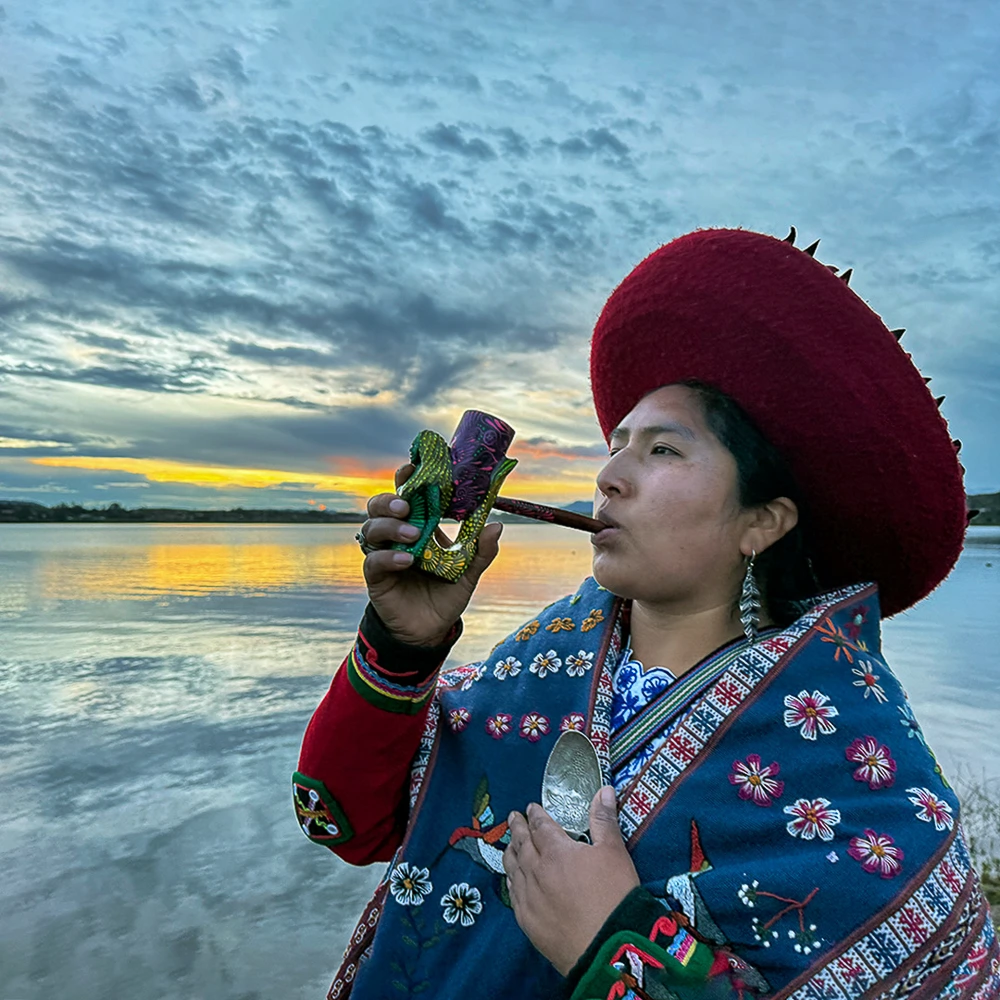
The Solstice in Peru is not merely an astronomical event. It is a living ceremony, a sacred threshold, and the heartbeat of an ancient civilization that never stopped watching the sky.
Table of Contents
I. The Astronomy: What the Solstice Actually Is
The word solstice comes from the Latin sol (sun) and sistere (to stand still). It describes the precise moment when Earth’s axial tilt places one pole at its maximum inclination toward or away from the Sun — and the Sun appears to pause at its northernmost or southernmost point on the horizon before reversing its apparent path across the sky.
Earth orbits the Sun with its rotational axis tilted at roughly 23.5 degrees relative to the plane of its orbit. This tilt is the engine behind all seasons. When the Northern Hemisphere is maximally tilted toward the Sun (around June 21), it experiences its longest day — the summer solstice. Simultaneously, the Southern Hemisphere experiences its shortest day: the winter solstice. Six months later, in December, the geometry reverses entirely.
Key dates for Peru in 2026:
- June 21, 2026 — Winter solstice in Peru (Southern Hemisphere). The shortest day of the year; the Sun is at its most distant point in the sky.
- December 21, 2026 — Summer solstice in Peru. The longest day; the Sun reaches its highest arc.
What the Northern Hemisphere calls “midsummer” is midwinter in the Andes — and vice versa. This crucial inversion shapes Peru’s entire ceremonial solar calendar, and understanding it is the key to understanding why June is the month of the great Sun festival.
II. Peru and the Dual Solstice Year
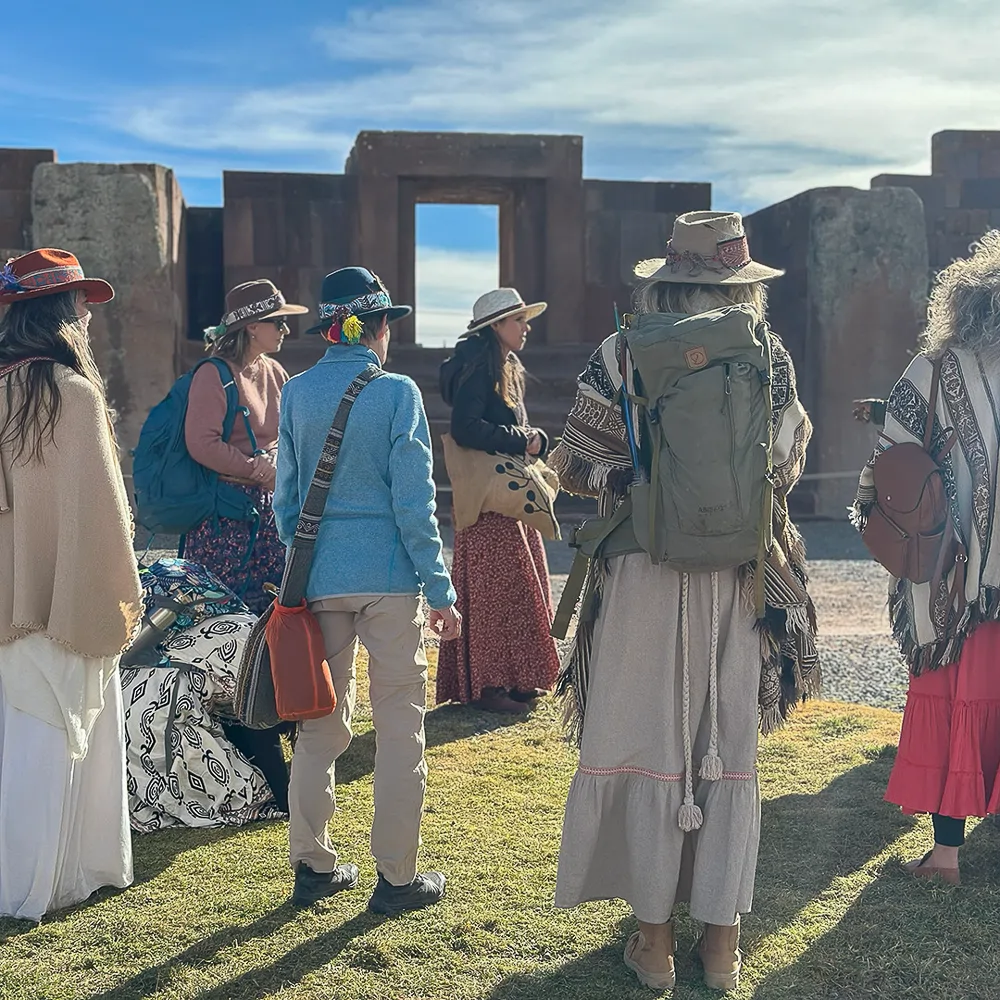
Peru sits almost entirely within the Southern Hemisphere, between roughly 0° and 18° South latitude. The Andean civilizations did not merely track one solstice — they built an entire ritual calendar around both, constructing solar architecture with extraordinary precision.
Machu Picchu’s famous Intihuatana stone — whose name means “hitching post of the Sun” in Quechua — is believed to have functioned as a solar calendar. At the June solstice, the Sun sits directly above the stone with no shadow cast. At Machu Picchu’s Temple of the Sun, a trapezoidal window frames the rising Sun precisely on the June solstice morning. At the sacred site of Tiwanaku near Lake Titicaca, the Sun Gate frames the sunrise at the equinoxes.
The entire Andean highland landscape was, in effect, a living astronomical instrument. Mountains, stones, and buildings conspired to mark the Sun’s movements and weave them into communal life.
The Inca calendar, known as the ceque system, organized time and ritual space simultaneously. Ceques were imaginary lines radiating outward from Coricancha — the golden Temple of the Sun in Cusco — dividing the empire into sectors and scheduling offerings throughout the year. The two solstices occupied the most sacred positions in this system, each anchoring one of the empire’s two great solar festivals.
“For the Incas, the Sun was not only a source of light and warmth but the god Inti himself — who protected, fertilized, and gave life to everything that existed.”
III. Inti Raymi — The Festival of the Sun
Of all the solar celebrations in Peru, none is more famous or more breathtaking than Inti Raymi, the June solstice festival held in Cusco every year on June 24. Its name is Quechua: Inti means sun; Raymi means festival or feast. Together, they name the greatest ceremony of the Inca Empire.
Origins
The festival was formally established by the Inca emperor Pachacuti around 1430 AD, though its astronomical and agricultural roots are far older. Observers from across all four suyos — the four quarters of the empire, collectively called Tawantinsuyu — gathered in Cusco to honor Inti and witness the renewal of the solar covenant between god and ruler. At its height, the ceremony lasted nine days, filled with sacrifices, dances, songs, and the ritual consumption of chicha, the sacred fermented maize drink.
Why June 24 and Not June 21?
According to Inca tradition, the Sun appeared stationary for three days after the June 21 solstice before visibly beginning its return journey. The actual ceremony was therefore held on the fourth day — June 24 — when it was certain that Inti had heard the prayers and chosen to return. This date also coincided with the Feast of St. John the Baptist in the colonial Catholic calendar, which allowed the tradition to survive under a thin Christian veneer even during colonial suppression.
The Three Stages of the Modern Ceremony
Today, Inti Raymi is a grand theatrical reenactment organized by EMUFEC (the Municipal Cultural Enterprise of Cusco), first revived in 1944 by the Cusqueño intellectual Faustino Espinoza Navarro. Over 800 actors, dancers, and musicians participate, all speaking in Quechua. The ceremony unfolds across three sacred locations:
1. Qoricancha — Temple of the Sun The ceremony opens at dawn at the courtyard of Qoricancha, the original golden Temple of the Sun, now incorporated into the convent of Santo Domingo. The actor-Inca offers the first greeting to Inti, ceremonial pututos (conch-shell horns) announce the beginning of the sacred day, and coca leaves are read to divine the fortunes of the coming year.
2. Plaza de Armas — The Great Square The procession moves to the central plaza, where the Inca delivers a speech addressing the people. This stage symbolizes the Inca’s role as political and divine intermediary between the Sun above and the empire below.
3. Sacsayhuamán — The Sacred Esplanade The grand finale unfolds at the megalithic fortress above Cusco. A symbolic llama sacrifice is reenacted — originally, the llama’s heart was held up to Inti, and the blood read for omens of the harvest. Women scatter flowers and sweep the path in a ritual of spiritual cleansing. Coca leaves are burned, ancestral dances are performed, and at sunset a ceremonial bonfire blazes. Costumed figures embody the Snake, the Puma, and the Condor — symbols of the three worlds of Andean cosmology.
Inti Raymi today attracts over 100,000 visitors and is considered the second-largest festival in Latin America after the Rio Carnival.
IV. Qhapaq Raymi — The December Solstice
While Inti Raymi receives the most international attention, the December solstice was equally sacred in the Inca world. Its festival was called Qhapaq Raymi, meaning the “Royal Feast” or “Festival of the Great Sun.” It fell in the heart of the Peruvian rainy season, when the Sun was at its absolute zenith power.
The December solstice separated two months in the Inca lunar-solar calendar: Qhapaq Raymi honored the Sun, and Qhapaq Raymi Camay Quilla honored the Moon — the masculine and feminine forces in cosmic balance.
The Huarachico: Solstice of Initiation
The December solstice also marked the great initiation ceremony of noble Inca youth. In the preceding month, boys of the royal lineage underwent the Huarachico — three weeks of endurance trials including combat, tests of courage and skill, fasting, and long-distance running. Their ears were ritually pierced for the first time, marking the passage from boyhood into manhood. The solstice was thus not merely an agricultural marker but a threshold of personal transformation, synchronized to the cosmos.
When the Spanish arrived, they deliberately scheduled Christmas to coincide with or absorb the December solstice festivities. Yet in Peru, the fusion was never complete. Today, many Andean families in Cusco and the Sacred Valley still observe December 21 with mixed Christian and pre-Hispanic rites: lighting candles, making offerings to the earth, and holding ceremonies their ancestors would recognize.
V. Andean Cosmology and the Three Worlds
To understand why the solstice carries such profound weight in Peru, one must first understand the architecture of the Andean cosmos. Andean cosmology arranges reality into three interconnected planes:
Hanan Pacha — The Upper World: The realm of celestial beings, stars, the Sun (Inti), the Moon (Mama Quilla), lightning (Illapa), and the Milky Way. The condor, which soars at the highest altitudes, is its sacred animal. At the solstice, the door between Hanan Pacha and the human world is understood to be at its thinnest.
Kay Pacha — This World: The present world of living humans, animals, plants, rivers, and mountains. Pachamama (Mother Earth) is its governing force. The puma embodies its power — so much so that the Inca city of Cusco was deliberately designed in the shape of a puma.
Ukhu Pacha — The Inner World: The underground realm of seeds, ancestors, and transformative forces. The serpent is its symbol, its spiral form evoking the cycle of death and return. Seeds planted in Ukhu Pacha reemerge in Kay Pacha as new life.
The Word Pacha
The Quechua word pacha is impossible to translate with a single English word. It encompasses space, time, and consciousness simultaneously — an integration of place and period that has no equivalent in Western thought. The solstice is not merely an astronomical event in this framework: it is a pacha — a moment when the very structure of time and space pivots.
Pachamama, Inti, and the Principle of Ayni
At the heart of Andean cosmology lies a principle of complementary opposites. Pachamama — whose name literally means “Mother Earth-Time” — represents the horizontal, earthly, and feminine dimension: the nurturing soil, the flowing water, the passage of seasons. The Apus — the mountain spirits of sacred snow-capped peaks — are the vertical, masculine dimension, guardians watching over their communities from above.
The cosmic relationship between these forces is maintained through Ayni — the Andean principle of reciprocity. The cosmos is held together not by power, but by mutual care. At the solstice, when the Sun appears at its weakest, the ceremony of Inti Raymi is an act of cosmic reciprocity: humans expressing gratitude and love to the Sun precisely when it seems most distant, reassuring it, pleading with it to return.
VI. The Solstice as Spiritual Threshold
For contemporary Andean spiritual practitioners and the millions of Peruvians who carry this living heritage, the solstice is not history. It is a door.
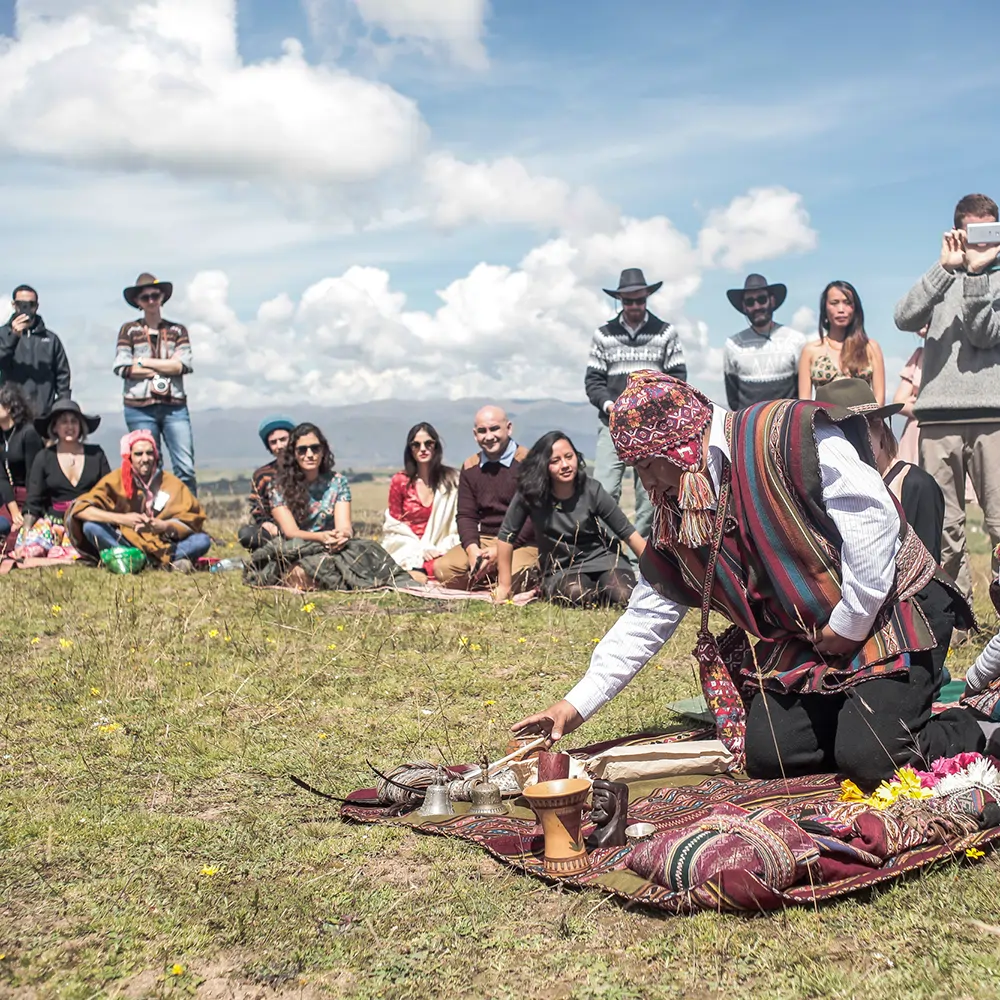
In Andean spiritual thought, the solstice represents a thinning of the membrane between worlds — a moment when the energies of Hanan Pacha descend most powerfully into Kay Pacha. Ceremonies held at the solstice are believed to carry far greater power than those performed at ordinary times. Healing, purification, setting intentions for the coming cycle, and communing with ancestral spirits are all considered especially potent at this juncture.
The Return of Light as Metaphor
The spiritual significance of the June solstice in Peru is rooted in the paradox at its heart: this is the moment of maximum darkness — the shortest day — yet it is celebrated as a festival of light and renewal. The moment when the Sun stands still before returning is, spiritually, a moment of death and rebirth.
The Andean people did not fear this darkness; they welcomed it as the necessary precondition for the Sun’s return, just as a seed must be buried in darkness before it can grow. This spiritual urgency emerged from a lived relationship with a landscape where the Sun’s cooperation was literally a matter of life and death — Andean civilization was built on maize, potatoes, quinoa, and coca at altitude, all uniquely vulnerable to the cold and frost that deepen after the solstice.
“The ceremony is an act of love toward the Sun — a recognition that even the divine needs to be thanked, to know it is not forgotten.”
Qoyllur Riti: The Pre-Solstice Pilgrimage
The Qoyllur Riti pilgrimage, held in late May or early June on the slopes of the Ausangate glacier near Cusco, is one of the most powerful pre-solstice ceremonial gatherings in the world. Thousands of pilgrims ascend to over 5,000 meters in darkness to honor the Apu (mountain spirit) of Ausangate and receive the blessings of the glacier before the solstice. This ceremony fuses pre-Inca Andean traditions with Catholic elements — a living example of the religious syncretism that characterizes Peruvian spiritual life.
Coca Leaves and Shamanic Divination
Throughout the solstice ceremonies, coca leaves play a central spiritual role. In the Andean tradition, coca is a sacred plant, a gift from Pachamama, a bridge between the human and spirit worlds. Paqos (Andean shamans) read the patterns of coca leaves tossed on a mesa (a ritual cloth) to divine the fortunes of the coming agricultural year, the health of communities, and the desires of the spirit world. This tradition — visible during the Plaza de Armas stage of Inti Raymi — is one of the most ancient continuous divinatory practices on Earth.
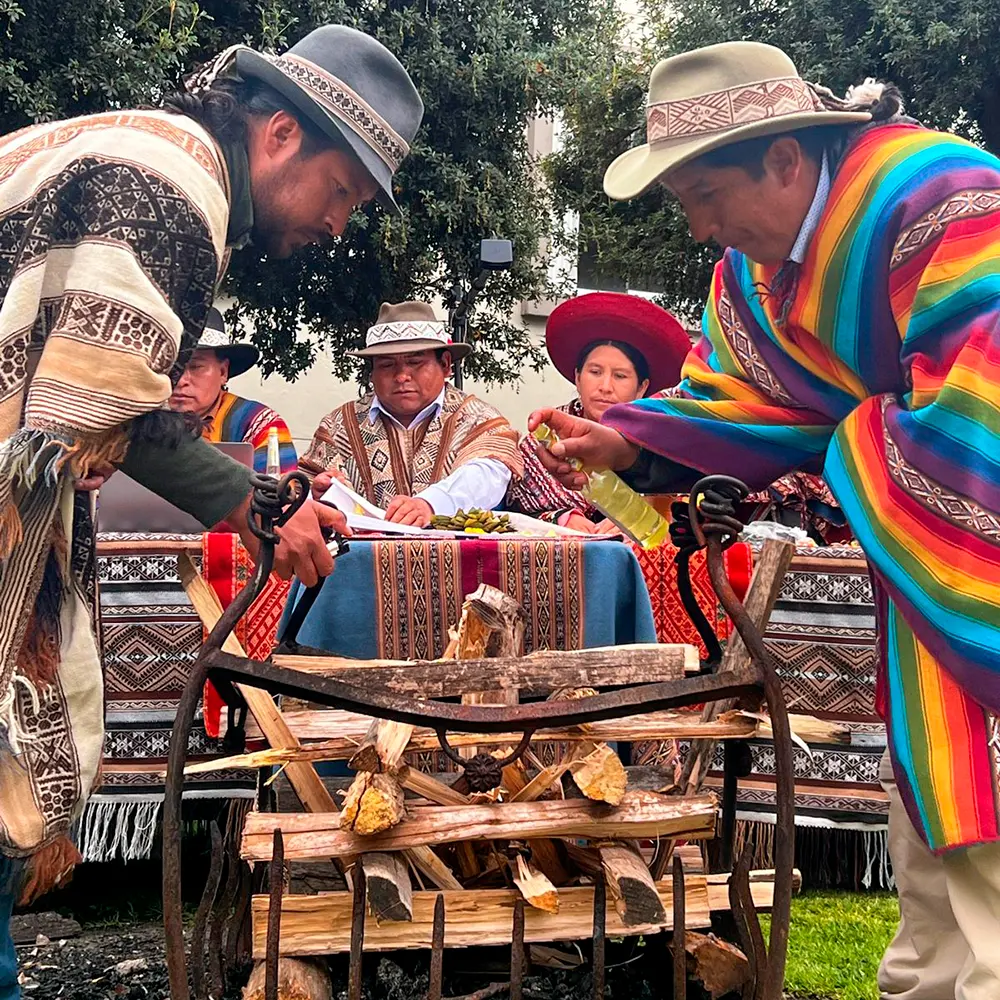
The despacho, a ritual bundle of offerings assembled by paqos and given to fire or earth, is another cornerstone of solstice ceremony. These bundles, containing coca leaves, llama fat, flowers, seeds, and colored threads, are “conversations” with the spirit world — expressions of gratitude and requests for blessing at the turning of the solar year.
VII. The Living Tradition Today
The Inca Empire ended in the sixteenth century, but its solar calendar never truly did. The Spanish colonial administration banned Inti Raymi in the seventeenth century, declaring it an idolatrous rite — yet communities throughout the Andes continued to observe it privately, folding the ceremonies into Catholic feast days to protect them from persecution.
When Faustino Espinoza Navarro organized the first modern public reenactment in 1944, he was not inventing a tradition but resurrecting one that had never fully died. In 2001, Inti Raymi was officially declared Intangible Cultural Heritage of Peru under Law No. 27431.
The Inca Solar Calendar at a Glance
| Date | Festival | Significance |
| June 21 | Winter Solstice | Shortest day in Peru; the pivot point of the solar year |
| June 24 | Inti Raymi | Festival of the Sun; Inca New Year; renewal of the solar covenant |
| August 1 | Pachamama Day | Month of offering to Mother Earth; despacho ceremonies across the Andes |
| September (variable) | Koya Raymi | Festival of the Moon at equinox; honors Mama Quilla, the feminine principle |
| December 21 | Qhapaq Raymi | Summer solstice; festival of royal youth initiation; Sun at its zenith |
| May–June (variable) | Qoyllur Riti | Pre-solstice glacier pilgrimage to Apu Ausangate |
Why This Tradition Still Matters
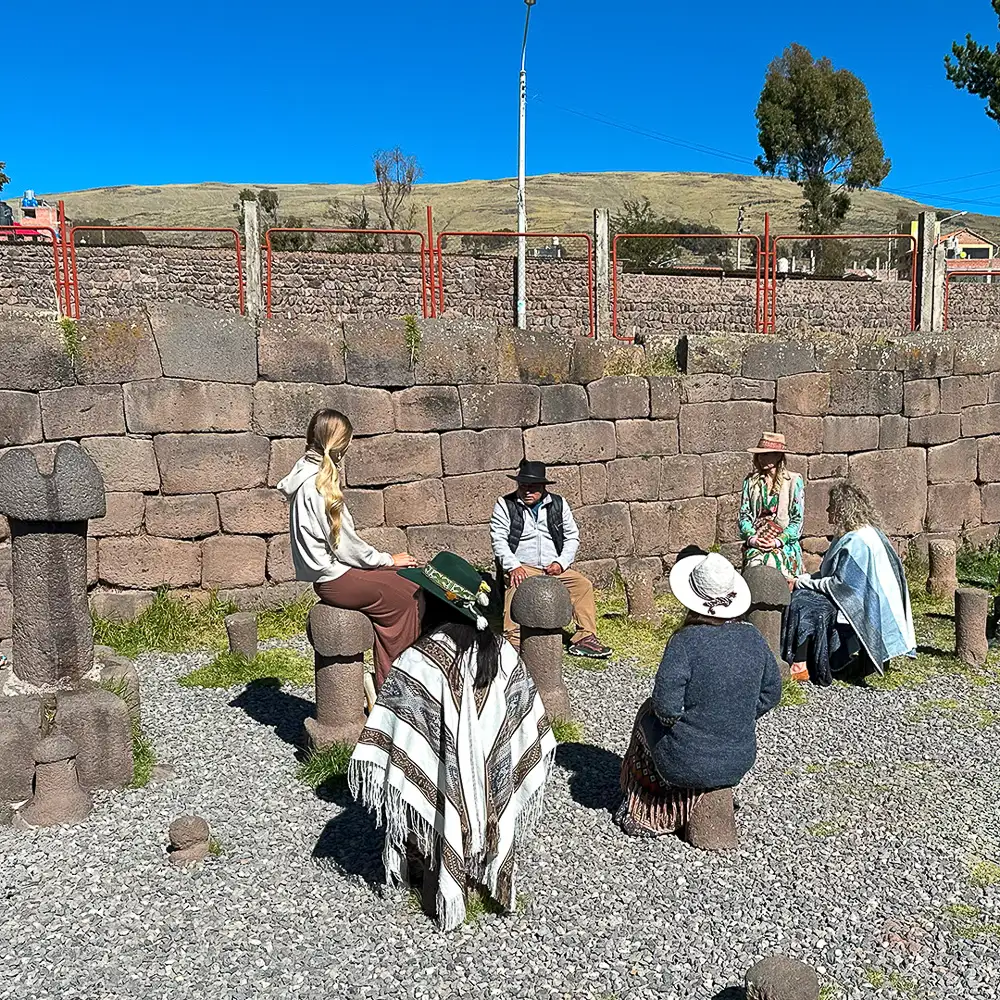
Beyond the grand spectacle of Inti Raymi, the solstice is observed across Peru in deeply personal ways. In Andean communities of the Sacred Valley, the Altiplano, and the highlands of Ayacucho, families perform private despacho ceremonies, light candles, make offerings of food and chicha to the earth, and gather before dawn to greet the Sun as it rises. Modern practitioners blend these ancient rites with yoga, meditation, and breathwork, attracting spiritual seekers from around the world to Peru’s sacred sites at the solstice.
What makes Peru unique in the global landscape of solstice traditions is the unbroken thread between the observatory and the altar — between the astronomical calculation and the human cry for warmth, between the ancient and the modern. The Inca understood with absolute clarity that the moment of the Sun’s apparent weakness was the exact moment when their prayers mattered most.
That insight — that the darkest moment is precisely when the light most deserves to be honored — remains, across five centuries, one of the most profound gifts of Andean civilization to the world.