The Equinox in Peru: Science, Andean Tradition, and Spirituality
 By PumAdventures
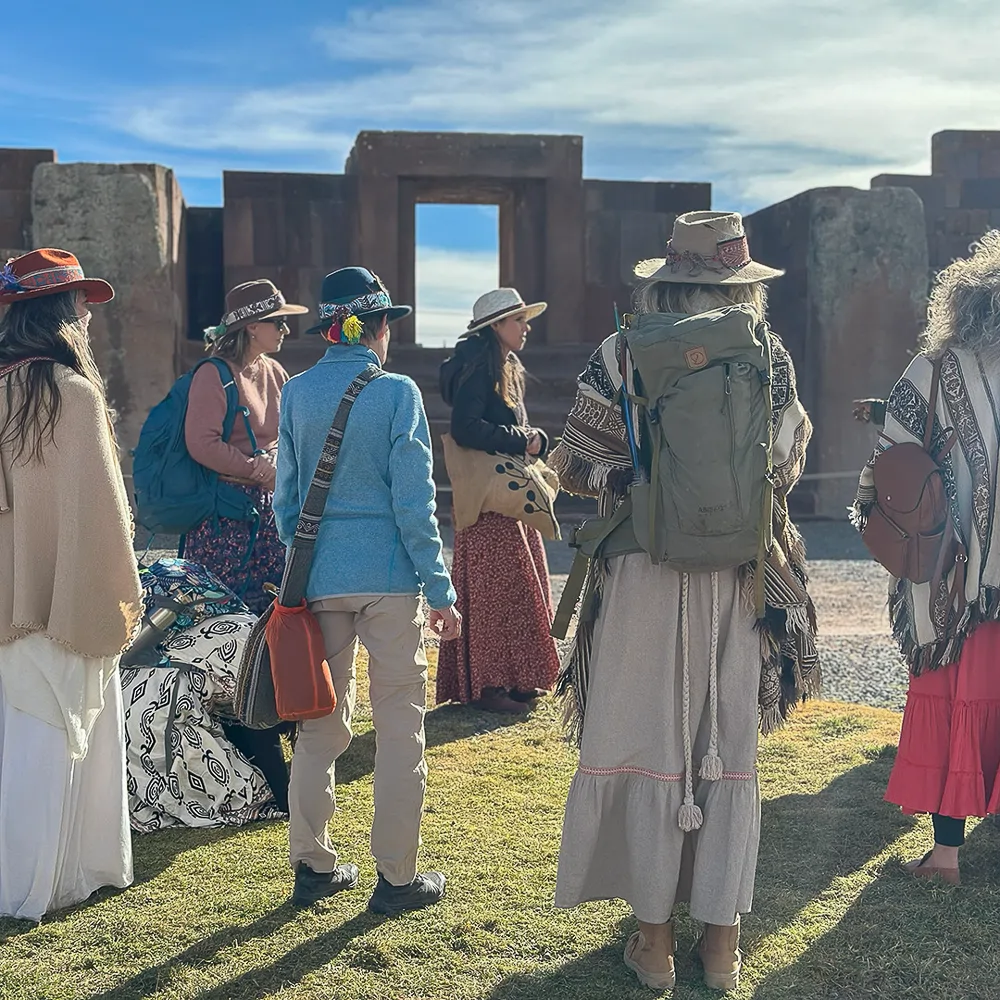
Twice a year, something extraordinary happens in the sky: the equinox in Peru. It’s a moment when day and night last exactly the same duration—a phenomenon that has captivated civilizations for thousands of years.
In Peru and throughout the Andean region, this event is far more than a seasonal change. It’s a sacred moment. It’s the instant when indigenous peoples honor the earth, renew their energies, and mark new cycles of life. For Incan and pre-Incan civilizations, the equinoxes represented crucial points in a cosmic calendar that governed everything that existed.
What makes the equinox so special? Why do thousands of years later still celebrate this event? And more importantly, what can we learn about ourselves in this moment of perfect balance?
This article takes you on a journey through three dimensions of the equinox: the science that explains it, the Andean tradition that honors it, and the spiritual meaning that transcends it.
Table of Contents
PART 1: THE EQUINOX FROM A SCIENTIFIC PERSPECTIVE
What Exactly Is the Equinox?
The word “equinox” comes from Latin aequinoctium, meaning “equal night” (aequus = equal, nocte = night). But this definition barely scratches the surface of what this phenomenon really is.
An equinox is a specific moment in the year when the Sun crosses directly over Earth’s Equator. At this precise instant, both hemispheres of Earth receive approximately the same amount of sunlight. This results in day and night lasting almost exactly the same: 12 hours each.
This occurs exactly twice a year:
- Spring Equinox (Southern Hemisphere): March 20-21
- Autumn Equinox (Southern Hemisphere): September 22-23
In Peru, located in the Southern Hemisphere, the spring equinox marks the beginning of warmer days and the flowering of nature. The autumn equinox signals the start of the colder period.
The Celestial Mechanics Behind the Equinox
To understand why this happens, you need to understand Earth’s axial tilt. Our planet doesn’t rotate perfectly vertical relative to its orbital plane around the Sun. Instead, it’s tilted approximately 23.5 degrees.
This tilt is responsible for our seasons. When the Northern Hemisphere is tilted toward the Sun, it receives more direct solar light (it’s summer there). Meanwhile, the Southern Hemisphere is tilted away (it’s winter). Six months later, the position reverses.
However, twice a year, during the equinoxes, both hemispheres are exactly “sideways” relative to the Sun. Neither is tilted toward it nor away. At this magical moment, the sun’s light touches the Equator perpendicularly.
A fascinating fact: The duration of daylight during an equinox isn’t exactly 12 hours. Due to atmospheric refraction (which “lifts” the solar disk above the horizon) and the Sun’s angular size, sunlight arrives a few minutes earlier than pure calculation predicts. This means that technically, the day is slightly longer than the night even during an equinox.
Exact Equinox Dates in Peru 2026
In 2025, the spring equinox will occur on Monday, September 22 at 19:19 UTC, although in Peru the celebration begins the day before to honor the transition.
The equinox doesn’t always occur on the same date because the Gregorian year (365.25 days) doesn’t perfectly match the tropical year (the time it takes Earth to complete one orbit around the Sun). This difference causes a gradual shift in the equinox date, oscillating between the 20th and 23rd of each month.
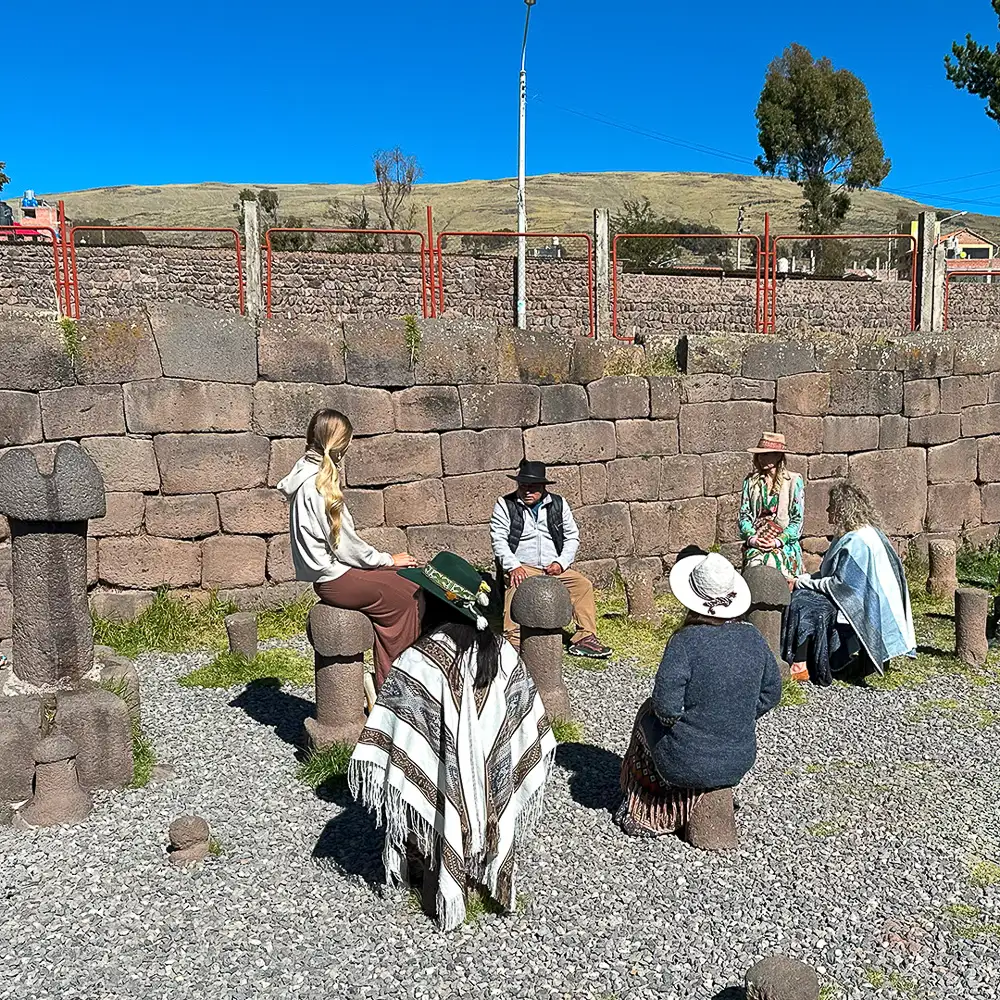
PART 2: THE EQUINOX IN ANDEAN TRADITION
The Andean Worldview of the Annual Cycle
For the indigenous peoples of the Andes, time is not linear. It doesn’t flow in a straight line from past to future. Instead, time is cyclical, like an eternally turning wheel. This wheel has four cardinal points, four sacred moments that correspond to the solstices and equinoxes.
These four moments are known as the Four Raymis (Raymis = festivals or celebrations):
- Pawkar Raymi – Spring Equinox (March)
- Inti Raymi – Winter Solstice (June)
- Killa Raymi – Autumn Equinox (September)
- Kapak Raymi – Summer Solstice (December)
Each of these moments marks an important transition in the agricultural and spiritual cycle of Andean communities.
Pawkar Raymi: The Festival of Flowering
Pawkar Raymi, celebrated in full splendor each March 20-21, is one of the four most powerful festivities in the Andean world. Its name comes from Kichwa and holds a fascinating visual poetry: Pawkar means “polychromia” or “many colors,” and Raymi translates as “festival” or “celebration.”
Why “many colors”?
When the spring equinox arrives in the Andes, the earth awakens from winter’s lethargy. The first flowers emerge from the soil. The first tender grains emerge. The fields fill with vibrant colors: red of wild flowers, yellow of emerging maize, white of blossoming fruit.
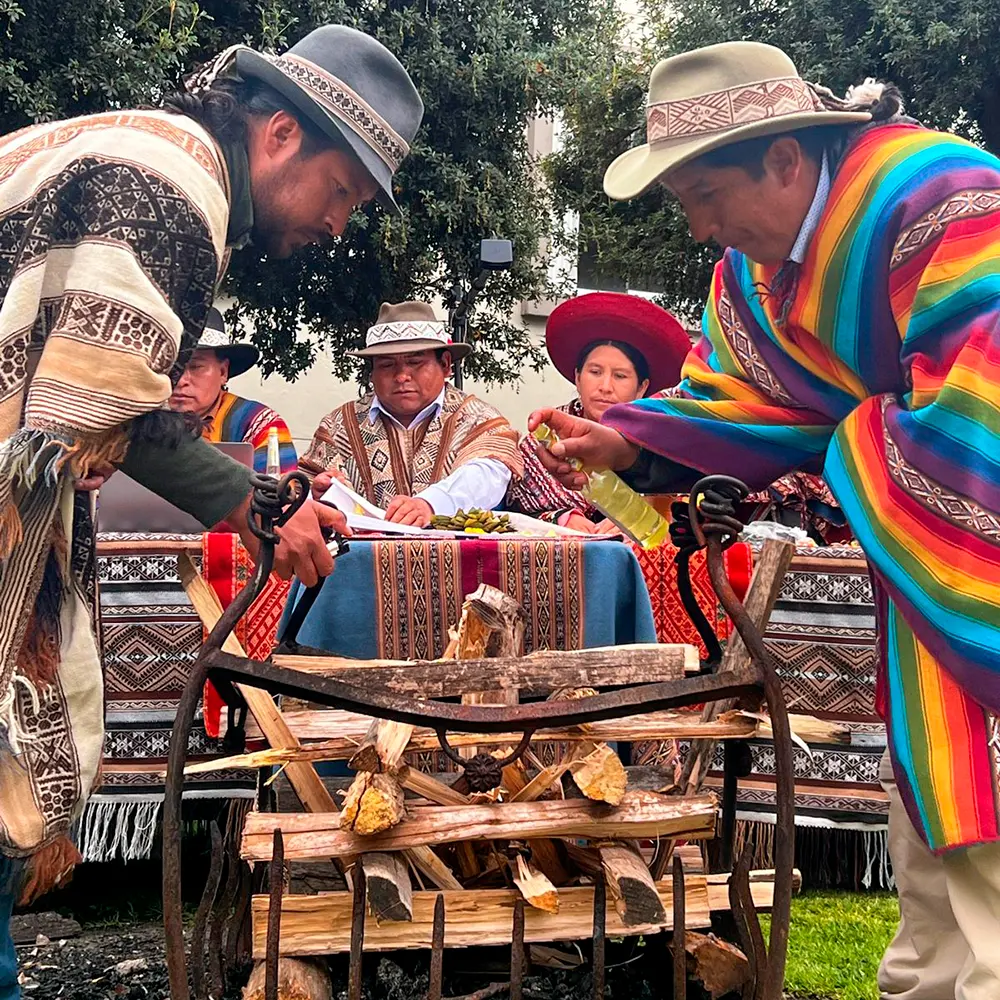
The celebration of Pawkar Raymi reflects this explosion of color. Communities gather wearing their finest traditional clothing, creating a spectacle of colors that represents the renewal of life. It’s a festival that highlights the renewal of nature and connection with the cycles of life and death. Communities celebrate the passage from childhood to adulthood, performing a kind of blessing of flowers and water related to the flowering of trees.
Pawkar Raymi Rituals:
- Water and Flower Blessing: A ceremony where water and flowers receive special blessings, symbolizing purification and rebirth.
- Ceremonial Circles: Communities gather in circles (representing the chakana, the Andean cross) to share energy and renewal.
- Sharing Food: The first fruits of the harvest are shared communally, reinforcing the bond with Pachamama (Mother Earth).
- Flowering Dances: Dances are performed that imitate the movement of flowers opening their petals.
Killa Raymi: Honoring the Moon and the Feminine
Killa Raymi, which occurs during the autumn equinox in September, is related to the moon and is an opportunity to honor it and connect with its feminine energy as a representation of the feminine.
If Pawkar Raymi celebrates the awakening of the Sun’s masculine energy, Killa Raymi honors the Moon’s feminine energy. This balance between the solar and lunar, masculine and feminine, is fundamental to Andean worldview.
During Killa Raymi:
- It’s the moment of the end of earth preparation and the beginning of planting, expressing gratitude to the moon and earth for their fecundity.
- The creative feminine capacity is honored, represented in the earth’s fertility.
- Women play special roles in the ceremony, reminding us that without the feminine there is no creation.
- Gratitude is expressed to Pachamama for her generosity during the harvest period that ends.
The Importance of Andean Reciprocity
In all these ceremonies runs a common thread: ayni (reciprocity). The Andean worldview is based on a fundamental principle: nothing is taken without giving something in return.
When Andean peoples celebrate the equinoxes, they’re not merely observing astronomical phenomena. They’re participating in a constant dialogue with nature. When they ask for a good harvest, they give something in return: their gratitude, their work, their care for the earth.
This reciprocal relationship maintains balance. That’s why each Raymi is both a celebration and a responsibility: the moment to remember that we’re part of nature, not separate from it.
PART 3: THE SPIRITUAL MEANING OF THE EQUINOX
The Equinox as a Symbol of Universal Balance
Beyond astronomy and tradition, the equinox has profound spiritual meaning that resonates across nearly all human cultures. Why?
Because the equinox represents something we all experience internally: balance between opposing forces.
It represents balance, renewal, and a new energetic beginning at both personal and collective levels. At the equinox, light and darkness don’t struggle for dominance. They meet in perfect harmony. Each exists in its full measure, without eclipsing the other.
Spiritually, this translates to:
- Internal Light and Shadow: We all carry within us a luminous part (our virtues, capacities, light) and a dark part (our fears, limitations, shadow). The equinox invites us to integrate both, to accept that we need both light and shadow to be whole.
- Action and Contemplation: Winter is introspective; summer is active. The equinox is the bridge where we can find the balance between doing and being.
- Masculine and Feminine Energy: Every person, regardless of gender, contains both energies. The balance of the equinox reminds us to honor both.
- Mind and Heart: Our rational side (mind) and our emotional/intuitive side (heart) can function together in harmony.
The Equinox as a Point of Transformation
It’s a moment to plant new intentions, balance emotions and energy, and allow ourselves to begin different cycles with greater clarity.
Here lies the magic of the equinox: it’s not just a moment of pause, but of transformation.
During winter, energy is concentrated, stored, introspective. During summer, it’s expanded, expressed, projected outward. At the equinox, when these two forces meet in balance, there’s an open space for change.
It’s as if the door between two rooms opens completely on both sides. It’s the perfect moment to:
- Release the Old: That which no longer serves you, patterns you’ve outgrown, relationships or beliefs that have become restrictive.
- Receive the New: New intentions, new purposes, new directions in life.
- Integrate Learnings: Everything you learned in the previous cycle can now be integrated and transformed into wisdom.
Spiritual Practices for the Equinox
If you wish to work with equinox energy, here are some practices that many traditions recommend:
1. Meditation for Balance
Sit in a quiet place during the equinox. Visualize a horizontal line crossing your body. On one side, the sun’s light. On the other, the moon’s darkness. Allow both to balance within you. Feel how this harmony fills you.
2. Release and Receive Ritual
Write on one piece of paper what you wish to release (an emotion, a belief, a situation). Then, write on another piece what you wish to receive. Burn the first in a candle as a symbol of transformation. Plant the second in soil.
3. Ritual Bath
Take a bath with sea salt and flower petals. As the water touches your skin, visualize it carrying away everything you don’t need and bringing new renewing energy.
4. Walk in Nature
Walk barefoot in the earth during the equinox if possible. Feel your connection with Pachamama. Rest under a tree and feel its ancient and wise presence.
5. Create an Equinox Altar
Create a sacred space with candles (one white for light, one black for darkness), fresh flowers, crystals (clear quartz for clarity), and harvest fruits. This altar represents your intention of balance and transformation.
PART 4: THE EQUINOX IN THE PERUVIAN EXPERIENCE
How the Equinox Is Celebrated Today in Peru
Although ancestral Andean ceremonies have been transformed over time, Peru still honors the equinox in meaningful ways.
In March (Spring Equinox):
- Youth Day is celebrated coinciding with the entry of spring, symbolizing renewal and new beginnings.
- The International Spring Festival in Trujillo fills the city with color, music, and dance.
- In rural communities, blessing rituals for seeds and fields are performed.
In September (Autumn Equinox):
- Though less prominent than June’s Inti Raymi, many Andean communities perform ceremonies of gratitude for harvests.
- Offerings are made to Pachamama in sacred places.
Traveling to Peru to Experience the Equinox
If you wish to live the equinox experience in Peru, you have options:
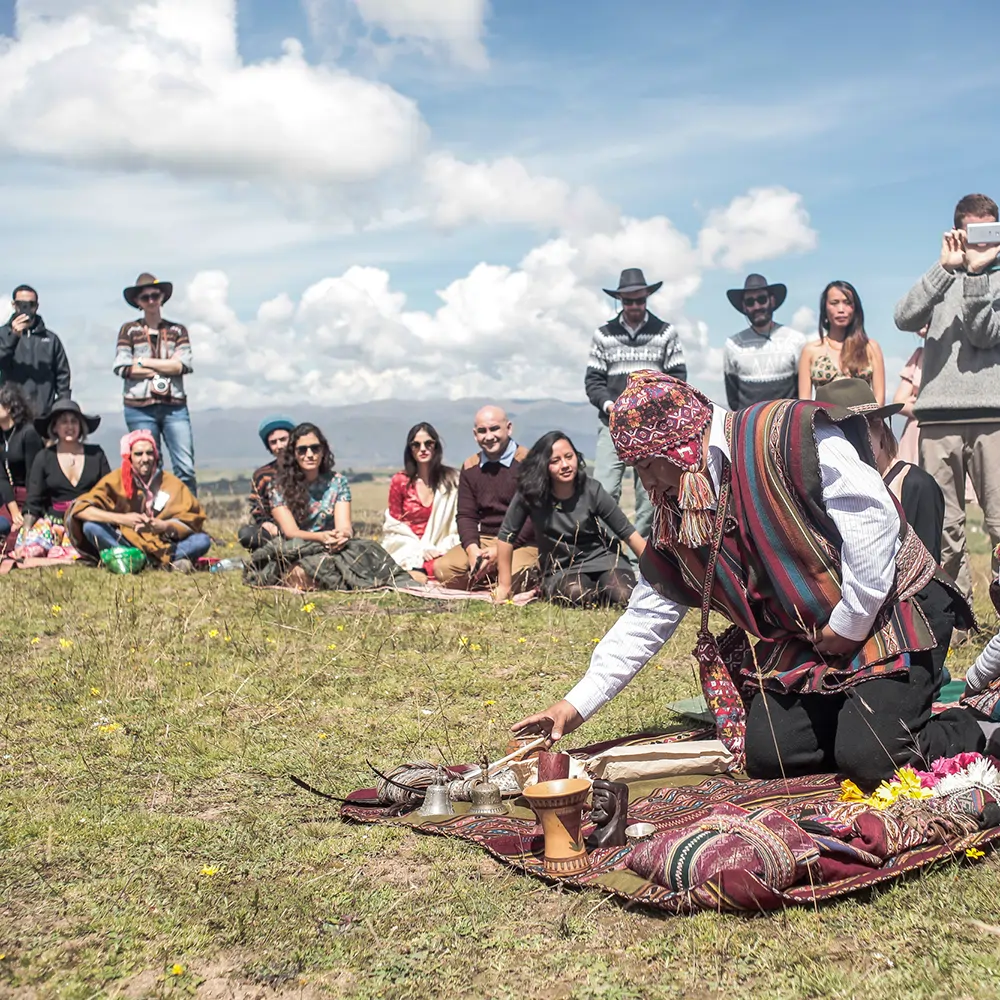
Option 1: Cusco and the Sacred Valley Cusco is the heart of Andean tradition. During the equinoxes, you can participate in rituals at ancestral sites like Sacsayhuamán. Many shamans and facilitators offer special ceremonies during these dates.
Option 2: Machu Picchu Machu Picchu opens its gates during the equinoxes with special energies. There are moments where the sun illuminates the Incan temples perfectly, reminding us of the astronomical precision of the Incas.
Option 3: Rural Andean Communities If you’re adventurous, you can connect with rural communities in places like Ollantaytambo or Pisac, where ancestral celebrations occur without massive tourist influence.
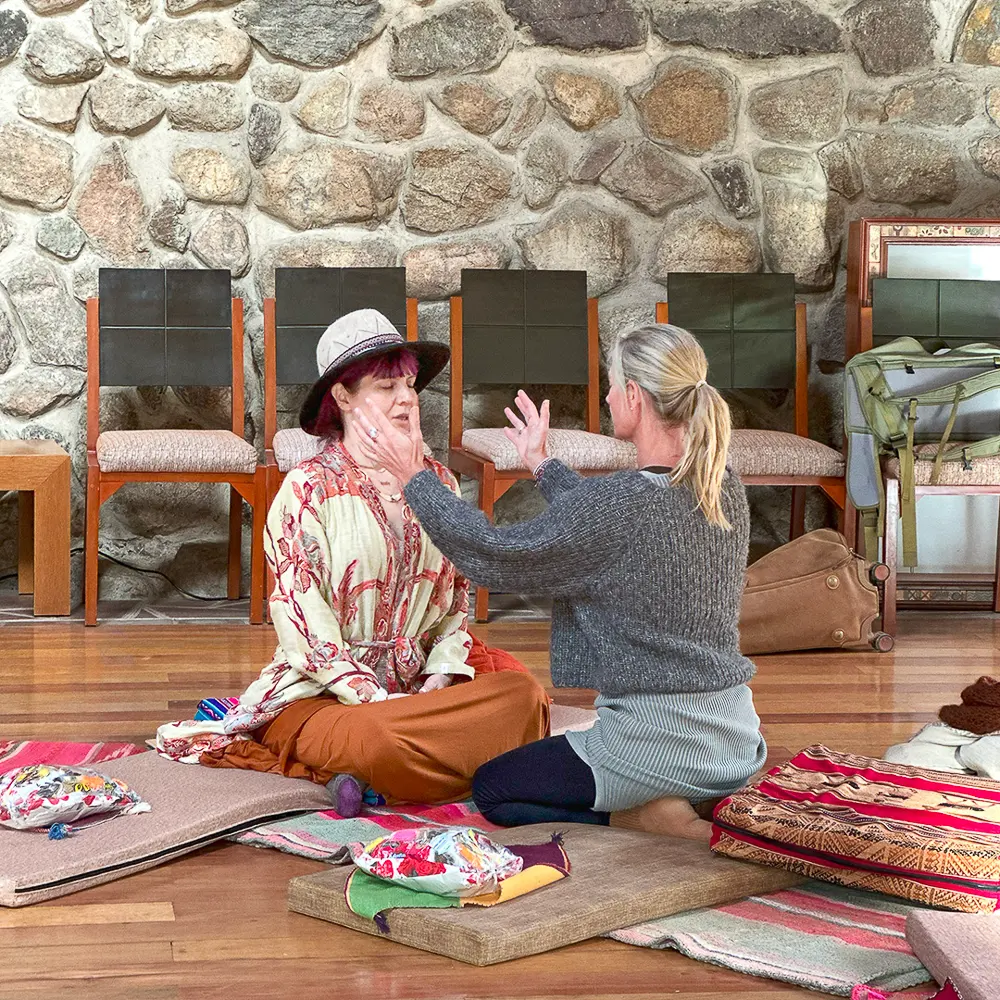
Option 4: Spiritual Retreats Many facilitators offer special equinox retreats that combine traditional Andean ceremony with modern spiritual practices such as yoga and meditation.
PART 5: PERSONAL INTEGRATION: WORKING WITH EQUINOX ENERGY
The Equinox Is Not Only External, It’s Internal
Here’s the most important part: while we celebrate the equinox in the sky, we also celebrate it within ourselves.
Your body responds to cosmic cycles. Your pineal and pituitary glands (sometimes called the “master gland” of the body) respond to sunlight. Your nervous system is regulated according to circadian rhythms. Your complete biochemistry is affected by the seasons.
At the equinox, when day and night are equal, your body receives a signal: “It’s time for balance”.
How to Harness This Energy in Your Life
In Your Health:
- Adjust your sleep toward 12 hours of sleep/12 hours of wakefulness.
- Eat foods that reflect the season: spring = fresh fruits and vegetables; autumn = corn and root harvests.
- Practice balanced physical activity: neither extreme exhaustion nor sedentariness.
In Your Emotions:
- Seek balance between your work and rest.
- Balance your alone time with community time.
- Cultivate spring’s optimism without denying periods of introspection.
In Your Spirituality:
- Perform rituals that honor balance.
- Review your year’s intentions: are they aligned with your true essence?
- Seek mentors or facilitators who can guide your transformation process.
CONCLUSION: THE EQUINOX AS A MIRROR
The equinox is much more than an astronomical phenomenon. It’s a mirror where you can see yourself reflected in the universe. It’s a reminder that we’re not separate from nature, but deeply connected to it.
Each equinox, during those moments when day and night last exactly the same, the universe whispers a message to us:
“You too can find balance. You too can transform. You too can flourish.”
The Andean peoples knew this for thousands of years. They celebrated each equinox not as mere observers of a cosmic event, but as active participants in the eternal drama of renewal and transformation.
Today, you too can join this ancestral celebration. You don’t need to travel to Machu Picchu or Cusco. You don’t need to perform complicated rituals. You just need to recognize the moment, honor its meaning, and allow it to change you.
The equinox returns each year. Each time, it will bring the opportunity to begin anew, to find balance, to flourish. All you need is to be present.
Questions about the equinox in Peru or your spiritual experience?
Contact us:
📧 travel@pumadventures.com
📱 +51 987 555 135
🌐 https://www.pumadventures.com/