Private vs Group Ceremony in Cusco: How to Choose
 By PumAdventures
The question arrives in our inbox almost weekly, and it is usually phrased as though the answer were obvious: is the private ceremony better?
It costs more, so people assume it must be. And a lot of operators are happy to leave that assumption alone, because the private booking is the easier sale.
Here is the straight answer, and it will save you money in some cases and change your trip in others. Private is not automatically better. It is different, and for a first ceremony it is sometimes the worse choice.
But before any of that is useful, the private vs group ceremony question needs reframing, because on our side of it the comparison people imagine is not the comparison that actually exists.
Table of Contents
What You Are Actually Choosing Between
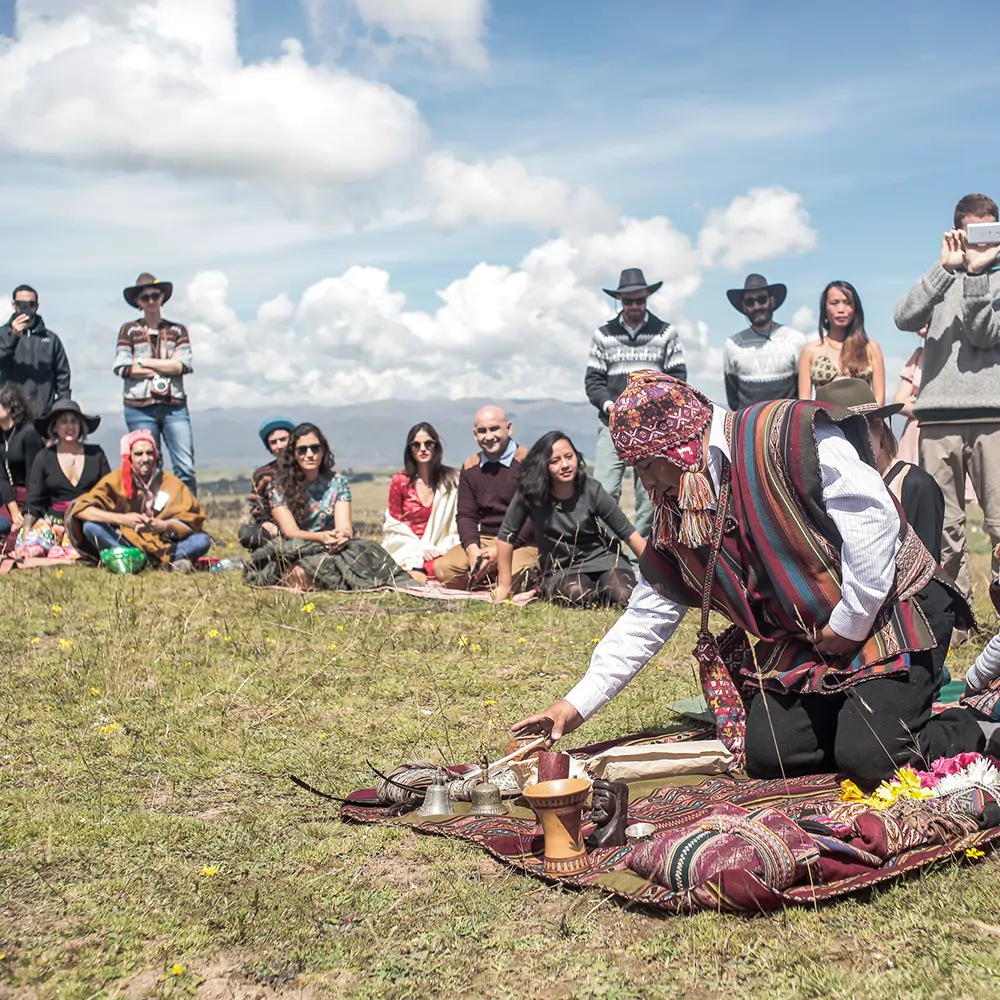
Most writing on this subject assumes two products: a cheap ceremony with fifteen strangers, and an expensive ceremony with just you. That is how some centres in Iquitos and Pisac operate. It is not how we do.
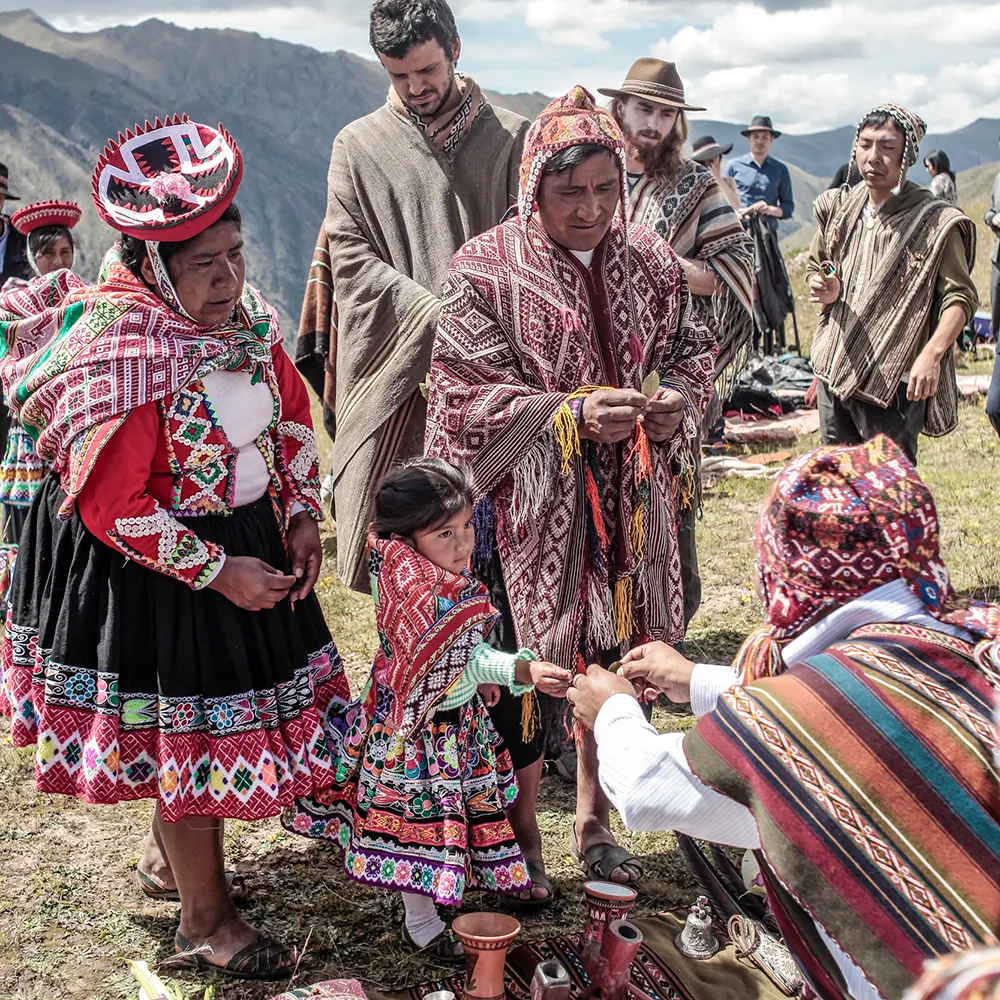
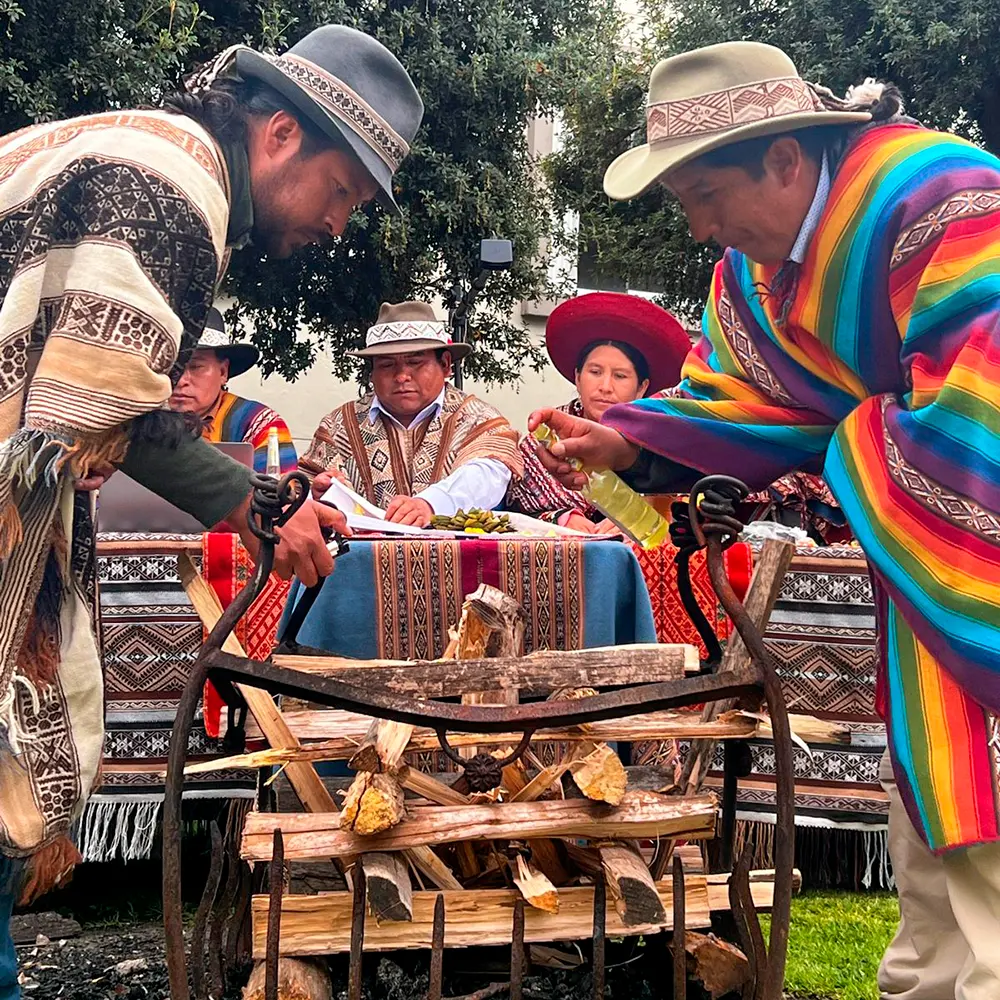
Our single ceremonies are already private. Book the ayahuasca ceremony and what you get is one exclusive ceremony with one-to-one guiding and support — from $450 per person, with a listed group size of two and solo travellers quoted individually. The wachuma ceremony at Quillarumiyoq runs the same way, from $250 per person. So does the Pachamama despacho in Chinchero, from $350, and the coca leaf reading, from $70, which is listed for one person because that is what it is.
You will not be put in a maloca with strangers on any of those. That is the default, not an upgrade.
So the real choice is this:
| A private single ceremony | A fixed-date group retreat | |
| Who is there | You, or you and whoever you brought | 8 to 15 people, most of them strangers |
| How long | A few hours to a full day | 7 to 12 days |
| What it includes | One ceremony, transport, the maestro, integration the next morning | Accommodation, several ceremonies, sites, meals, the whole arc |
| From | $70–$450 per ceremony | $1,950 upwards for the journey |
| Dates | Yours | Set, and they sell out |
| Where | Private ceremonies | Join a Journey |
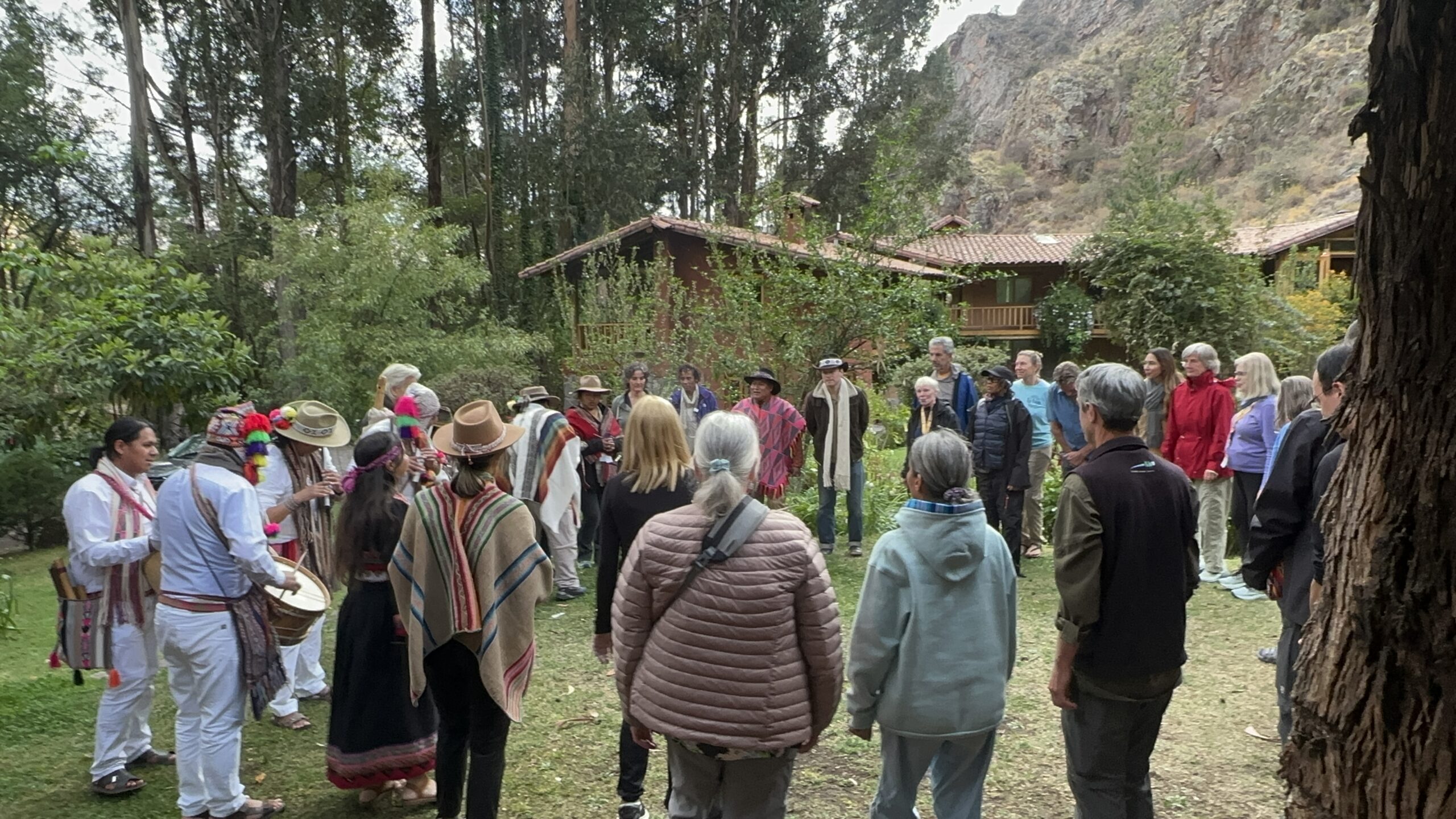
Our fixed departures run between eight and fifteen spaces each — the Mesa Retreat, the Sacred Solstice, the Pachamama Immersion, the Equinox Journey. Seven to twelve days, with ceremony sitting inside a longer programme rather than standing alone.
And there is a third thing, which confuses people and shouldn’t: our group retreats page is not about joining strangers at all. It is for people who arrive with their own group — a yoga teacher bringing students, a family, a circle of friends — and want a journey built around them. That is a private experience with more people in it.
So when someone asks whether to go private or group, the honest first question back is: do you mean “alone with the maestro” or “inside a longer journey with other travellers”? They are completely different decisions.
What a Group Genuinely Gives You
This is the part that gets flattened into “community vibes,” which does it no justice. There are four specific things a group provides that a private ceremony structurally cannot.
Other people’s material
You hear what happened to someone else, and it reorganises what happened to you.
The morning circle after a group ceremony is, for a lot of people, where the night finally makes sense — not because a facilitator explained it, but because a stranger described something adjacent to their own experience and the shape of it became visible.
This is not a soft claim. In a systematic review of psychedelic-assisted group therapy published in the Journal of Psychoactive Drugs in 2019, Trope and colleagues noted something telling: participants in modern individual psychedelic trials have asked to meet one another. People who went through it alone, in clinical conditions, with professional support, still wanted contact with others who had been there. The authors suggest group contact may help validate intense experiences.
If the people with the best available support still want that, it tells you something about what solitude costs.
The relief of not being the only one in the room
Nobody mentions this and it matters enormously.
In a private ceremony, all of the attention is on you. For some people that is exactly right. For others it is a weight — a sense of being observed, of having to produce an experience, of the maestro and the facilitator both watching and waiting.
In a group, the attention is distributed. You can have a quiet, uneventful, inward night without anyone leaning in to check how you are doing every twenty minutes. A surprising number of people find that easier.
Continuity
A retreat gives you days, not hours. Acclimatisation, a reading, a despacho, a ceremony, an empty day, another ceremony, integration — with the same people, in the same place, in sequence.
That arc is the thing a single ceremony cannot deliver at any price. Our guide to the seven-day spiritual itinerary in Cusco explains why the spacing between ceremonies matters more than the number of them, and a fixed-date journey is that spacing built in rather than assembled by you.
The people
Half the letters we get years later mention someone the sender met on a retreat. That is not a selling point we engineered. It is just what happens when a dozen people go through something at the same time.
What a Private Ceremony Genuinely Gives You
Equally specific, and the reasons are mostly practical rather than romantic.
- Your questions, at length. Nobody else is waiting. You can ask the maestro the thing you were embarrassed to ask, twice, and get an answer through the translator rather than a nod.
- The pace moves to you. A despacho that wants to take four hours takes four hours. In a group, the schedule has fifteen other people in it.
- Your intention shapes the preparation. This is the most underrated part of the private format. What you tell us beforehand changes what the maestro prepares — which elements go into the despacho, which Apus are named, what the ceremony is actually for. In a group, the intention is collective and yours sits inside it.
- Privacy about your own history. If you are carrying a bereavement, a diagnosis, a medication history or a marriage that is in trouble, you may not want to narrate any of it to eleven strangers in a sharing circle. That is a completely legitimate reason to go private, and it is the reason we hear most often from people over fifty.
- Your dates. The fixed departures are fixed. If you have nine days in March and the Mesa Retreat departs in April, a private sequence is your only route.
- And if groups are hard for you. Social anxiety is real and ceremony does not suppress it — it tends to amplify whatever you walked in with. Someone who finds a circle of strangers effortful at the best of times should not test that theory in an altered state at 3,700 metres.
The Money, Stated Plainly
Two things here that providers tend to leave vague.
- A private ceremony is not the premium product it sounds like. At $250 for a full-day wachuma ceremony or $450 for an ayahuasca night, the single private ceremony is by far the cheaper way in. The group retreat, at $1,950 and up, is the larger purchase — because it is twelve days of accommodation, transport, sites, meals and several ceremonies, not because the ceremony inside it is better.
- This matters for how you read our advice. When we recommend a retreat over a single ceremony, we are recommending the more expensive option, and you should weigh that accordingly. When we recommend a single private ceremony over a retreat — which we do often — we are talking ourselves down from several thousand dollars to a few hundred. Both of those happen weekly.
- The solo traveller surcharge is real, and nobody warns you. Several of our ceremony rates are published per person on the basis of two travellers. One person booking alone is not half of two people — the transport, the maestro, the site and the day are the same — so a solo booking is quoted individually and comes out higher per head than the listed figure.
That is not a markup for being alone; it is arithmetic. But it is worth knowing before you build a budget off a starting price. The coca leaf reading is the exception, listed for one at $70 and available at your hotel or online.
For the full breakdown of what shifts these numbers, our guides to San Pedro ceremony costs in Cusco and what an ayahuasca retreat costs in Peru go line by line.
Private vs Group Ceremony: When We Recommend Each
The useful version of this article. These are the actual calls we make.
We recommend the group retreat when
- It is your first time with a plant medicine and you have the days. The container, the other people, the morning circles and the pacing all work in your favour, and the review evidence points the same way.
- You are travelling alone and want to not be alone. A fixed departure solves that in a way a private ceremony cannot.
- You want several ceremonies. Properly spaced, over days, which is hard to assemble yourself and easy inside a built itinerary.
- You are drawn to a specific tradition rather than a specific substance. The Mesa Retreat and the oracle and Pachamama journeys are structured teaching, not a ceremony with extras.
- The date is the point. Solstice, equinox, the first of August. Those departures exist because the calendar matters.
We recommend the private ceremony when
- You have two or three days, not twelve. Most visitors are in this position, and a single well-held ceremony with a quiet day after it beats a compressed retreat.
- You are a couple. Doing ceremony alongside a partner changes it, and that deserves its own treatment — our guide to a spiritual retreat for couples in Peru covers what works together and what is better done apart.
- You are carrying something specific. A loss, a decision, a diagnosis. Private lets the ceremony be built around it.
- Groups cost you energy rather than giving it. Trust yourself on this.
- You want the non-psychoactive ceremonies. A coca reading and a despacho are the two most accessible things we offer, they carry no pharmacological contraindications, and both are naturally intimate.
- Your dates don’t match ours. The simplest reason, and the most common.
The combination that the evidence quietly favours
One detail from Trope and colleagues’ review is worth lifting out. Among the studies they catalogued, one reported that the best short- and long-term outcomes came from patients who had individual sessions followed by group therapy.
A single study, in a review the authors themselves describe as hypothesis-generating rather than conclusive. But the shape of it matches what we see: the ceremony held privately, the integration shared.
In practice that looks like a private ceremony with the next-morning integration circle, or a private sequence of a few days that ends with you in Cusco talking to other people who have been through it. If you have the time, that is the arrangement we would build.
If It Is Your First Time
Since this is the question underneath most of the others, here is the direct answer.
With ten days or more: take the group retreat. You will get more out of a first ceremony inside a container than out of a first ceremony standing alone, and you will have people to compare notes with the next morning.
With fewer than five days: take a private ceremony, and don’t try to fit two in. One well-spaced ceremony with a clear day after it. Start with the coca reading on your second day if you can — it costs your body nothing while you acclimatise and it tends to sharpen a vague intention into a specific one.
And a first ceremony should probably be wachuma, not ayahuasca. Daytime, outdoors, warm, lucid, with an exit available. We go into the ordering in the seven-day itinerary.
What to Ask Any Operator, in Either Format
The format matters much less than the answers to these.
How many facilitators per participant? In a group of fifteen with two facilitators, the maths of who can be helped at three in the morning is simple and unforgiving. Ask for the number.
Who else is in the room, and were they screened? You are sharing a night with these people. Their contraindications affect your night too.
What is the screening process, and will you turn people away? An operator who has never declined anyone is not screening. We do decline people, and our retreat safety page sets out the protocol.
What happens medically if something goes wrong, and how far is the hospital? Specifically, by road, at night.
Who is the maestro, and where are they from? The only credential that means anything in this field is who vouches for someone in their own community. Ours are named on our team page, with their communities.
Our guide to choosing a safe ayahuasca retreat in Peru is the longer version of this list.
One trap worth naming. Some visitors assume a private ceremony means a lighter touch on the rules — that screening is a group-management problem and a one-to-one booking can be more flexible. It is the opposite. A private ayahuasca ceremony puts you alone in an altered state with a small team and no other participants around, which raises the standard rather than lowering it.
The Responsibility Part
Honest regardless of which format you pick.
Ayahuasca and wachuma are psychoactive and carry real physical and psychological risk. Cardiac conditions, uncontrolled hypertension, epilepsy, pregnancy and breastfeeding, and a personal or family history of psychosis, schizophrenia or bipolar disorder are exclusions, not formalities. Minimum age is 18.
Medication is where most of the risk sits. Serotonergic antidepressants — SSRIs and SNRIs — are incompatible with ayahuasca’s MAO-inhibiting alkaloids. Lithium is an absolute exclusion. Tramadol, triptans, stimulants, St John’s Wort and some cough remedies all matter. Any change to a prescribed medication must be planned and supervised by the doctor who prescribed it, months in advance — never by us, and never on your own. Our page on who should not drink ayahuasca has the full list.
Every participant completes a health screening before we confirm a booking, in both formats. Please do not conceal a medication because you are afraid of being turned away; that is the single most dangerous thing you can do here, and there is often a workable path that starts with the truth.
Altitude is its own risk. Ceremony sites around Chinchero sit at roughly 3,762 m. Allow days to acclimatise, and consult your own physician before travelling to high altitude or participating in any plant ceremony, particularly if you take prescribed medication.
And if neither format is available to you on medical grounds — the coca leaf reading and the despacho carry no such restrictions. Coming to the Andes and not drinking anything is not a failed trip. Our full range of ceremonies shows what else the tradition holds.
Frequently Asked Questions
-
Is a private ceremony better than a group one?
Not automatically. Private gives you attention, pacing, privacy about your own history and your own dates. A group gives you other people’s experience, a distributed sense of attention, continuity over days, and company. For a first plant ceremony with time available, the group container often serves people better.
-
Will I be put in a ceremony with strangers if I book a single ceremony?
Not with us. Our single ceremonies are already exclusive to you and whoever you book with. Strangers come into it only on the fixed-date journeys.
-
How many people are in your group retreats?
The fixed departures run between eight and fifteen spaces.
-
Is a private ceremony more expensive?
Per ceremony it is the cheaper route — from $250 for a full-day wachuma ceremony or $450 for an ayahuasca night, against $1,950 and up for a multi-day journey. The retreat costs more because it is many days and many elements, not because the ceremony in it is better.
-
Does a solo traveller pay more?
Usually yes. Several rates are published per person based on two travellers, and the transport, maestro and day cost the same whether one person or two attends, so solo bookings are quoted individually. The coca leaf reading is listed for one person.
-
Can I bring my own group?
Yes — that is what our group retreats page is for. A journey built for the people you arrive with, which is a private experience with more people in it.
-
What if my dates don’t match a fixed departure?
Then a private sequence is the answer. Most of our guests are in exactly that position.
-
Is a group ceremony safer because other people are there?
No, and the reasoning runs the other way. Safety comes from screening, facilitator ratios and a medical plan. A larger group means more people per facilitator, which is a question to ask rather than an assumption to make.
-
Is a private ceremony screened less strictly?
No. If anything the standard is higher, because you are alone in an altered state with a small team.
-
Can couples do a private ceremony together?
Yes, and it is one of the formats private suits best — though some ceremonies work better done separately even for a couple travelling together.
-
What should a first-timer with only three days do?
A coca leaf reading on day two, a single private ceremony on day three or four, and a quiet day after it. Not two plant medicines, and not a flight the next morning.
How We Would Decide
If you have twelve days and it is your first time, take a fixed departure and let the arc do the work.
If you have four days, book one private ceremony, leave the day after it empty, and resist the temptation to add a second. If you are carrying something you would not say out loud in a circle, book private regardless of how long you have.
And if you cannot tell which of those you are, say so when you write to us. That is a perfectly good opening message, and it is a better place to start from than a format you picked off a price list.
Tell us your dates and what you are hoping for, and we will tell you which one we would put you in — including when that is the cheaper option.
Prices quoted are published starting rates at the time of writing, generally per person and in several cases based on two travellers; they change and should be verified on the relevant ceremony page. Ayahuasca and wachuma are not treatments for any medical or psychiatric condition. Participation requires honest health disclosure, is subject to screening, and is undertaken on the basis of informed personal responsibility. Consult your physician before travelling to high altitude or participating in any plant ceremony. Tour operators in Peru are regulated through MINCETUR; ask any provider for their registration. Research cited: Trope et al., Psychedelic-Assisted Group Therapy: A Systematic Review, Journal of Psychoactive Drugs 51(2), 2019 — a hypothesis-generating review, not a basis for clinical claims.