Andean Wedding Locations in the Sacred Valley: Seven Places, Honestly Compared
 By PumAdventures
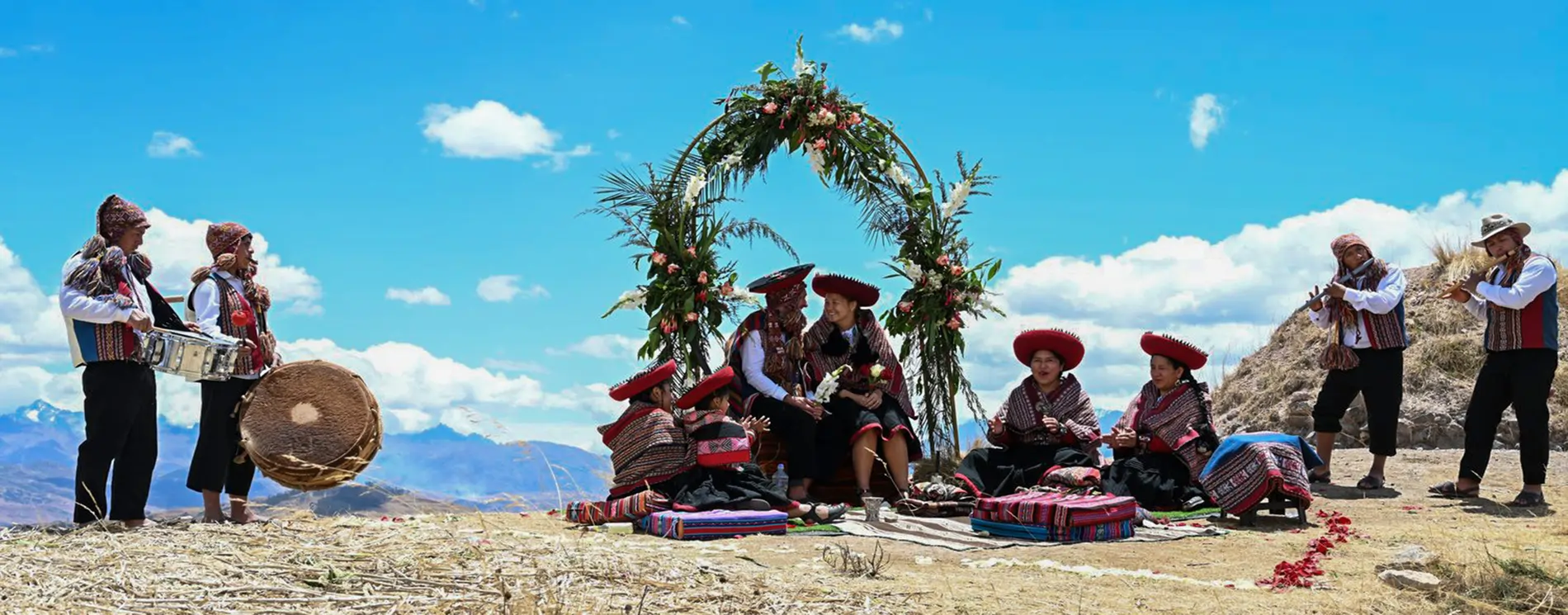
Most couples choose where to marry in Peru from a photograph. It’s understandable — the Sacred Valley photographs extraordinarily well, and one image of terraces at golden hour will do more persuading than any brochure.
It’s also how people end up asking a seventy-year-old parent to stand at 4,600 metres, or booking a site where the sun vanishes behind a mountain wall at four in the afternoon, or planning a ceremony inside a protected archaeological park where amplified music and gatherings simply aren’t allowed.
The good Andean wedding locations Sacred Valley are decided by three unglamorous things: altitude, permissions, and light. Get those right and almost any of these places will give you a day you remember. Get them wrong and no amount of scenery rescues it.
Below are seven real options, with the numbers that matter for each — elevation, drive time, what the site means in Andean cosmology, who can legally hold a ceremony there, when the light is good, and how many guests it will actually hold.
Table of Contents
Three Things That Decide Your Location Before Aesthetics Do
Altitude, and where your guests can actually breathe
Cusco sits at 3,399 m. Counterintuitively, the Sacred Valley floor is lower — Urubamba at 2,871 m, Ollantaytambo at 2,792 m, Pisac at 2,972 m. Descending into the valley is one of the kindest things you can do for anyone who arrived two days ago.
But not all of the region is “the valley floor.” Chinchero sits on a high plateau at around 3,760 m — higher than Cusco. Moray is at 3,385 m. Huaypo lake is at 3,507 m. And the Ausangate viewpoints are in an entirely different category, above 4,500 m.
The practical rule: the higher the site, the more acclimatisation days your guests need beforehand, and the shorter the ceremony should be. Our 7-day itinerary explains the acclimatisation logic in detail; it applies just as much to a wedding as to a ceremony week.
Permissions — and the difference between a park and a field
This is where couples get caught out, and where cheap operators quietly cut corners.
Chinchero, Moray, Ollantaytambo and Pisac are protected archaeological parks administered by the Dirección Desconcentrada de Cultura de Cusco. The official rules for Chinchero’s park give you a sense of the regime: visiting hours of 7 AM to 6 PM, no food or alcohol on site, no unauthorised drones, and commercial photography or filming requiring explicit DDC authorisation.
Read that list against a wedding. Champagne toast? Not inside the park. Live musicians? Not without authorisation. Drone footage of the two of you? Requires a permit obtained in advance, by someone.
Which is why almost every legitimate ceremony in these places happens on community or private land adjacent to the site, not inside the protected perimeter — with the ruins as backdrop rather than venue. Any operator who is vague about this distinction is telling you something.
Huaypo and Maras are the exceptions, and it’s the single most useful thing in this article: neither is an archaeological park, which makes both dramatically simpler.
Light — the valley eats your afternoon
Cusco is at 13.5° south, so day length barely changes: sunrise moves between roughly 5:20 and 6:10, sunset between 17:30 and 18:15 across the year.
The catch is that in June and July — peak wedding season — the sun sets at about 5:30 PM, and in the narrow parts of the valley it disappears behind the ridgeline well over an hour before that. In Ollantaytambo, hemmed in by steep walls on both sides, direct light can be gone by mid-afternoon in winter.
On the open plateau — Chinchero, Maras, Huaypo — you keep the light much longer and get a real golden hour.
Plan the ceremony for late morning. An 8 AM pickup from Cusco puts you on site around 9:30 with soft light, a full ritual sequence finishing early afternoon, and photographs before the valley starts closing down.
The Seven Andean Wedding Locations in the Sacred Valley at a Glance
| Location | Altitude | From Cusco | Protected park? | Comfortable guests |
| Chinchero | ~3,760 m | 45–60 min | Yes (adjacent land used) | 2–20 |
| Laguna de Huaypo | 3,507 m | ~1 hr (44 km) | No | 2–40 |
| Moray | 3,385 m | ~1 hr 15 | Yes | 2–10 |
| Maras | ~3,300 m | ~1 hr 15 | No (salt pans communally managed) | 2–15 |
| Ollantaytambo | 2,792 m | ~1 hr 45 | Yes | 2–15 |
| Pisac | 2,972 m | ~1 hr | Yes | 2–15 |
| Ausangate viewpoints | 4,500 m+ | 3+ hrs | No | 2–4 |
1. Chinchero — The Birthplace of the Rainbow
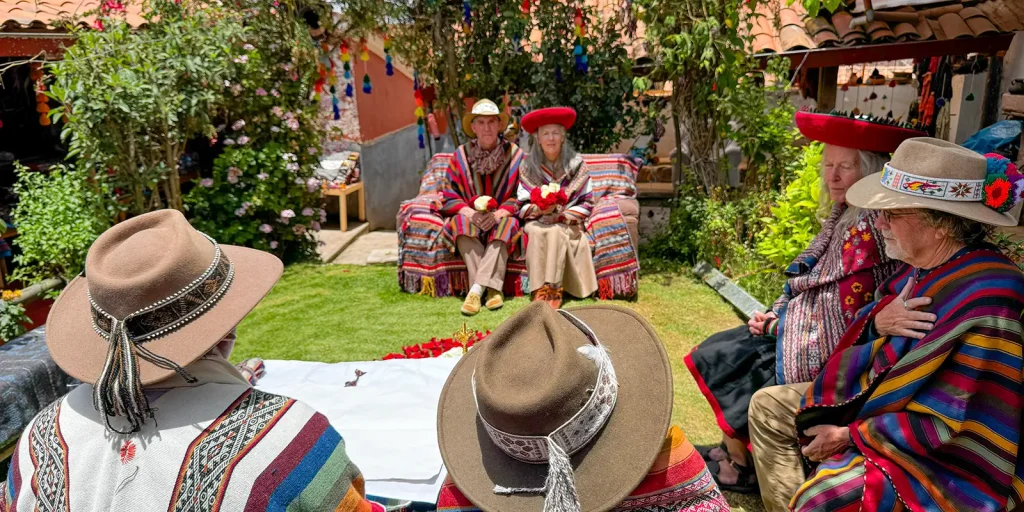
What it means. Chinchero is known in Andean tradition as the place where the rainbow was born, and its weaving lineage has carried Quechua cosmology in textile form for centuries. Our article on Chinchero goes deeper into why the village holds the position it does. Distantly it looks toward Apu Salkantay, and the themes traditionally associated with it — creativity, heritage, cosmic memory — sit naturally with a marriage.
The numbers. Around 3,760 m. Forty-five minutes to an hour from Cusco on good road. The archaeological park covers 43 hectares and opens 7 AM to 6 PM.
Permits. Ceremonies take place on community land, arranged with the community, rather than inside the park. This is normal practice and it is how it should be done.
Light and season. Open plateau, wide sky, long light in both directions. April to October is the dry season; June and July give the clearest skies and the coldest mornings. Late morning is ideal.
Guests. Two to twenty comfortably.
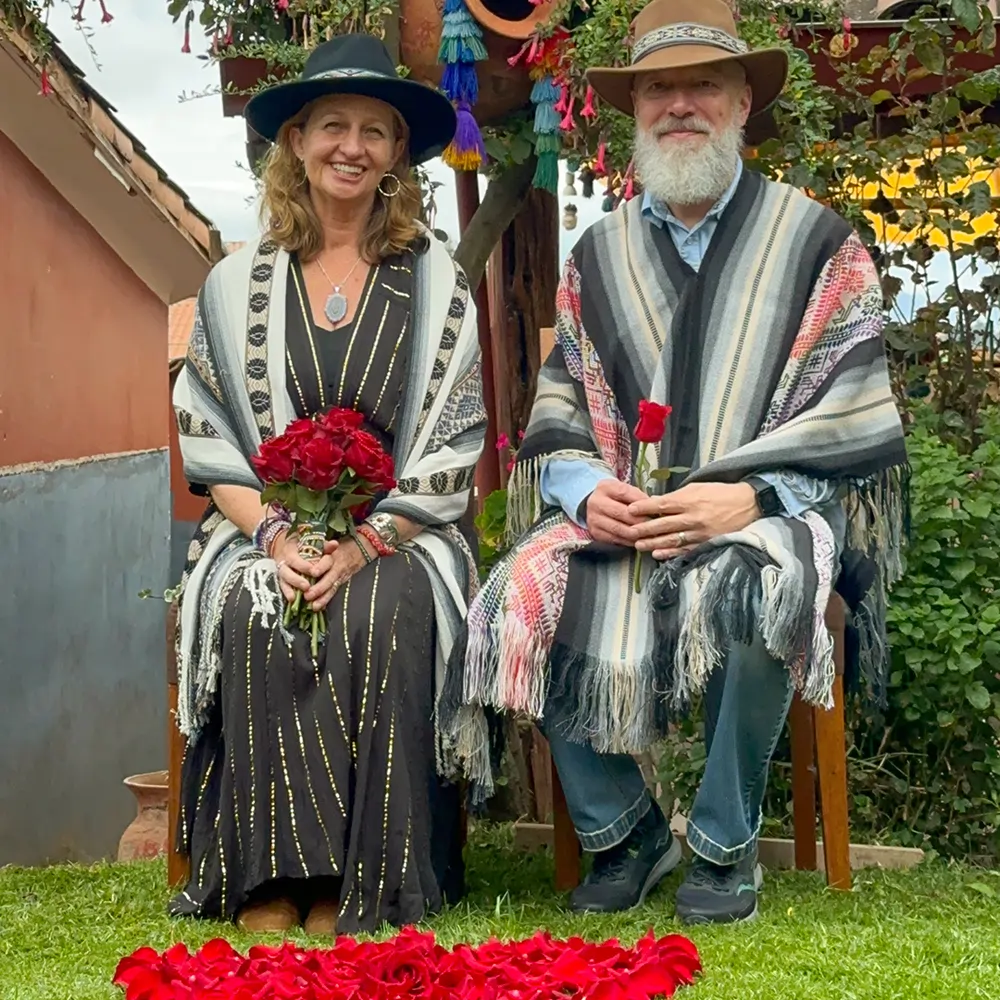
Our honest view. This is where our own ceremony takes place, so treat this as a declared bias — but the reasons are practical. The masters are from here. The weavers who make the ceremonial garments are from here. The infrastructure exists, the community relationship is long-standing, and the drive is short enough that guests aren’t exhausted before anything begins. The only real drawback is the altitude, which is higher than Cusco.
2. Laguna de Huaypo — The Quiet Alternative
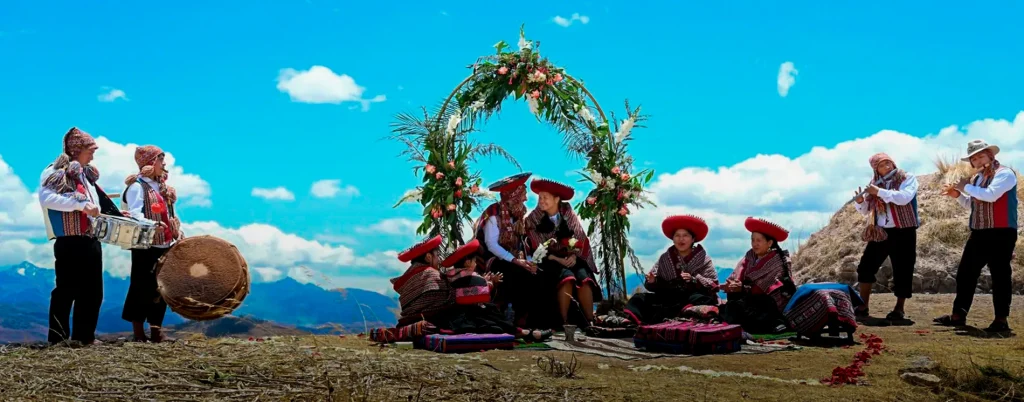
What it means. Water in Andean cosmology carries cleansing and renewal, and a high lake holds the sky in it. There’s no grand temple story here, which for some couples is precisely the appeal — the setting isn’t borrowed from anyone else’s history.
The numbers. 3,507 m, 44 km from Cusco, about an hour’s drive, roughly an hour from Urubamba. Eucalyptus stands along the shore, snow peaks on the far side.
Permits. Not an archaeological site. This is the most permissive location on the list — open land where a toast, live music and a larger group are all straightforward.
Light and season. Superb, and the reason photographers like it: an open western horizon and reflections off the water. Golden hour is unobstructed. In the rainy months the surrounding land is green in a way the dry season never delivers.
Guests. Two to forty. Easily the most scalable option here.
Our honest view. Underrated, and our usual recommendation for couples bringing more than fifteen people or who want a champagne toast without a permit conversation. It lacks the immediate visual authority of Inca stonework. It compensates with freedom.
3. Moray — The Sacred Womb

What it means. Concentric terraces descending into the earth, read in Andean tradition as a womb — fertility, growth, and connection with Pachamama. For couples building a family, the symbolism needs no explanation. Our guide to Sacred Valley spiritual sites treats Moray at greater length.
The numbers. 3,385 m, around an hour and fifteen from Cusco, usually combined with Maras.
Permits. A protected archaeological park, and a heavily visited one. Ceremonies happen on the approach or adjacent land, not down in the terraces. Expect other visitors nearby at any reasonable hour.
Light and season. The bowl shape means the terraces are lit unevenly through the day, with the lower rings in shadow early and late. Late morning is the only reliable window for even light across the structure.
Guests. Small groups only — two to ten. There isn’t the space or the privacy for more.
Our honest view. Visually spectacular and symbolically perfect, but it is a busy site with real restrictions. Beautiful for photographs afterwards; not our first choice for holding the ceremony itself.
4. Maras — Salt, Sky and Open Ground
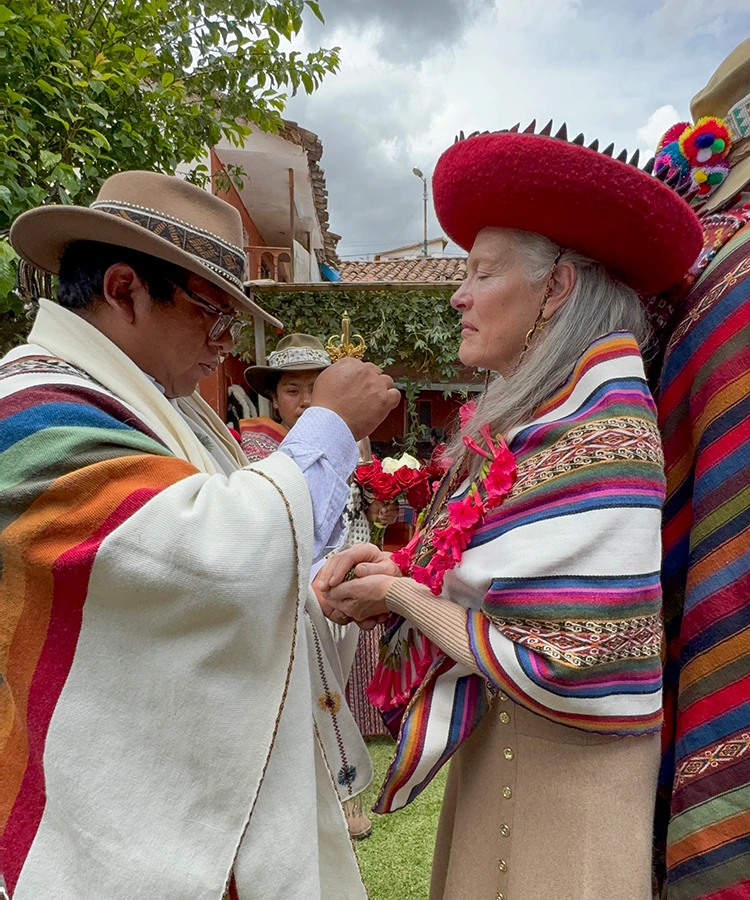
What it means. Thousands of salt terraces worked by the same families for generations, fed by a spring that has run since before the Inca. Salt preserves; the metaphor writes itself. This is a living, working landscape rather than a ruin — which some couples find more meaningful than stones.
The numbers. Maras village around 3,300 m, the salt pans in the ravine below. About an hour and fifteen from Cusco.
Permits. The salt pans are communally managed by the Maras families, not the DDC — a different and generally more workable conversation. But it’s an active production site with narrow walkways, and access rules change. Confirm current conditions before committing.
Light and season. Extraordinary in the dry season, when the pans are white and hold the light. In the rainy months they’re partly flooded and grey-brown — a completely different, much less photogenic place. This location is dry season only if photographs matter.
Guests. Two to fifteen, with the caveat that the terrain isn’t kind to anyone unsteady on their feet.
Our honest view. The most distinctive images on this list, and a genuine seasonal trap. Marry here in June, not February.
5. Ollantaytambo — Strength and the Living Inca Town

What it means. Watched over by Apu Pinkuylluna, Ollantaytambo carries associations of strength, illumination and protection. It is also the only Inca town still lived in continuously — people cook and sleep inside walls laid five hundred years ago, and the original water channels still run through the streets.
The numbers. 2,792 m — the lowest option here, and by a meaningful margin. About an hour and forty-five minutes from Cusco.
Permits. Protected archaeological park. Ceremonies take place on private or community land in and around the town.
Light and season. The weak point. Ollantaytambo sits in a narrow, steep section of the valley, and in June and July direct sun leaves the town in the middle of the afternoon. Morning ceremonies only. Get this wrong and you’ll photograph your wedding in flat shade.
Guests. Two to fifteen. Accommodation in town is plentiful, which helps.
Our honest view. The right answer when guests are struggling with altitude — that 970 m drop from Cusco is felt immediately. It’s also the natural choice if you’re continuing to Machu Picchu, since the train leaves from here; our 3-day Sacred Valley and Machu Picchu tour is built around that route. Just accept the morning ceremony.
6. Pisac — Ancestral Knowledge and the Intihuatana
What it means. Associated with Apu Intihuatana and Apu Ñusta, and traditionally approached for guidance, clarity and ancestral knowledge. The Intihuatana stone above the town is one of the most significant surviving sun-anchors in the region. Pisac appears in our roundup of the best sacred sites in Cusco for good reason.
The numbers. Town at 2,972 m, ruins considerably higher up the ridge. About an hour from Cusco, at the near end of the valley.
Permits. Protected archaeological park. The upper site involves a real climb, which rules it out for most guests regardless of permissions.
Light and season. Better than Ollantaytambo — the valley is wider here — but the eastern ridge still shortens the afternoon. Morning to early afternoon.
Guests. Two to fifteen in the town and surrounds. Far fewer if you want to be up at the ruins.
Our honest view. A good choice for couples drawn to divination and guidance, and it pairs naturally with a coca leaf reading. Pisac’s Sunday market brings crowds; pick a weekday.
7. Ausangate Viewpoints — For Almost Nobody
What it means. Ausangate is the most powerful Apu in the Cusco region — not one sacred mountain among several, but the one the others are measured against. Turquoise lakes, glaciers, and no infrastructure of any kind.
The numbers. Three and a half hours’ drive each way. Our Ausangate 7 Lakes day tour reaches 4,620 m on foot across roughly 12 km, with about seven hours of hiking. Weather is genuinely unpredictable and can turn within the hour.
Permits. Open high country, no archaeological restrictions. The constraint is physical, not bureaucratic.
Light and season. Spectacular and unreliable in equal measure. Dry season only, and even then you may be married in sleet.
Guests. Two to four, all of them fit and properly acclimatised.
Our honest view. We include it for completeness and we rarely recommend it. At these altitudes a wedding party becomes an expedition, and altitude illness at 4,600 m with a three-hour drive to help is not a risk to accept for a backdrop. If Ausangate matters to you, trek it before or after the wedding. Marry lower.
Can You Get Married at Machu Picchu?
Not inside the citadel — and the reasons are specific rather than a matter of negotiation.
Under current Ministry of Culture regulations, entry requires a timed ticket and a guide, groups are capped at ten people, and visits are limited to about two hours along a fixed circuit. Tripods are prohibited. So are musical instruments, loudspeakers, banners and alcohol. Drones require separate authorisation and are refused as a matter of course.
A ceremony needs the things that list rules out: people standing still in one place, music, a toast, and time. Machu Picchu is designed to keep visitors moving.
What couples actually do — and it works well — is marry symbolically in the Sacred Valley, then visit Machu Picchu the following day for portraits within the normal rules. You get the ceremony you want and the photograph you want, on separate days, without asking a guard to overlook a regulation. Ollantaytambo is the sensible base for that combination.
Be sceptical of any operator advertising a wedding ceremony inside Machu Picchu. Either they mean Aguas Calientes, or they’re planning to improvise something and hope.
Which One Should You Choose?
Guests arriving from sea level with only two days to acclimatise → Ollantaytambo. The altitude drop does more for people’s wellbeing than anything else on this list.
More than fifteen guests, or you want a proper toast and live music without a permit file → Huaypo.
Photographs above all else, travelling in dry season → Maras, with Moray for portraits afterwards.
You want the deepest ceremonial infrastructure and lineage masters → Chinchero.
You’re drawn to guidance, divination and ancestral counsel → Pisac.
You’re combining the wedding with Machu Picchu → Ollantaytambo, then the train.
Just the two of you, fit, and the mountain matters more than comfort → Ausangate. Reluctantly.
Practical Notes Whatever You Choose
Season. Dry season runs roughly April to October and gives the most reliable conditions — SENAMHI, Peru’s national meteorological service, publishes regional forecasts worth checking in the weeks before you travel; June and July are clearest and coldest, with genuine near-freezing nights. November to March brings afternoon rain, greener landscapes and much better availability. Mornings in the wet season are frequently clear — which is another argument for a late-morning ceremony.
Always have a rain plan. Ask your operator what it is. If the answer is improvised on the day, that’s your answer about the operator.
Wind. The high plateau sites — Chinchero, Maras, Huaypo — can be windy from late morning. It affects veils, candles, loose flowers and anything printed. Worth mentioning to your florist.
Cold. At 3,700 m the temperature drops sharply the moment cloud crosses the sun. Traditional Andean garments are woven from alpaca for exactly this reason. Guests in summer dresses will suffer; tell them.
Ground. Terraces, salt walkways and cobbled Inca streets are not friendly to heels, and less friendly to anyone with mobility difficulties. Ask honestly about your guest list before choosing.
Buy the altitude days. Two nights before the ceremony, minimum. It is the cheapest insurance you will ever buy for a wedding.
Frequently Asked Questions
Where is the best place for an Andean wedding in the Sacred Valley?
Chinchero for ceremonial depth, Ollantaytambo for low altitude, Huaypo for larger groups and fewer restrictions, Maras for photographs in dry season.
Can we hold the ceremony inside an Inca archaeological site?
Generally no. Chinchero, Moray, Ollantaytambo and Pisac are protected parks with restrictions on gatherings, alcohol, amplified sound and commercial photography. Ceremonies take place on adjacent community or private land.
Can we get married at Machu Picchu?
Not inside the citadel. Timed entry, mandatory guides, a two-hour limit and bans on tripods, instruments and alcohol make it impossible. Marry in the Sacred Valley and photograph at Machu Picchu the next day.
Which location is best for guests who struggle with altitude?
Ollantaytambo at 2,792 m, followed by Pisac at 2,972 m. Both are well below Cusco.
What time of day should the ceremony be?
Late morning. In June and July the sun sets around 5:30 PM and leaves the narrow valleys hours earlier.
How many guests can we bring?
Two to twenty at most sites; up to about forty at Huaypo; four at Ausangate.
Is Maras good year-round?
No. The salt pans are white and photogenic in dry season and partly flooded in the rainy months. Dry season only if images matter.
Do we need permits ourselves?
No — your operator arranges community agreements and any DDC authorisations. But ask them to confirm in writing which apply to your site.
Can we do a Pachamama offering as part of the ceremony?
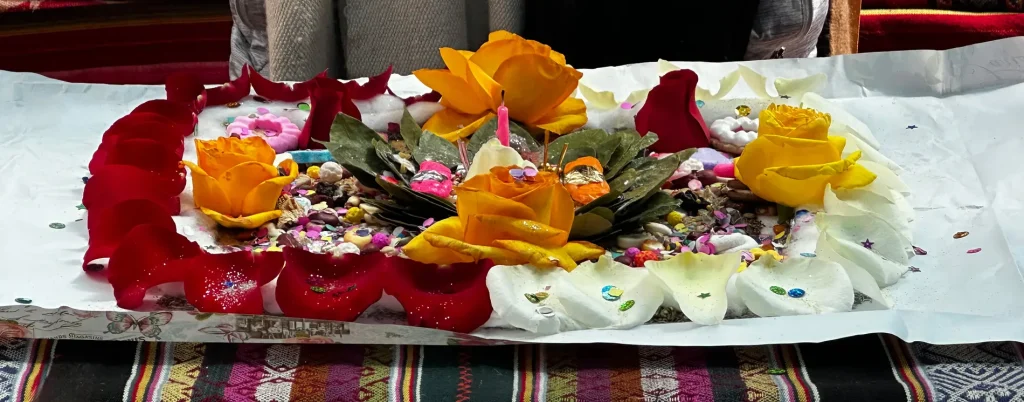
Yes, and it’s traditional. The marriage despacho is built into our ceremony; it also exists as a standalone Pachamama offering.
How far ahead should we choose the location?
Three to six months, longer for June and July. The site determines transport, florist logistics and which masters are available.
Where We’d Send You
If you asked us to pick without knowing anything else about you, we’d say Chinchero — and we’d admit that’s partly because it’s where our masters are from and where the weaving that makes the ceremonial garments is done.
But the honest recommendation changes with the guest list. Bring your grandmother and we’ll say Ollantaytambo. Bring thirty friends and we’ll say Huaypo. Come in July with a photographer you’ve flown in and we’ll say Maras.
The location is the last decision, not the first. Settle your dates, your numbers, and how much altitude your people can take — then the right place is usually obvious.
Tell us your dates and guest count and we’ll tell you which of these actually fits, including when the answer is none of them. The full ceremony details and pricing are on our Andean wedding page, and we break the numbers down further in our guide to what an Andean wedding costs.
Altitudes and access times are approximate and drawn from published sources at the time of writing. Regulations governing archaeological parks are set by the Dirección Desconcentrada de Cultura de Cusco and the Ministry of Culture and can change — confirm current requirements before finalising plans. The Andean wedding ceremony is symbolic and does not constitute legal marriage under Peruvian law.