Ausangate Trek: Complete Guide 2027 — Routes, Difficulty, Altitude & Tips
 By PumAdventures

By PumAdventures — Local operators in Cusco, Peru since 2013
There is a moment on the Ausangate Trek — somewhere above 5,000 meters, with the glacier wall rising above you and a turquoise lake that looks painted below — when you understand why the Quechua people of Cusco have considered this mountain the most sacred peak in the region for thousands of years.
The Ausangate Trek is not the most famous trek in Peru. It does not end at Machu Picchu. It does not follow the stones of the Inca Trail. It does not appear on the postcards sold in Cusco’s Plaza de Armas.
What it offers instead is rarer: the unmediated experience of one of the most extraordinary high-altitude landscapes on Earth, walked in relative solitude, in direct relationship with a mountain that the Andean world considers a living deity.
This guide covers everything you need to know to plan your Ausangate Trek in 2027 — from route options and altitude profiles to packing lists, best season, acclimatization, and the question almost no other guide answers: what makes the Ausangate different from every other trek in Cusco, and why does PumAdventures combine it with a Wachuma (San Pedro) ceremony.
What Is the Ausangate Trek?
The Ausangate Trek is a high-altitude circuit in the Vilcanota mountain range, built around the Ausangate massif, which rises to 6,384 meters (20,945 feet). Depending on the version chosen, the trek usually takes between 3 and 7 days and crosses passes that often rise above 4,800 meters (15,748 feet).
Unlike the Inca Trail, the Salkantay, or the Lares — all of which lead toward Machu Picchu — the Ausangate Trek is its own destination. The center of the experience is not a ruin or a citadel waiting at the end. The center is the mountain itself and everything that lives around it: glaciers, lakes, high-altitude wetlands, herds of alpaca and llama, hot springs, cold campsites, and communities that still inhabit the territory at great elevation.
The Ausangate Trek is a high-altitude 70 km hike through the Peruvian mountains near Cusco, with an average altitude of over 4,000 meters. It is all about beautiful scenery: snow peaks, glaciers, colorful mountain lakes, and the option to visit Rainbow Mountain.
The mountain itself stands approximately 100 kilometers southeast of Cusco city, in the Ocongate area of the Quispicanchi province. The highest point of the trek, depending on the route, is either Palomani Pass or Condor Pass — both between 5,200 and 5,400 meters (17,060 to 17,717 feet). The summit of Ausangate itself, at 6,384 meters, is not climbed on the standard trek.
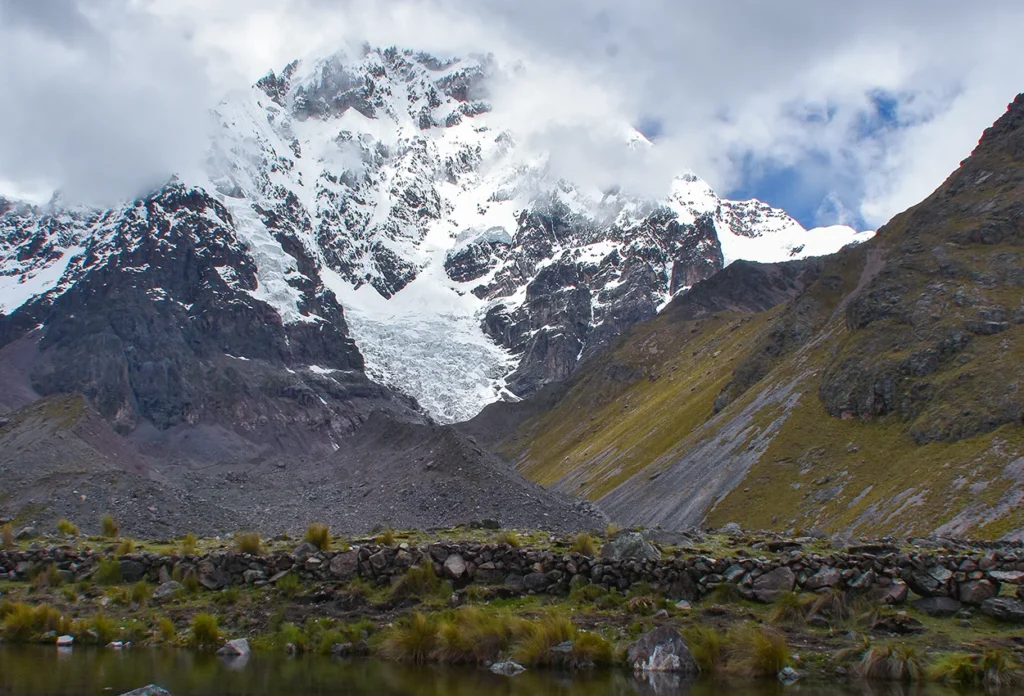
Apu Ausangate — The Sacred Mountain of the Andes
Before planning any itinerary, it is worth understanding what this mountain means — because the Ausangate Trek is not simply a scenic route. It is a walk through one of the most spiritually significant landscapes in the Western Hemisphere.
The Ausangate is a sacred mountain for several Andean communities. It is recognized as an Apu — a protective presence linked to water, fertility, and the balance of the territory. That dimension does not sit apart from the trek. It is felt in the landscape and in how the route is lived.
In Quechua cosmology, the Apus are not metaphors. They are living beings — mountain deities of immense power who govern the water, the weather, the crops, and the spiritual life of the communities that live in their shadow. Apu Ausangate is considered the most powerful of all the Apus of the Cusco region: the guardian of the entire south, the owner of the waters that feed the Sacred Valley, the protector of the Quechua people who have honored it with offerings since before the Inca Empire existed.
The mountain is notably associated with the Qoyllur Riti Festival, held at the end of May on the opposite side of the Cordillera Vilcanota, in the Sinakara Valley. The festival draws over 10,000 pilgrims each year — one of the largest indigenous pilgrimages in the Americas.
When you walk the Ausangate circuit, you are walking a pilgrimage route. The hot springs of Pacchanta where trekkers rest their feet have been sacred bathing waters for centuries. The passes where cairns accumulate are places where the Quechua tradition holds that the boundary between the human world and the world of the Apus grows thin. The offerings left at the Apacheta are prayers spoken to the mountain in a language older than any written record.
The name Ausangate likely comes from the ancestral term Awsanqati, connected to both Quechua and Aymara, and is generally understood as a reference to the rocks, fissures, and cavities of the massif — conveying the idea of a living mountain, respected and deeply tied to the identity and life of the territory.
Understanding this does not require adopting any particular spiritual framework. It requires only a willingness to walk with awareness — and the result is a relationship with the landscape that is qualitatively different from any other trek in Peru.
Ausangate Trek Routes — Which Version Is Right for You?
There are many variants, between 3 and 7 days, with the possibility of a detour to the colorful mountain of Vinicunca (Rainbow Mountain). The trek crosses several high passes where you will see snow-capped peaks, glaciers, herds of llamas, and beautiful lakes.
Here is an honest breakdown of each format:
Ausangate Trek 3 Days — Compact Pilgrimage
Best for: Travelers with limited time who want a genuine high-altitude experience without the full circuit commitment. Also the format for our exclusive Ausangate Trek & Wachuma Ceremony — the only experience in Peru that combines the trek with a plant medicine ceremony at the foot of the Apu.
What you cover: Drive to Pacchanta (Day 1) → Sacred lagoons, Apacheta pass, and Wachuma ceremony or high-altitude exploration (Day 2) → Return via Lucio’s Temple (Day 3).
Altitude reached: Up to 5,100 m / 16,732 ft.
Accommodation: Local homestay in Pacchanta — simple, warm, and deeply authentic.
Limitations: You do not complete the full circuit around the mountain. You experience one face of Ausangate in depth rather than the full circumnavigation.
Ausangate Trek 4 Days — The Accessible Circuit
Best for: Trekkers who want the full circuit experience with slightly shorter daily distances. Often combined with Rainbow Mountain on Day 3.
What you cover: Tinki → Upis → Ausangatecocha → Rainbow Mountain → Pacchanta → Tinki.
Altitude reached: Up to 5,200 m / 17,060 ft at Palomani Pass.
Accommodation: Camping alongside glacial lakes or basic mountain huts depending on operator.
Ausangate Trek 5 Days — The Classic Circuit
Best for: The majority of trekkers. The Ausangate Trek reaches 5,200 meters across five days, making it harder than the Inca Trail but more rewarding with fewer crowds and no permits required. This is the most complete and recommended format for experiencing the full circumnavigation of the mountain.
What you cover: The complete circuit — Tinki → Upis → multiple high passes → Ausangatecocha → Rainbow Mountain optional → Pacchanta → Tinki.
Altitude reached: Depending on the route, the highest point is Palomani Pass or Condor Pass, between 5,200 and 5,400 meters (17,060 to 17,717 feet).
Accommodation: Camping (most operators) or basic mountain lodge option depending on company.
Ausangate Trek 6–7 Days — Extended with Rainbow Mountain
Best for: Trekkers who want the complete circuit plus a dedicated visit to Rainbow Mountain (Vinicunca) and Red Valley, with time to explore at leisure rather than rushing past the highlights.
What you cover: All of the 5-day route plus Rainbow Mountain as a full day rather than a detour, with additional acclimatization time built in.
Note: Rainbow Mountain can also be visited on a day trip from Cusco, which is arguably better for those who want a shorter commitment. Being there early morning, just after the tour buses, allows you to experience it before the crowds arrive. If Rainbow Mountain is your primary goal, the day tour is worth considering. If the full Ausangate circuit is your goal, adding Rainbow Mountain as part of the multi-day trek is the richer option.
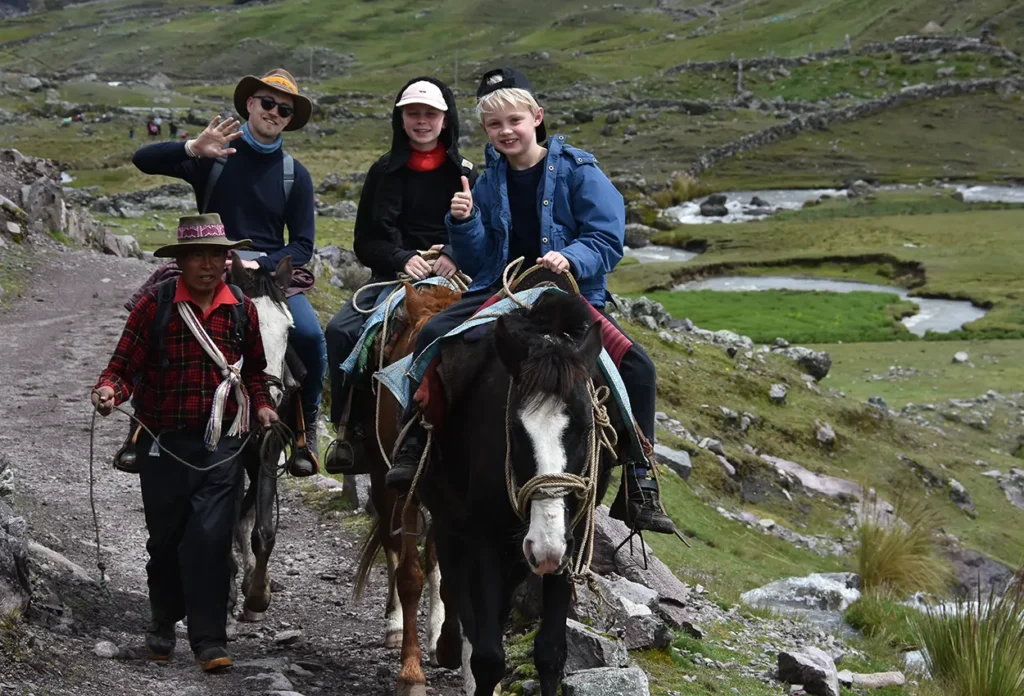
Ausangate Trek Difficulty — An Honest Assessment
Ausangate is one of the most challenging hikes around Cusco but at the same time one of the most rewarding in terms of scenery. Understanding where the challenge actually comes from is more useful than a generic difficulty rating.
The challenge is primarily altitude, not technical terrain.
While the hike itself is comparable to other Andean treks, the average altitude is over 13,000 feet (4,000 m) above sea level. Lower oxygen levels at this elevation can trigger altitude sickness and shortness of breath.
This route is rated moderately difficult to advanced, mainly because of the thinner oxygen at altitude. However, you do not need to be an athlete to do this trek. The key is proper acclimatization, at least two days in Cusco, and during the hike staying hydrated and keeping a steady, efficient pace.
Ausangate is not like some other high-altitude treks such as Everest Base Camp or the Annapurna Circuit that start at lower elevations and gradually gain altitude. The entire route goes over 4,000 meters from the start. There is no warm-up period at lower altitude. You are high from the moment the trek begins.
Daily distances and elevation gain vary significantly by route but typically involve 12–20 km per day with 400–700 meters of ascent to each pass. The passes themselves — reached quickly and descended on the other side — are the highest-exertion moments. Between passes, the terrain is generally rolling high-altitude grassland (puna) that is demanding primarily due to the sustained elevation rather than technical difficulty.
Who should not attempt this trek without careful consideration:
- Anyone who has not acclimatized in Cusco for a minimum of 2–3 days (4–5 preferred)
- Anyone with a history of serious altitude sickness on previous high-altitude trips
- Anyone with cardiovascular conditions — consult your doctor before booking
Who can do this trek:
- Fit travelers with some hiking experience, even without previous high-altitude trekking
- First-time high-altitude trekkers who are well acclimatized and traveling with a guide
- Experienced mountaineers seeking a remote Andean experience without technical climbing
Ausangate Trek Altitude Profile — Day by Day
Understanding the altitude arc before you go is one of the most useful pieces of preparation:
| Point | Altitude (m) | Altitude (ft) |
| Cusco (start/finish) | 3,400 m | 11,155 ft |
| Tinki (trailhead, classic circuit) | 3,900 m | 12,795 ft |
| Pacchanta / Upis (first camp) | 4,400 m | 14,435 ft |
| Arapa Pass | 4,900 m | 16,076 ft |
| Palomani / Condor Pass (highest point) | 5,100–5,400 m | 16,732–17,717 ft |
| Ausangate summit (not trekked) | 6,384 m | 20,945 ft |
| Pacchanta hot springs | 4,380 m | 14,370 ft |
The key pattern: you are above 4,400 meters from the first night of camping. The passes are reached and crossed relatively quickly. The long hours of each day are spent at 4,400–4,800 meters — which is the altitude that accumulates to produce fatigue and altitude symptoms over multiple days.

Ausangate Trek vs. Inca Trail vs. Salkantay — Which One?
This is the most common planning question we receive. Here is an honest comparison:
| Ausangate | Inca Trail | Salkantay | |
| Destination | The mountain itself | Machu Picchu | Machu Picchu |
| Permits required | No | Yes (sell out months ahead) | No |
| Maximum altitude | 5,100–5,400 m | 4,215 m | 4,638 m |
| Duration | 3–7 days | 4 days (classic) | 5 days (classic) |
| Crowds | Very low | High | Moderate |
| Primary reward | Glaciers, sacred landscape, solitude | Incan ruins, Sun Gate arrival | Mountain scenery + Machu Picchu |
| Cultural focus | Living Quechua communities, Andean cosmology | Inca archaeology | Andean nature |
| Difficulty | Moderate–hard (altitude) | Moderate | Moderate |
| Best for | Nature lovers, spiritual travelers, experienced hikers | History lovers, first Peru trekkers | Balance of scenery + archaeology |
Choose Ausangate if: You want the most remote, visually extraordinary, and spiritually resonant trekking experience in the Cusco region — and you are willing to trade Machu Picchu for something rarer.
Choose Inca Trail if: Arriving at Machu Picchu through the Sun Gate at dawn is the specific experience you are seeking, and you are comfortable with the permit system and group size.
Choose Salkantay if: You want a mountain trek that also ends at Machu Picchu, with fewer crowds than the Inca Trail and no permit required.
Best Time to Do the Ausangate Trek
Trek between May and October during the dry season; avoid November through April when rain makes passes dangerous and trails nearly impassable.
Here is a month-by-month breakdown of what to expect:
April–May: The transition into dry season. Weather is generally good, trail conditions stable. April can still see occasional afternoon rain. May is when the Qoyllur Riti Festival takes place near Ausangate — a powerful time to be in the region, though the festival area will be crowded with pilgrims.
June–August: Peak dry season. Clearest skies, firmest trails, best visibility of the glacier and mountain peaks. Also peak tourist season — trailheads at Rainbow Mountain will be busiest. The Ausangate circuit itself remains relatively uncrowded even in peak season.
September–October: Excellent conditions, gradually increasing in moisture toward October. One of the best windows — good weather, fewer tourists than June–August, and the landscape is particularly green from residual moisture.
November–March (Rainy Season): During the rainy season, trails can be dangerous and passes become difficult to cross after heavy precipitation. We do operate year-round but will advise you honestly if specific dates appear problematic. January and February are the wettest months and the least advisable for the high passes.
Our recommendation: May, September, or October for the ideal balance of weather, scenery, and fewer crowds than peak June–August.
Acclimatization — The Most Important Preparation You Can Do
Spend at least three days acclimatizing in Cusco before starting; altitude matters more than fitness.
This is not a recommendation — it is the single most important factor in whether your Ausangate Trek is a transformative experience or a miserable one. More trekkers underestimate acclimatization than any other factor. Fitness does not protect against altitude sickness. Time does.
What to do during your acclimatization days in Cusco:
- Arrive in Cusco and rest for the first 24 hours. Do not attempt significant physical activity.
- Drink 3–4 liters of water per day. Dehydration accelerates altitude symptoms.
- Avoid alcohol for the first 48 hours minimum.
- Eat light meals — altitude affects digestion, and a heavy stomach makes symptoms worse.
- Consider acclimatization hikes at 3,800–4,200 m on Days 2–3 before the trek. The Sacred Valley (2,800 m) is a common first day; ascending to Sacsayhuamán (3,750 m) is a good second day preparation.
- Coca leaf tea — available everywhere in Cusco — has been used for altitude adaptation by the Andean people for centuries. It genuinely helps with mild symptoms.
- Discuss Diamox (acetazolamide) with your doctor before leaving home if you have a history of altitude sensitivity.
Symptoms that require descent: Severe headache unresponsive to ibuprofen, loss of coordination, confusion, vomiting, or breathlessness at rest. These are signs of serious altitude illness, not normal adjustment. Your guide carries emergency oxygen and the trek includes an emergency horse — descent is always the correct response to serious symptoms.
Ausangate Trek Packing List — Complete 2027 Guide
Pack a sleeping bag rated for negative 15 degrees Celsius, a down jacket, waterproof boots, and SPF50 sunscreen — night temperatures can drop below negative 10 degrees Celsius.
A complete packing list organized by category:
Clothing — The Layering System Is Everything
The layering system is a technique for maintaining warmth and comfort on the mountain. It involves wearing several clothing layers that can be added or removed depending on conditions and hiking pace.
Base layer (against skin):
- Thermal top and bottoms — merino wool or synthetic. Never cotton — cotton retains moisture and accelerates hypothermia.
Mid layer (insulation):
- Fleece jacket or lightweight down jacket for warmth when stationary or at camp
Outer layer (protection):
- Waterproof, windproof shell jacket and pants — essential. Conditions can shift from warm sunshine to sleet within an hour at these altitudes.
Additional clothing items:
- Warm hat covering ears — a beanie or fleece hat, not a baseball cap
- Lightweight gloves for daytime hiking + heavier insulated gloves for evenings and mornings
- Neck gaiter or balaclava
- Hiking pants (softshell or trekking pants — not denim)
- Sun shirt for daytime UV protection
- Swimsuit for Pacchanta hot springs
- Camp sandals or lightweight shoes for evenings at the homestay
Footwear:
- Ankle-supporting waterproof hiking boots — broken in before the trek, not new
- Wool or synthetic hiking socks × 3–4 pairs
- Gaiters (optional but useful for wet trail sections)
Gear
- Daypack 20–30L (your overnight luggage is transferred by horse)
- Headlamp with extra batteries — nights are completely dark at altitude
- Trekking poles — strongly recommended for descending steep passes
- Reusable water bottles or hydration bladder — minimum 2 liters capacity
- Water purification tablets or filter (if hiking independently)
- Sunscreen SPF 50+ — UV radiation at altitude is severe, not comparable to beach conditions
- Quality sunglasses with UV protection — critical, not optional
- Camera and extra batteries (cold kills battery life significantly faster)
- Small personal first aid kit: blister treatment, ibuprofen, Diamox if prescribed, anti-nausea, rehydration salts
Documents
- Original passport — required for entry to the Ausangate protected area
- Travel insurance documents — ensure your policy covers high-altitude trekking above 5,000 m
- Booking confirmation
For the Wachuma Ceremony (if doing the 3-Day PumAdventures Trek)
- Warm layers specifically for sitting still — you will not be moving during the ceremony
- A journal — the day after the ceremony is often rich for writing
- Any personal sacred objects you want to bring into the ceremonial space
- Clear intention — the most important thing you carry
Ausangate Trek Accommodation — Camping vs. Homestay
Most classic circuit operators offer camping alongside the glacial lakes — there are no established campsites on the Ausangate trek; tents are set up along the route, often alongside a turquoise lake. Some companies also offer the trek as a lodge trek in which you stay in very basic huts along the route.
Camping: The most immersive and widely offered format. Your guide and cook set up camp. Sleeping at 4,400–4,800 meters in a tent is cold — this is where the sleeping bag rated for -15°C matters most. The upside: waking up beside a glacial lake with no one else around is one of the defining experiences of the trek.
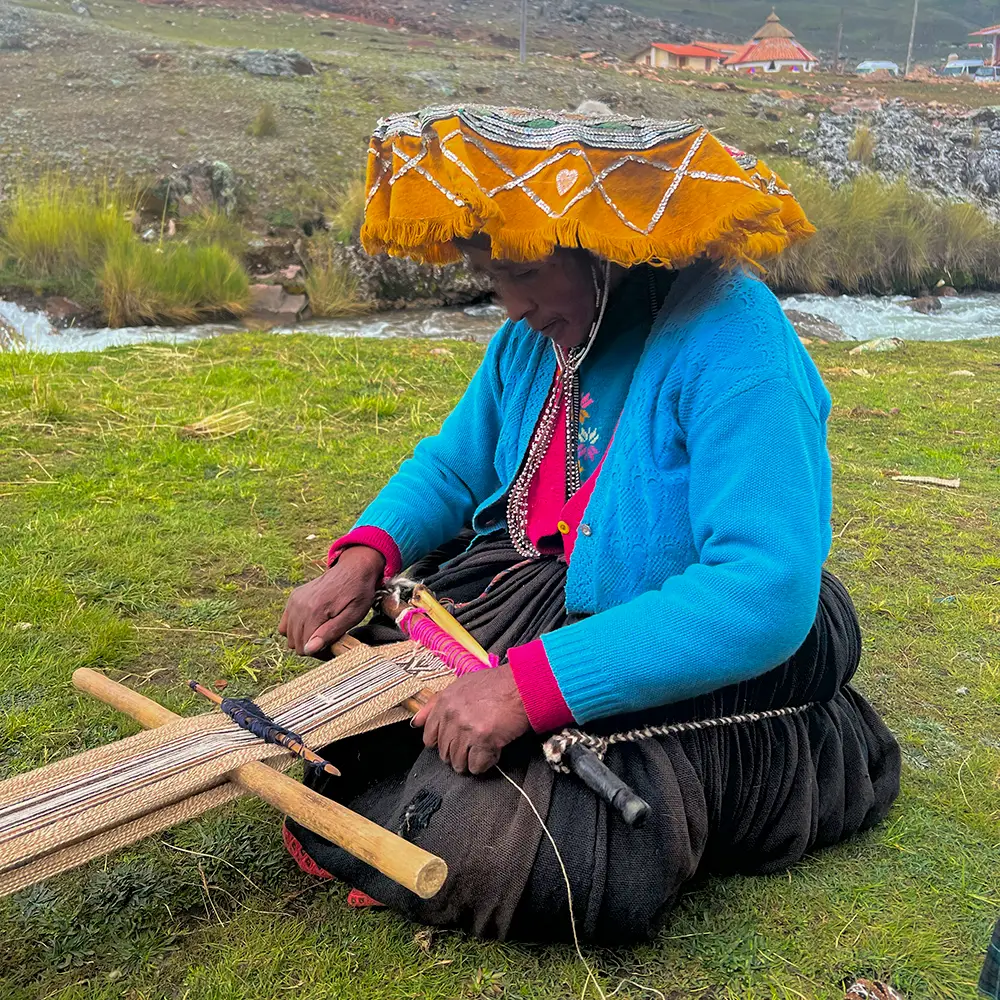
Homestay (PumAdventures 3-Day format): On our 3-day Ausangate Trek, you stay with a Quechua family in Pacchanta — a simple, warm, and authentic experience that most participants describe as one of the most grounding elements of the entire trip. Not a lodge. Not glamping. The real thing.
Wildlife on the Ausangate Trek
One of the unexpected pleasures of the Ausangate circuit is the wildlife. You are not in a zoo or a reserve — you are walking through the actual living habitat of some of the most extraordinary animals in the Americas:
Alpacas and llamas: Herds of hundreds, grazing at altitudes that seem impossible for anything with fur. They will regard you with complete indifference, which is somehow charming.
Andean condors: The largest flying bird in the world by wingspan, commonly sighted soaring in the thermals above the passes. If you see one, stop walking and watch.
Vicuñas: The wild ancestor of the alpaca — more delicate, faster, and considerably shyer. Their fleece is the finest natural fiber in the world. Spotting a vicuña herd in the open puna is a quiet privilege.
Viscachas: A relative of the chinchilla, they look like a rabbit wearing a squirrel’s tail and live in the rocky sections between the high passes. Almost absurdly endearing.
Andean birds: Puna ibis, Andean lapwing, Andean avocet in the wetlands, and occasional sightings of the extraordinary Andean flamingo in the more remote sections of the circuit.

The Pacchanta Hot Springs — A Sacred Rest
On most versions of the Ausangate Trek, the final campsite is at Pacchanta — a Quechua community at approximately 4,380 meters, at the base of the Ausangate glacier. The village is home to natural thermal hot springs: pools fed by geothermal water that emerges warm from the depths of the mountain.
Soaking in the Pacchanta hot springs after days at high altitude — with the glacier face of Ausangate rising 2,000 meters above you, in cold mountain air, with steam rising from the water — is one of the more extraordinary physical experiences available in the Cusco region.
The hot springs are not a resort. They are basic natural pools, used by the local community and trekkers alike. They are cold to get into and hot enough to stay in for a long time. Bring your swimsuit.
The Wachuma Ceremony — What Makes the PumAdventures Trek Unique
The Ausangate is a sacred mountain for several Andean communities. That dimension does not sit apart from the trek — it is felt in the landscape and in how the route is lived.
At PumAdventures, we took this reality seriously when designing our 3-Day Ausangate Trek. We asked a simple question: if this mountain is a living sacred presence — if it is genuinely considered the guardian deity of the entire Cusco region — what does it mean to walk through its landscape as a tourist versus as a pilgrim?
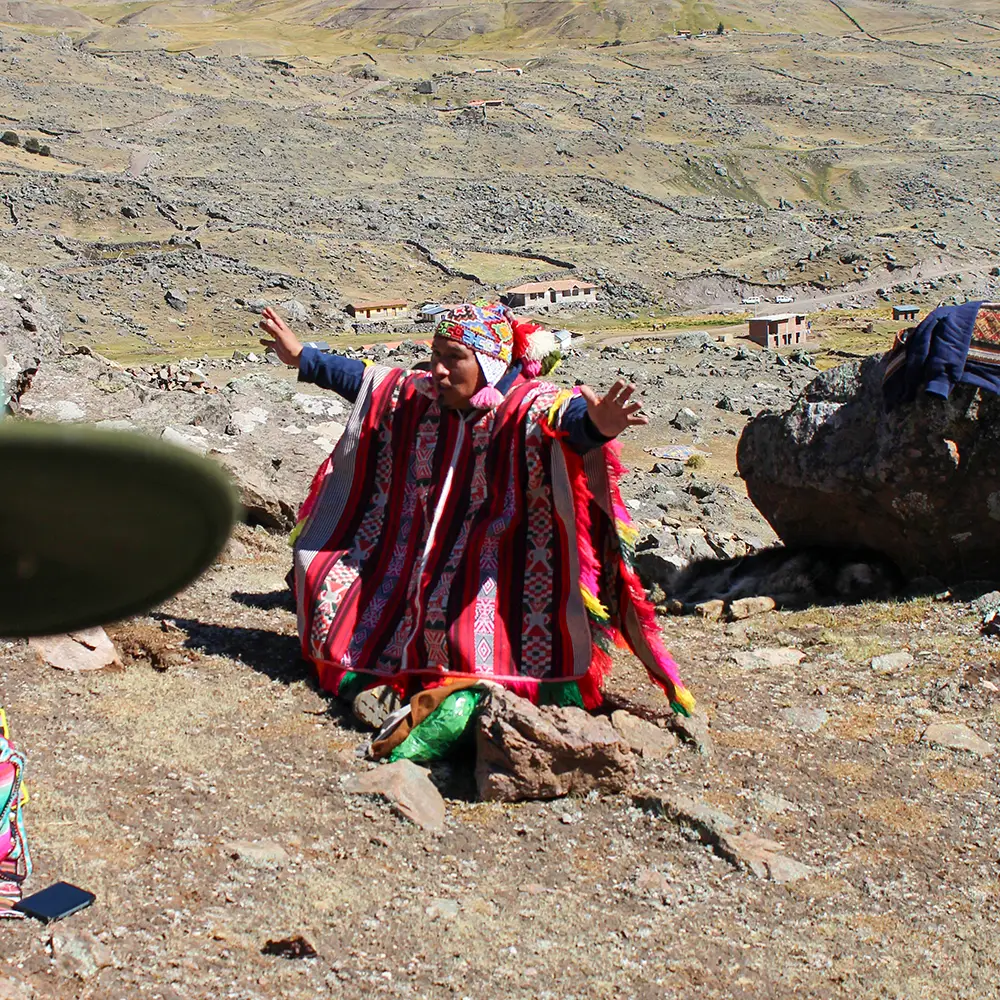
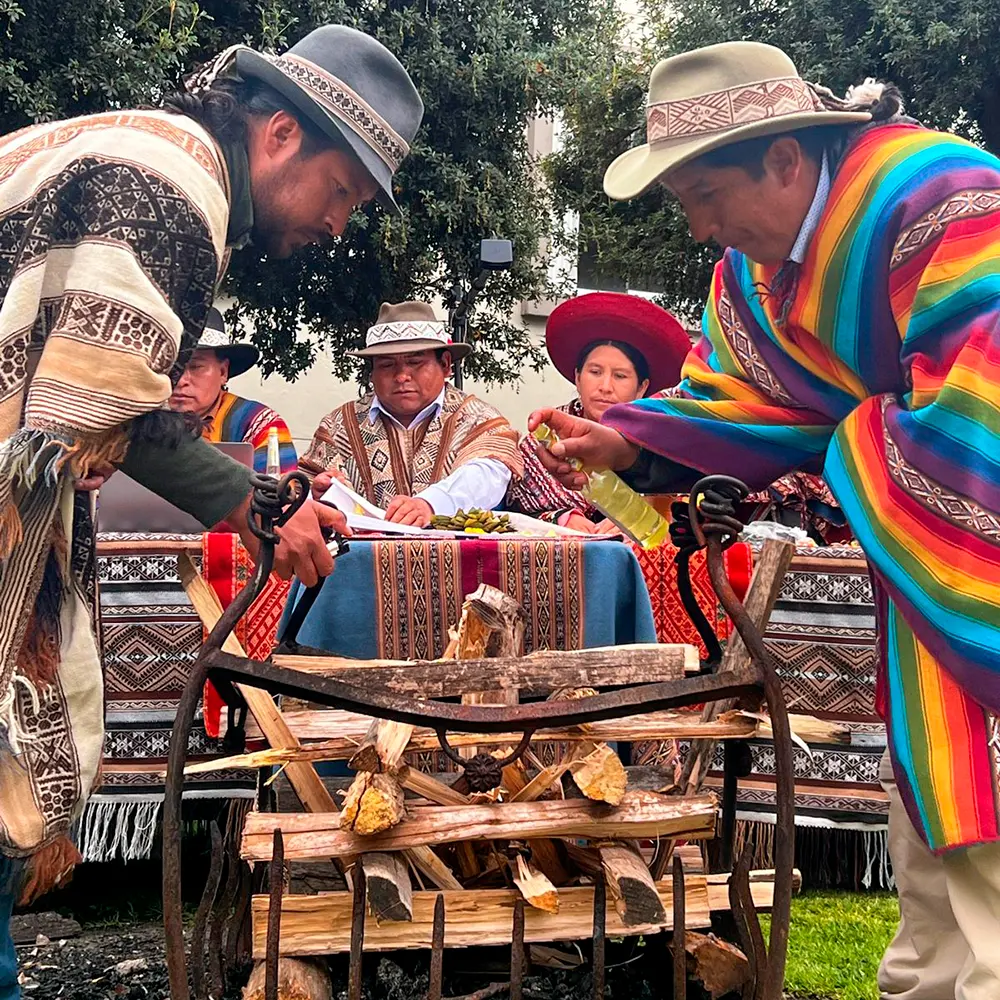
The answer we arrived at was a Wachuma (San Pedro) ceremony held at the foot of the Apu on Day 2 of the trek.
Wachuma is the sacred plant medicine of the Andes — a daytime medicine of clarity, heart-opening, and direct communion with Pachamama and the mountain spirits. It has been used in ceremony in this region for at least 3,000 years. And Apu Ausangate is, in the Andean tradition, one of the most powerful ceremonial presences in the entire continent.
The combination does not exist anywhere else. No other operator in Peru offers it. The reason is not commercial — it is simply that offering a genuine Wachuma ceremony requires a practitioner with real lineage, real training, and real relationship with this specific mountain. Our Master is from Pacchanta. This is his mountain. He has worked with it his entire life.
If you come to walk the Ausangate purely as a trekking experience, it will be extraordinary. If you come to walk it as a pilgrimage — with the Wachuma ceremony as the ceremonial heart of the journey — it will be something different: an encounter with the living intelligence of the Andean world that participants consistently describe as impossible to fully put into words.
Learn more about the Ausangate Trek & Wachuma Ceremony →

How to Get to Ausangate from Cusco
The trek begins in the Ocongate area, approximately 100 km southeast of Cusco city.
By private transport (recommended): Our tours include private round-trip transport from your Cusco hotel. The drive takes approximately 3 hours along the road through Urcos and Ocongate to Tinki or Pacchanta. The road passes through several small highland towns and offers increasingly dramatic views of the Vilcanota range as you approach.
By public bus (independent trekkers): Public bus from Cusco to Tinki costs approximately 20 soles (around $6 USD) return. Buses depart from the Coliseo Cerrado bus terminal in Cusco.
Trailhead options: Most classic circuit treks begin in Tinki. Our 3-day trek departs from and returns to Pacchanta, which sits closer to the base of the Ausangate glacier and is accessible by the same road.
Ausangate Trek Cost — What to Budget
Costs vary significantly by format, operator, and group size. Here is an honest range for 2027:
| Format | Independent | Budget operator | Quality operator |
| 3 Days | Not recommended | $250–350 | $500–900+ |
| 4 Days | $50–80 (food + transport) | $350–450 | $600–900 |
| 5 Days | $50–100 (food + transport) | $450–600 | $700–1,100+ |
What quality operator pricing includes at PumAdventures: private transport, all meals, professional English-speaking guide, experienced cook from the community, horses for luggage transfer, emergency horse, oxygen tank, first aid kit, entrance fees, and — in our 3-day format — the Wachuma ceremony with an Andean Master.
The independent option is very cheap, especially with your own camping gear. The trade-offs are that you carry all your gear, rely entirely on yourself, there is no backup in case of difficulty, and the route is not always well marked. For experienced high-altitude trekkers with navigation skills, independent trekking is a genuine option. For everyone else, the guided experience is both safer and, frankly, richer — the cultural and spiritual dimensions of the Ausangate are largely inaccessible without a local guide who carries that knowledge.
Frequently Asked Questions — Ausangate Trek 2027
Do I need a permit for the Ausangate Trek?
No. Unlike the Inca Trail, the Ausangate Trek does not require a permit. You pay a small entrance fee to the protected area (approximately 10–20 soles / $3–6 USD), but there is no advance booking system, no quota, and no dates to plan around. This flexibility is one of the genuine advantages of Ausangate over the Inca Trail.
Is the Ausangate Trek harder than the Inca Trail?
The Ausangate Trek reaches higher maximum altitude — 5,200 meters versus 4,215 meters for the Inca Trail — making it harder than the Inca Trail but more rewarding in terms of remoteness and scenery with fewer crowds. The Inca Trail has more historical and archaeological interest. Ausangate has more raw mountain terrain and significantly higher altitude.
Can I do the Ausangate Trek independently?
While technically possible for very experienced high-altitude trekkers, professional guides provide essential safety, navigation, and cultural interpretation. Most travelers benefit significantly from guided services, including logistical support. The route is not well-marked in all sections, the altitude is serious, and the cultural dimensions of the trek — particularly the spiritual significance of the landscape — are largely inaccessible without a knowledgeable local guide.
What is the altitude sickness risk on the Ausangate Trek?
It is real and should be taken seriously. The trek takes place at altitudes ranging between 4,000 and 5,200 meters above sea level. Some passes exceed 5,000 meters, which can lead to altitude sickness if not properly acclimatized. The mitigation is simple: acclimatize properly in Cusco before departure, drink abundant water, hike slowly, and communicate honestly with your guide about how you are feeling. Do not push through serious symptoms.
Can I combine the Ausangate Trek with a visit to Machu Picchu?
Yes. Many travelers combine both in a single trip to Cusco. Our recommendation is to do the Ausangate Trek before visiting Machu Picchu — arriving at the sacred citadel after days in the mountain landscape, with the medicine and the Apu still working in your system, adds a dimension to the Machu Picchu experience that travelers consistently describe as remarkable. We can arrange the full combined itinerary.
What makes the PumAdventures Ausangate Trek different from other operators?
One thing: the Wachuma ceremony. We are the only operator in Peru offering a guided San Pedro ceremony at the foot of Apu Ausangate as part of a multi-day trek. Our Master is from Pacchanta — this is his home, his mountain, and his tradition. If you are seeking a purely trekking experience, there are excellent operators who offer the classic circuit in 5 days. If you are seeking a pilgrimage — a trek that enters into genuine relationship with the living sacred presence of Ausangate — the 3-Day Ausangate Trek & Wachuma Ceremony is the only experience of its kind.
Can I combine the Ausangate Trek with an Ayahuasca ceremony in Cusco?
Yes, and many of our travelers do. A complete itinerary might look like: arrive Cusco → acclimatize 3–4 days → Coca Leaf Reading → Ayahuasca Retreat 1 or 2 Days → Ausangate Trek & Wachuma → Machu Picchu (optional) → depart. The Ayahuasca works at night and on the inner visionary dimension. The Ausangate Trek and Wachuma work in daylight and in direct relationship with the mountain. Together, they address different but complementary dimensions of the healing journey. We design all combined itineraries to your specific dates and intentions — contact us to plan yours.
Ready to Trek Ausangate?
The Ausangate Trek is not for everyone. It asks something of your body and your willingness to be in a landscape that does not comfort or reassure — a landscape that simply is, at full scale, without apology.
For those who are ready for it, there is nothing else in Peru quite like it.
We have been guiding this mountain since 2013. Our team is from Pacchanta and Chinchero. The Master who leads the Wachuma ceremony has worked with Apu Ausangate his entire life. We know this route, this community, and this mountain — not as a product, but as home.
Book the Ausangate Trek & Wachuma Ceremony — 3 Days from Cusco →
Or contact us to design a combined itinerary that includes Ayahuasca, San Pedro, and Ausangate trekking in a single guided journey.
PumAdventures is a licensed tour operator based in Chinchero, Sacred Valley, Cusco, Peru. We have offered authentic Andean ceremonies and trekking experiences since 2013. All our guides are native to the region. All our ceremonies are led by Andean Masters with genuine ancestral lineage.
Ayahuasca Retreat Cusco · San Pedro Ceremony · Coca Leaf Reading · Offering to Pachamama · Essence of Cusco 5 Days