Best Time for a Spiritual Retreat in Peru: Month by Month
 By PumAdventures
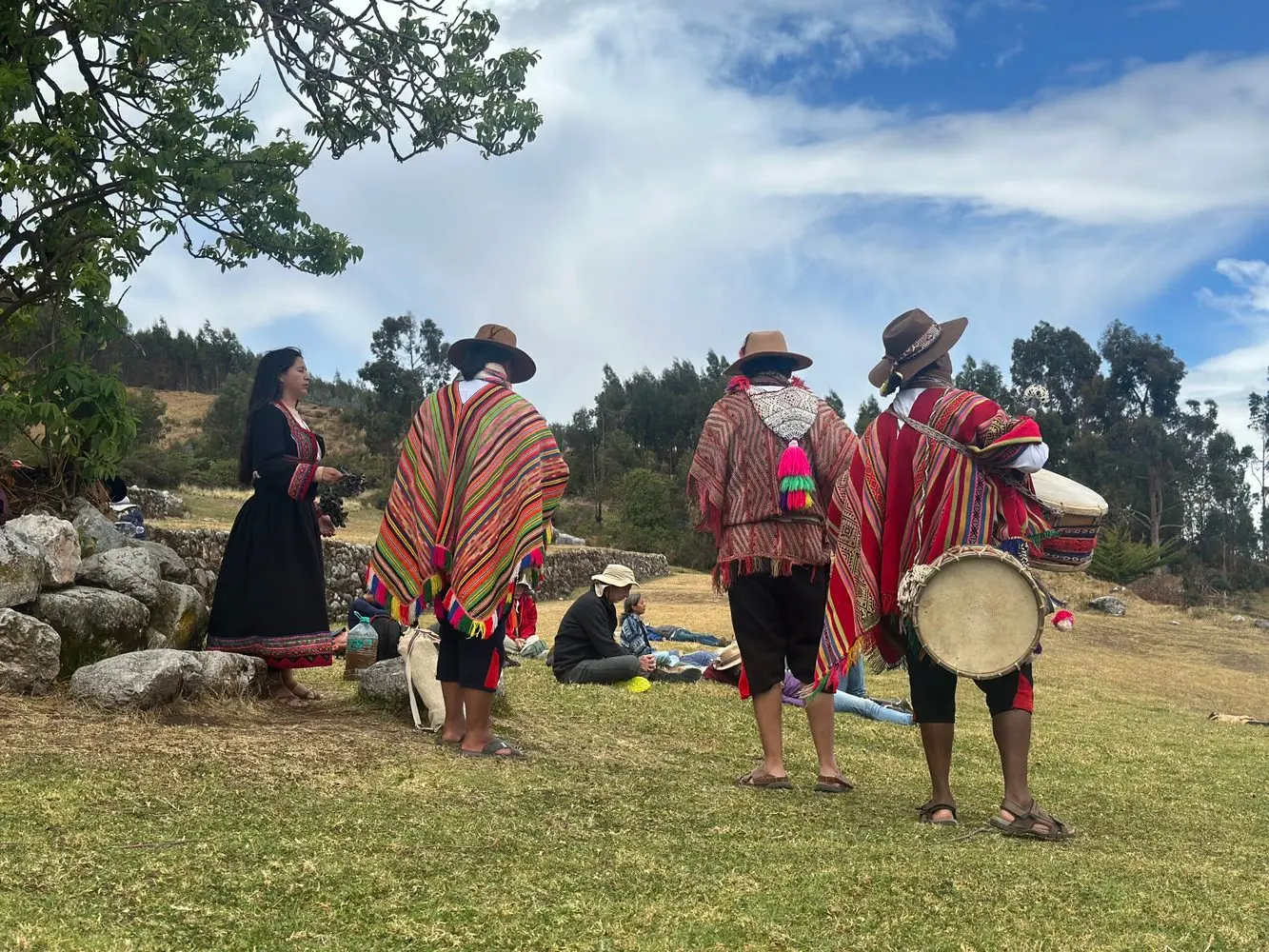
Ask any travel agency when to visit Cusco and you’ll get the same answer: June to August, the dry season.
That answer is correct — for photographing Machu Picchu. It is not necessarily the right answer for ceremony, and the people giving it are usually optimising for something you haven’t asked about.
The best time for a spiritual retreat in Peru depends on four things that don’t move together: the weather, the crowds, what the Andean ceremonial calendar is doing, and — the one nobody mentions — whether the masters you want to sit with are actually available. In the first week of August they are not, because they are conducting offerings for their own families and communities, who come first.
This is a month-by-month guide with the real numbers, our own fixed departure dates, and an argument that will surprise you: for ceremonial work specifically, the rainy season is often the better season.
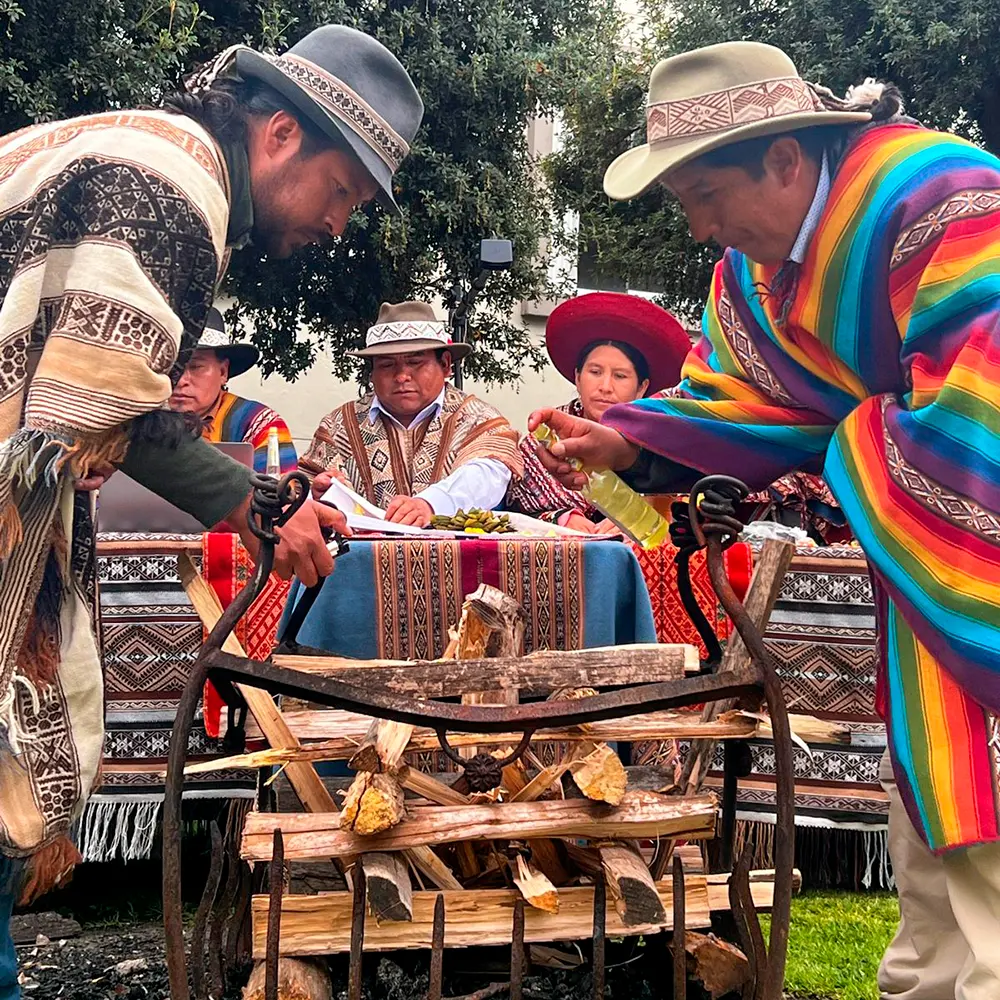
Table of Contents
The Fact That Changes the Whole Calculation
Here is something almost nobody planning a trip to Cusco knows.
The temperature barely changes all year. Average monthly temperatures in Cusco run from about 6.5 °C in July to 8.8 °C in November — a spread of roughly two degrees across twelve months. Daytime highs sit between 12.1 °C and 13.7 °C every single month of the year.
Cusco is at 13.5° south. It does not have summer and winter in the sense most travellers mean. It has a wet season and a dry season, and everything else stays remarkably still.
What does change, dramatically, is rainfall:
| Driest | Wettest | |
| July | 15 mm | |
| June | 16 mm | |
| August | 26 mm | |
| December | 201 mm | |
| February | 218 mm | |
| January | 241 mm |
January gets roughly sixteen times the rain of July. That’s the whole seasonal story.
One consequence catches people out: the dry season has the coldest nights. July averages a nightly low of 1.8 °C and June 2.3 °C, against 5.1–5.3 °C in the wet months. If you are picturing “dry season” as warm, adjust. Clear skies at 3,399 m mean heat escapes overnight, and a 5 AM ceremony in July is genuinely cold.
The Two Seasons, Honestly
Dry season — roughly April to October
Clear skies, reliable conditions, cold nights, and everyone else in the world at the same time. June and July are peak: for accommodation, for Machu Picchu tickets, for the Inca Trail, and for prices. This is when outdoor daytime ceremony is most predictable, and it is the correct season if your trip also includes serious trekking.
Rainy season — roughly November to March
Afternoon rain most days, green landscape, far fewer visitors, and far better availability. Rain here is typically convective — it builds during the day and falls in the afternoon, which means mornings are frequently clear. That single fact is what makes the season workable, and it is the reason we schedule ceremonies for late morning year-round anyway.
February is the outlier and deserves naming: wettest stretch, the Inca Trail closes entirely for maintenance, and landslides occasionally disrupt the train line to Machu Picchu.
The Contrarian Case: Why the Green Season Suits Ceremony
This is the section our competitors won’t write, because it sends business into months they’d rather not staff.
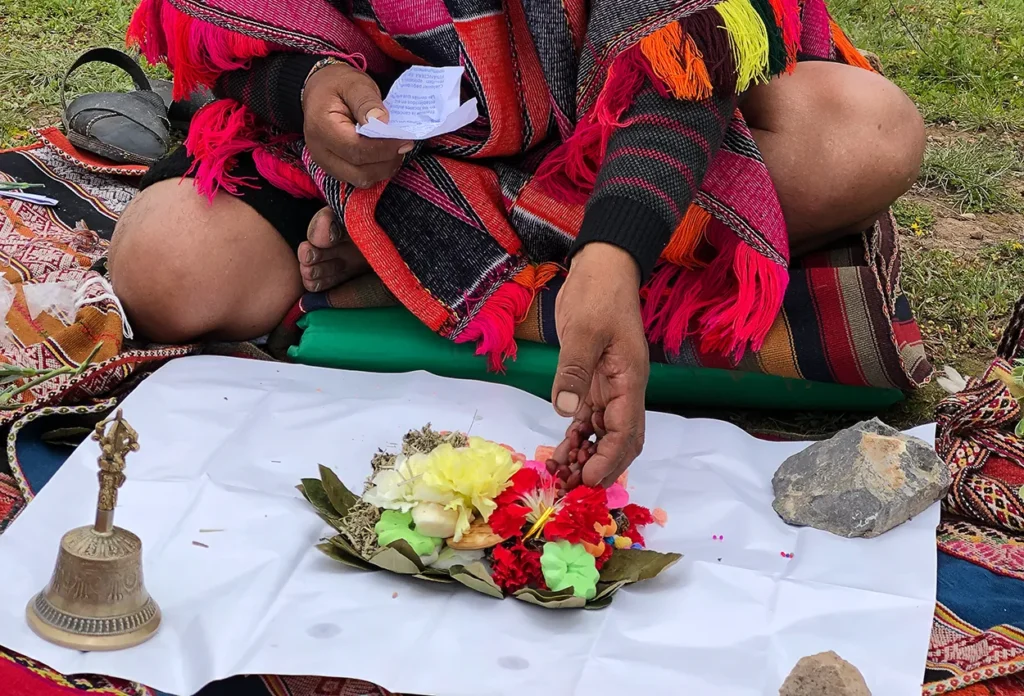
The masters are available. This matters more than weather. Through June, July and August the paqos of the Cusco region are working constantly — Inti Raymi, the Virgen del Carmen, the whole of Pachamama month. In January they have time, and time changes a ceremony. A despacho built unhurried by someone with nothing else that afternoon is a different despacho.
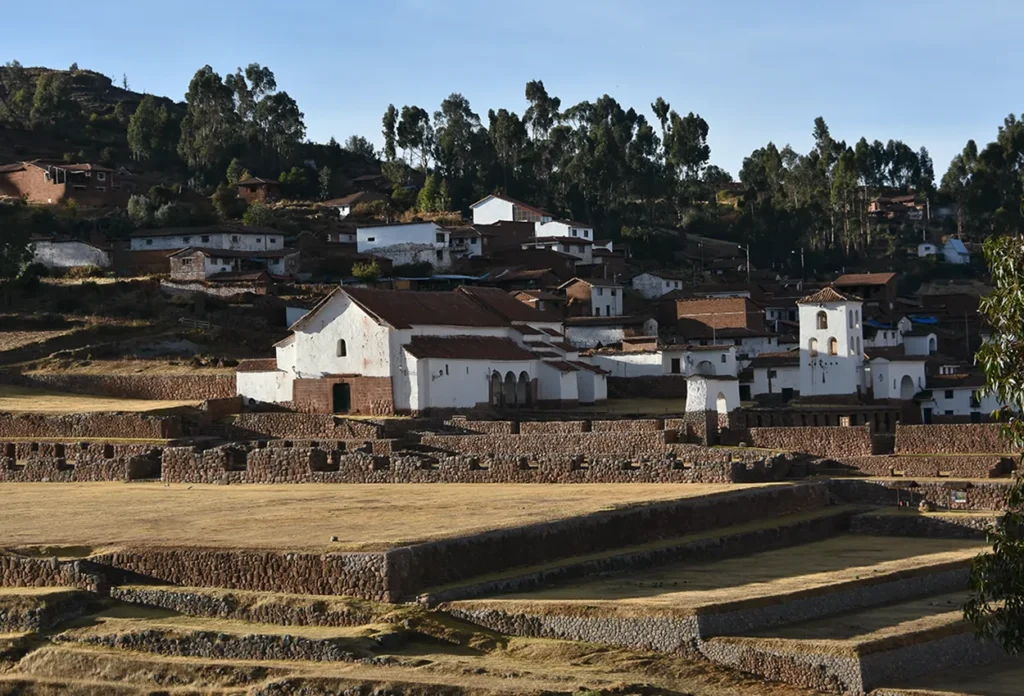
There is nobody else there. Chinchero in February is a village. Chinchero in July has coaches in it. If part of what you came for is silence, the wet season delivers it and the dry season charges you more for its absence.
The land is alive. The Sacred Valley in the green season looks nothing like the dry-season version. Everything is planted, the hills are green, the rivers are full. If your ceremony is an offering to Pachamama, there is something fitting about making it while she is visibly producing rather than dormant.
Mornings work. Late-morning ceremony sits comfortably inside the clear part of a wet-season day. You plan around afternoon rain; you don’t fight it.
And it costs less. Accommodation, flights and availability all move in your favour.
What it is not good for: trekking, the Inca Trail in February, Machu Picchu photography, or the Maras salt pans, which are white and spectacular in the dry season and flooded grey-brown in the wet. If your trip is half ceremony and half hiking, the dry season wins on balance.
What the Season Actually Does to a Ceremony
Weather tables tell you about a place. This is what the seasons do to the thing you came for.
A despacho in July. Built outdoors on the Chinchero plateau in bright, thin sunlight. The fire takes immediately. The wind is the enemy — it lifts petals and loose wool off the paper, and paqos build lower and tighter because of it. Bring layers you can shed at midday and put straight back on when a cloud crosses.
A despacho in January. Built under cover or in a gap between showers, usually late morning. The fire needs more coaxing and the smoke behaves differently — heavier, slower to lift. Nobody minds. The ground is soft for a burial offering, which in the dry months can be genuinely hard to open.
Wachuma in the dry season. The ideal conditions, honestly. Eight to twelve hours outdoors at Quillarumiyoq needs stable weather, and June through September delivers it. The trade-off is sun exposure at 3,700 m — the light is punishing and people underestimate it every year.
Wachuma in the green season. Workable with a morning start and a covered space to retreat to. Afternoon rain arrives around the time the ceremony is deepening, which some people find beautiful and others find difficult. We’ll be honest with you about which you’re likely to be.
Ayahuasca, any month. The least weather-dependent of the ceremonies, since it runs at night and indoors. The variable is temperature: a July night in Chinchero is close to freezing and you will want more blankets than you think. January nights are milder by three or four degrees, which sounds trivial and isn’t when you’re sitting still for four hours.
Coca leaf readings are unaffected entirely. An hour, seated, indoors. Any month, any weather.
Month by Month
January — The wettest month at 241 mm, and the quietest. Green, cheap, and empty. Excellent for coca readings, despachos and ayahuasca; poor for anything involving a mountain pass. New Year in the Andes carries its own ritual life, much of it domestic and unadvertised.
February — 218 mm and the Inca Trail closed all month for maintenance. Carnival falls here, which is genuinely worth seeing and involves a great deal of water thrown at strangers, tourists emphatically included. Not the month for a trek-heavy trip; a fine month for a ceremony-led one.
March — 177 mm and tapering week by week. The valley is at its absolute greenest, the Inca Trail reopens on the 1st, and the crowds are still a couple of months away. One of the best months of the year for ceremony and almost nobody books it.
April — 87 mm. The transition, and arguably the sweet spot of the entire year — green landscape left over from the rains, drying skies, and the crowds still weeks away. Our Mesa Retreat departs 10 April 2027.
May — 31 mm. Superb conditions and the ceremonial calendar starting to move. Corpus Christi falls on Thursday 27 May in 2027, and the Qoyllur Rit’i pilgrimage — the snow star, at over 4,600 m — takes place in the days before it. Our Essential Wellness Retreat departs 4 May 2027.
June — 16 mm, and the busiest, coldest and most spectacular month of the year. The June solstice on the 21st is the southern winter solstice, Inti Raymi follows on the 24th, and the city fills completely. Hotels, trains and Machu Picchu tickets all tighten months ahead. Extraordinary if the festivals are why you came; expensive and crowded if they aren’t. Our Sacred Solstice Retreat departs 15 June 2027.
July — 15 mm, the driest month and the coldest nights. The Virgen del Carmen at Paucartambo runs 15–18 July, and Fiestas Patrias closes the month. Peak prices throughout. Our Introduction to Oracles departs 4 July 2027.
August — 26 mm and a slight uptick in wind on the high plateau. Pachamama month, the most significant ceremonial period of the Andean year, and the hardest week of the year to book anything. The paqos serve their own families and communities first, as they should. Our Pachamama Immersion departs 1 August 2027.
September — 44 mm. Our own favourite month, and we say so without much hesitation. The crowds thin, conditions hold, prices ease, and the September equinox falls around the 22nd. Two departures: Despacho Offering Immersion on 2 September and Equinox Journey on 12 September 2027.
October — 94 mm. Rain returning but not yet established, the warmest days of the year at 13.7 °C, and the crowds gone. Trekking is still entirely viable. A genuinely good month that almost nobody chooses, largely because guidebooks stop recommending Cusco after September.
November — 128 mm and the warmest average of the year at 8.8 °C. The green is returning to the valley, the planting has begun, and there are very few visitors anywhere. Our 2028 calendar puts a departure here deliberately.
December — 201 mm. The December solstice on the 21st is the southern summer solstice, the exact counterpart to Inti Raymi and almost entirely unvisited — which for some people is precisely the appeal. Santurantikuy, the great craft market, fills the Plaza de Armas on Christmas Eve and is one of the finest days of the year to be in the city.
The Ceremonial Calendar
If you want the trip to coincide with something, these are the fixed points. Our roundup of the most important festivities in Cusco covers them at length.
| When | What | Notes |
| Movable, May–June | Qoyllur Rit’i | The snow star pilgrimage, above 4,600 m. Demanding |
| Movable, May–June | Corpus Christi | 27 May 2027; 15 June 2028 |
| 21 June | Winter solstice | See the solstice in Peru |
| 24 June | Inti Raymi | Ticketed, staged, enormous |
| 15–18 July | Virgen del Carmen | Paucartambo |
| 1 August, all month | Pachamama Raymi | Domestic, not a spectacle |
| ~22 September | Spring equinox | See the equinox in Peru |
| 21 December | Summer solstice | Quiet, overlooked |
| 24 December | Santurantikuy | Cusco’s Christmas Eve market |
Peru’s festival calendar and heritage declarations are administered by the Ministerio de Cultura, which is the place to confirm anything official.
Why two of these move every year
Qoyllur Rit’i and Corpus Christi shift by up to a month between years, which wrecks a lot of travel planning.
Both are anchored to Easter, which is itself movable. Corpus Christi falls on the Thursday after Trinity Sunday — sixty days after Easter. Qoyllur Rit’i, the snow star pilgrimage, is timed to the days immediately before it.
The practical consequence is a swing of weeks. In 2027 Easter falls on 28 March, putting Corpus Christi on 27 May. In 2028 Easter is 16 April, pushing Corpus Christi all the way to 15 June — where it lands almost on top of Inti Raymi and the solstice, making that a ferociously busy fortnight in Cusco.
So a June trip in one year and a June trip the next are not the same trip. If you’re planning around either festival, confirm the date for your specific year before you book flights, and expect accommodation to tighten in whichever weeks they land.
Everything else on the list — the solstices, the equinox, Inti Raymi, the Virgen del Carmen, Pachamama Raymi — is fixed to the calendar and safe to plan around years ahead.
A warning about the two big ones. Inti Raymi and Corpus Christi fill the city. If you are coming for quiet interior work, arriving in Cusco on 23 June is a mistake — you will spend the week in crowds. Come for the festival or come for the ceremony; trying to do both in the same five days usually serves neither.
The Best Time for a Spiritual Retreat in Peru, by What You Want
Your first ceremony, and you want it unhurried → March, April, September, October or November. Availability, attention, and no competition for the masters’ time.
Quiet above everything → January through March. You will have Chinchero to yourself.
Ceremony plus serious trekking → May, September or October. Dry enough for the passes, without June and July’s crowds and prices.
You want to be there for Pachamama month → Late July into August, booked three to four months out. Read our Pachamama Raymi guide first so your expectations are right — it is not a public festival.
Solstice work → Mid-June for the winter solstice with everything that surrounds it, or December for the summer solstice with almost nobody there.
Equinox work → September, which is also simply one of the best months to be in Cusco.
The lowest budget → November to March. Meaningfully cheaper across flights, hotels and availability.
You have one week and want everything → You don’t. Pick two things. Our 7-day itinerary explains why spacing matters more than fitting it all in.
Our Fixed Departures
Group journeys run on set dates, which is the simplest way to see how we read the calendar ourselves.
2027: Mesa Retreat 10 April · Essential Wellness 4 May · Sacred Solstice 15 June · Introduction to Oracles 4 July · Pachamama Immersion 1 August · Despacho Offering Immersion 2 September · Equinox Journey 12 September.
2028: Mesa Retreat 5 May · Sacred Solstice 16 June · Pachamama Immersion 1 August · Despacho Offering 2 September · Equinox Journey 14 September · Essential Wellness 10 October · Introduction to Oracles 10 November.
Two things worth noticing. Our departures cluster April to September because that’s when group demand sits — not because the other months are worse. And 2028 pushes into October and November deliberately, for the reasons set out above.
Current dates and prices are on Join a Journey, and group retreats explains how the fixed departures work. Private ceremonies run year-round on your dates.
How Far Ahead to Book
June and July — four to six months. Everything is scarce at once.
First week of August — three to four months minimum. The paqos serve their communities first, and we will say no to late requests.
September — two to three months.
April, May, October — six to eight weeks is usually comfortable.
November to March — three to four weeks is often enough, and sometimes less.
Any month, for a private ceremony — two to four weeks, longer if you want a specific master.
One caveat that applies year-round: these are windows for us, not for your flights. Long-haul fares into Lima and the Lima–Cusco connection behave on their own schedule, and both are cheapest well outside the June-to-August block regardless of what the ceremony calendar is doing.
Practical Notes for Each Season
Dry season packing. The nights are the problem, not the days. Thermal layers, a hat, warm socks. A 5 AM ceremony in July at 3,760 m is colder than most visitors anticipate.
Wet season packing. A proper rain shell rather than an umbrella, waterproof footwear, and a dry bag for anything electronic. Afternoons, not mornings, are when you’ll need them.
Altitude is unaffected by season. Cusco is at 3,399 m in January exactly as in July. Two acclimatisation nights before any ceremony, all year round.
Check conditions before you fly. SENAMHI, Peru’s national meteorological service, publishes regional forecasts worth a look in the weeks beforehand.
Have a rain plan in writing. Ask your operator what happens if it rains on your ceremony day. In the green season this is not a hypothetical.
Frequently Asked Questions
When is the best time for a spiritual retreat in Peru?
For ceremony specifically, March through May and September through November give the best balance of conditions, availability and quiet. June to August is the most spectacular and the most crowded.
Is the rainy season actually bad?
Not for ceremony. Mornings are frequently clear, the masters have time, the landscape is green and costs drop. It is bad for trekking, and February is genuinely difficult.
What is the coldest month in Cusco?
July, with nightly lows averaging 1.8 °C. The dry season has the coldest nights, not the wet one.
Does the temperature change much through the year?
Barely. Monthly averages move about two degrees. Rainfall is what changes — January gets around sixteen times July’s.
Should I come for Inti Raymi?
Only if the festival itself is the point. It’s magnificent and it fills the city; it is not a good week for quiet interior work.
Is August the best month because of Pachamama?
It’s the most ceremonially significant and the hardest to book. Late July or early September gets you the season without the bottleneck.
When is Corpus Christi in 2027?
Thursday 27 May 2027, with Qoyllur Rit’i in the days before it. In 2028 Corpus Christi falls on 15 June.
Is Machu Picchu open all year?
Yes. The Inca Trail closes for all of February; Machu Picchu itself does not.
What’s the cheapest time to come?
November to March, across flights, accommodation and availability.
How far ahead should I book for August?
Three to four months at minimum. The first week is the busiest of the paqos’ year.
What We’d Actually Tell You
If you have complete freedom over dates, come in late September or early October. Conditions still hold, the June crowds are long gone, prices have eased, and the masters have time to give you.
If your instinct is June because that’s when the internet says to come, ask yourself what you’re coming for. If it’s Machu Picchu in perfect light and Inti Raymi in full costume, June is right and we’ll happily arrange it. If it’s a quiet week of ceremony in Chinchero, June is the month you’ll pay most for the least attention.
And if you can only travel in February — come. The valley is green, the village is empty, and the person building your despacho will not be watching the clock.
Tell us your dates and we’ll tell you honestly what that time of year can and can’t give you.Climate figures are long-term monthly averages for Cusco and describe typical conditions rather than any particular year. Festival dates tied to the movable Christian calendar — Qoyllur Rit’i and Corpus Christi — shift annually; confirm current dates before booking travel around them. Climate data: Climate-Data.org; forecasts: SENAMHI.