The Inca Trail Was a Pilgrimage, Not a Hike
 By PumAdventures
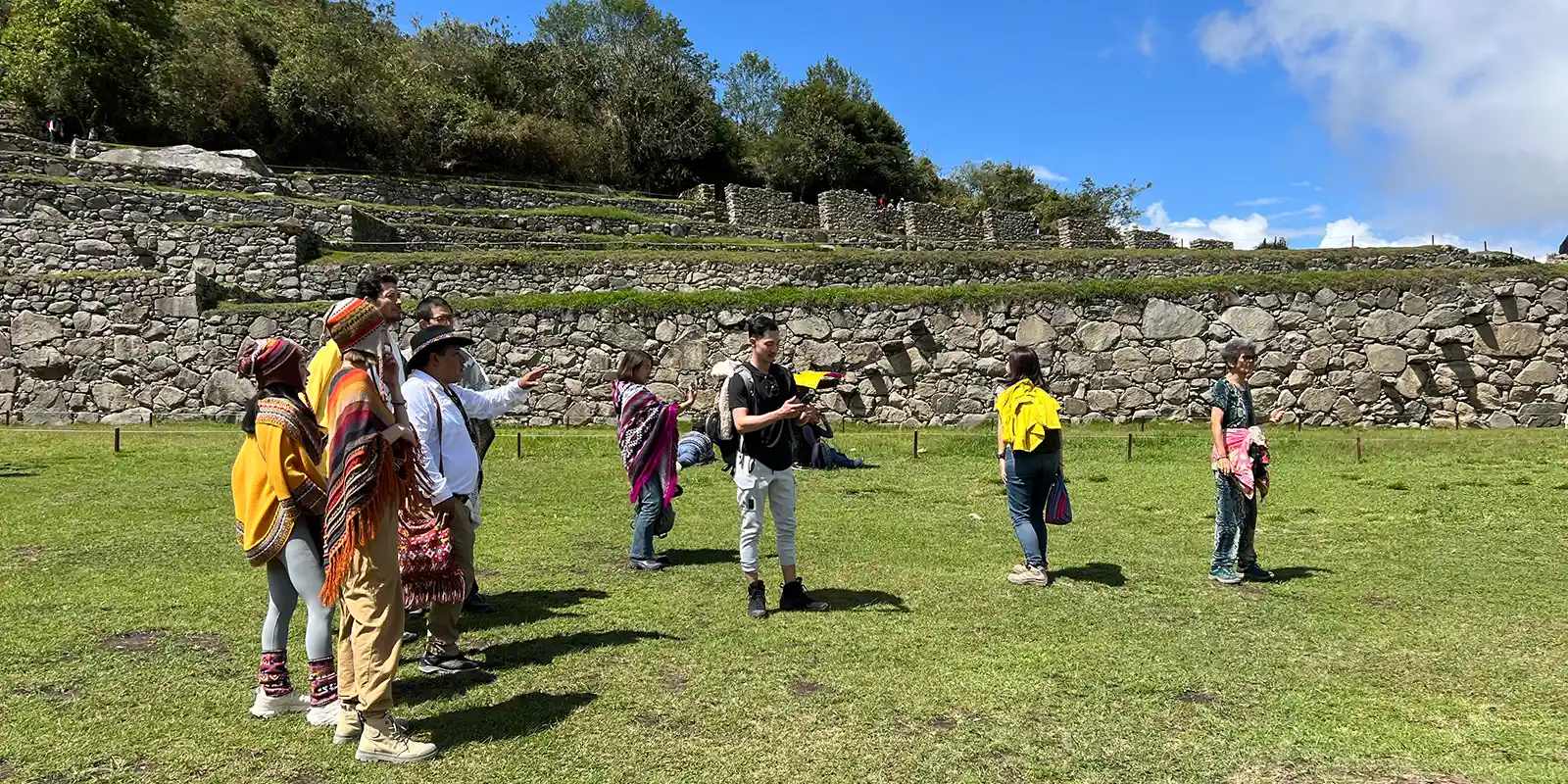
Around two hundred trekkers set out on the classic Inca Trail every morning of the year, most of them treating it as one of the world’s great long-distance walks. Which it is.
It is also a road that was not built for walking to Machu Picchu. Not in any practical sense.
Here is the fact that ought to reframe the whole thing, and that almost no trekking operator puts in front of you: there was an easier way in. The Urubamba valley floor runs from Ollantaytambo to the foot of the citadel — it is where the railway runs today, because it is the obvious route. The Inca had that option and did not take it. They cut a paved road up over a 4,215-metre pass instead, punctuated it with sites, and arranged for it to arrive through a gateway on a ridge.
In Inca engineering, choices like that are rarely accidental.
This article is about the Inca Trail was a pilgrimage meaning — what the route’s design tells us about what it was for, what the Inca demonstrably did build ritual approaches for elsewhere, where the honest limits of that reading are, and how to walk it with some awareness without pretending to a ceremony that isn’t yours.
Table of Contents
The Harder Road Was a Decision
Start with the terrain, because the argument rests on it.
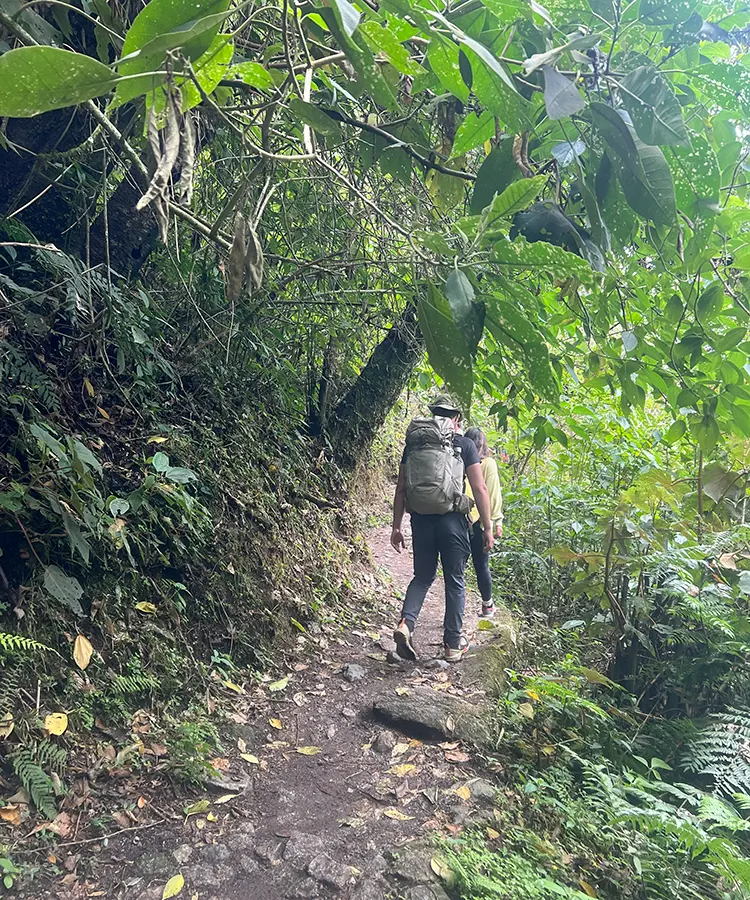
The classic trail runs about 42 km, from a trailhead at Km 82 or Km 88, climbing from roughly 2,600–2,800 m to 4,215 m at Warmi Wañusqa before descending to Machu Picchu at 2,430 m. It is paved in places with cut stone, staired where the gradient demands it, and carried across slopes on constructed terraces.
That is an enormous investment of labour to cross a mountain that could have been walked around.
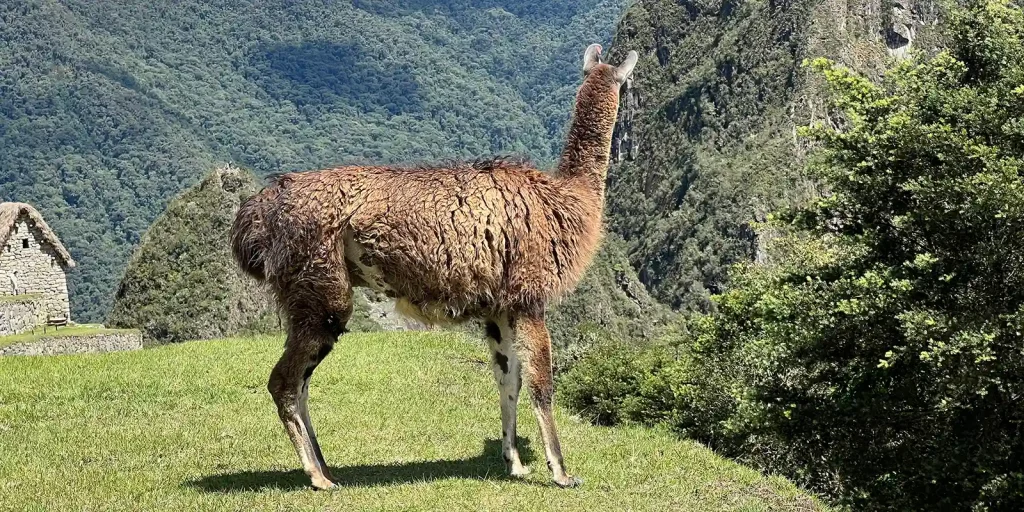
Inca road-building was extremely good at finding practical lines. The network handled armies, llama caravans and the chaski relay runners who carried messages across the empire, and where speed and load mattered the engineering shows it. The choice to route the approach to Machu Picchu high, hard and paved is therefore informative. Something other than efficiency was being served.
What that something was is an interpretation, and we’ll be clear throughout about where interpretation begins. But it isn’t a guess made from nothing — because we know a good deal about how the Inca built approaches to sacred places.
What We Actually Know About Inca Pilgrimage
This is the evidence base, and it is stronger than most travel writing lets on.
The Inca ran a documented pilgrimage system. Archaeological work in the Titicaca basin — Brian Bauer and Charles Stanish’s research on the Islands of the Sun and the Moon is the standard reference — has mapped how the approach to a major shrine was physically organised.
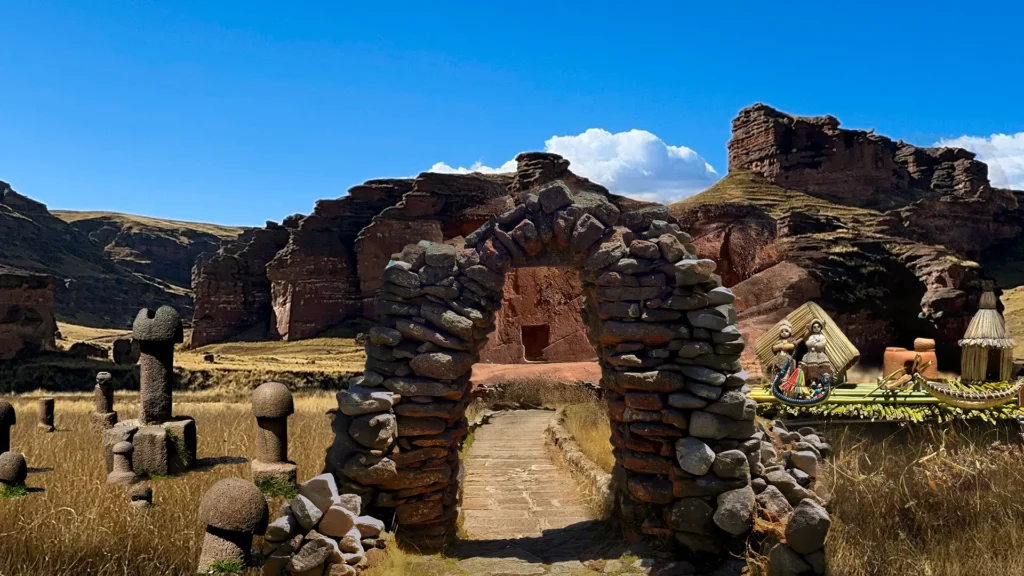
On the Island of the Sun, the route to the Sacred Rock was lined with numerous small constructed platforms along the two main roads. Carved stones functioned as checkpoints, where priests interviewed arriving pilgrims and expected payment. Excavation at these stations turned up pottery and figurines left as offerings, alongside the perishable things that would have accompanied them: peppers, tobacco, coca.
Read that again with the Inca Trail in mind. A sequence of built stations along a prescribed path, screening and staging the approach to a sacred centre. That is the pattern, and it is documented rather than inferred.
Pilgrimage was also politics. Stanish is blunt about this: these were journeys of faith and statements of allegiance. Provinces that failed to send delegations to major shrines could expect military consequences. The three great shrine networks corresponded to the three most important political-geographical regions of the empire.
So the Inca approach road was never a private spiritual amenity. It was infrastructure that did religious and political work at the same time — which is a more interesting thing than the version where everyone walked in reverent silence.
Being Honest: The Road Was Multi-Purpose
A corrective, because this article would be easy to overstate.
The Inca Trail is a segment of the Qhapaq Ñan, the Andean road system inscribed by UNESCO in 2014: over 30,000 km of road across six modern countries — Argentina, Bolivia, Chile, Colombia, Ecuador and Peru.
UNESCO’s own description of that network is instructive. It was “an extensive Inca communication, trade and defence network,” used by caravans, travellers, messengers, armies and population movements of up to forty thousand people. It also connected “centres of production and worship” and included sites of religious significance, with several summit ceremonial sites commanding 360-degree horizons.
Both things at once. Not a sacred way, and not a highway — a state road system that carried grain, soldiers and gods without distinguishing very sharply between them.
And on the trail itself: Runkurakay is a tampu — a waystation. That is logistics, plainly. Patallaqta, near the start, appears to have served religious and ceremonial functions and crop production and housing for soldiers. Andean sites resist the categories we bring to them.
So the defensible claim is narrower and better than “the Inca Trail was a sacred pilgrimage route.” It is this: a functional state road, with ceremonial design layered onto its final approach — and that final approach is where the interesting reading lives.
The Inca Trail Pilgrimage Meaning, Read in the Route Itself
Four features of the route carry the argument. Each is a real, observable thing you will walk past.
The passes as offering points
Warmi Wañusqa at 4,215 m, then Runkurakay pass, then Phuyupatamarca. High points in the Andes are not neutral ground. They are where you come closest to the Apus, and in living Andean practice a pass is where you stop, acknowledge, and give something.
You will find apachetas at all of them — stone cairns built up over generations. More on those below, because they are the single most misunderstood thing on the trail.
Our guide to the Apus explains why which mountains you name depends entirely on where you’re standing, which is exactly the logic a route like this is organised around.
The water shrines
This is the detail that convinces most people.
Wiñay Wayna — arguably the finest site on the trail — is built around a system of fountains fed by a spring, stepped down a steep flank beside a waterfall, with agricultural terraces below. Phuyupatamarca, the “town above the clouds,” has its own sequence of ritual baths.
Water in Andean cosmology is not plumbing. Springs are paqarinas, points of origin. A route studded with built water shrines, positioned where the engineering was hardest, is a route where washing and offering were part of the passage. Machu Picchu itself repeats the pattern with its sixteen linked fountains — a continuity we cover in our reading of Machu Picchu’s sacred architecture.
The sites are a sequence, not a scatter
Walk the classic route and you pass Patallaqta, Willkaraqay, Runkurakay, Sayaqmarka, Qunchamarka, Phuyupatamarca and Wiñay Wayna in a fixed order, each positioned where you would naturally stop.
Compare that with the Island of the Sun: platforms and carved-stone stations along a prescribed path, staging the approach. The Inca Trail has the same shape. Whether its stations performed the same screening function is not proven — nobody has excavated a priest’s toll booth at Sayaqmarka — but the architecture of a staged approach is there to be walked.

The Intipunku, and the reveal
The route arrives at Inti Punku, the Sun Gate, a gateway on the ridge above the citadel.
Consider what that does to an arrival. You cannot see Machu Picchu for four days. You climb a final stair. You pass through a gap in a wall. And the entire site appears below you at once, complete, with the mountains behind it.
That is a designed reveal. A road built for transport does not withhold its destination and then present it from above through a gate. Every architectural tradition that builds thresholds — temple gates, cathedral doors, the torii — understands that passing through a narrow frame changes what’s on the other side.
The Intipunku is the strongest single piece of the argument, and it is also the part every trekker experiences whether or not they’ve read a word about it. Both the four-day and the two-day routes enter this way.
Apachetas: What They Are, and What They Aren’t
The most common thing visitors get wrong on the trail.
What the word means. Apacheta comes from Quechua and Aymara, derived from apachita. The practice is a mound of stones stacked, often conically, as an offering — and it is found across the Andes, from Cusco down into the Atacama.
What it is. You are crossing territory that isn’t yours. You stop at the high point, you place a stone, and in doing so you acknowledge the Apu whose ground you’re on. It is a gesture of ayni — reciprocity, the principle that everything exists in an exchange of giving and receiving, which underlies all Andean practice. Our overview of ancient Peruvian rituals and practices sets out that framework.
- What it is not: a trail marker, a wishing well, or a photo prop.
- Which leads to the practical etiquette, and we’d ask you to take it seriously:
- Add a stone if you want to, and add it deliberately. One stone, placed with some attention. That’s the whole practice.
- Don’t knock cairns over, including for a clearer photograph.
- Don’t build your own decorative towers beside the existing ones. Rock-stacking as a visual hobby has become a genuine nuisance at high passes worldwide, and here it sits on top of something in use.
- Don’t take stones away. Not as a souvenir, not as a memento.
- And don’t stage it. If you’re placing a stone so someone can film you placing a stone, you’ve made it into something else.
These cairns are not archaeology. Arrieros, guides, porters and local walkers add to them now, this season, as a matter of course.
The K’intu at the Pass
If your guide stops below Warmi Wañusqa, takes out a bundle of coca, selects three whole leaves, arranges them with the glossy faces up, holds them to their mouth and breathes into them before offering them to the mountain — you are not watching a demonstration.
That is a k’intu, the fundamental unit of Andean offering: three leaves for the three worlds, Hanan Pacha above, Kay Pacha here, Ukhu Pacha within. The breath is phukuy, the transfer of intention into the leaf. The same gesture opens a coca leaf reading and sits at the centre of every despacho — our guide to despacho ingredients explains where it fits in the wider practice, and our piece on coca leaf reading covers the same leaf in its divinatory role.
Coca is also, practically, what gets people over that pass. Chewing it helps with altitude, and the crew will be doing it because it works. The ritual and the practical use are not separate things; the leaf is treated as a being that helps you, and helping you includes making 4,215 m more bearable.
How to behave. Ask before photographing — every time, and particularly at the moment of offering. Ask whether you can take a k’intu; the answer is usually yes and the asking is most of the point. If you’re given three leaves, hold them faces up, breathe your intention into them, and hand them back. Don’t chew a k’intu that’s been formed for offering.
And don’t fill the silence. Peruvian crews generally cross high passes quietly. There’s a reason for that, and it is not exhaustion.
What This Is Not
The honesty section, because the alternative is letting this article drift into the territory it’s meant to correct.
- You do not become a pilgrim by buying a permit. You become a visitor walking a road that was used for something else. That’s a fine thing to be, and it’s worth being accurately.
- The Inca pilgrims were not spiritual seekers. This is the correction that surprises people most. As far as the evidence goes, the people moving along these routes to major shrines were largely state-sanctioned delegations — representatives fulfilling an obligation, paying at checkpoints, demonstrating their province’s allegiance. Pilgrimage was a duty with political weight attached, not a personal quest for meaning. Projecting a modern seeker’s inner journey onto them gets the history backwards.
- There are no energy lines along the trail. The vortex vocabulary is a twentieth-century North American import. The Andes have their own documented sacred geography — the ceque system, the network of lines and huacas radiating from the Coricancha — and it is considerably more impressive than anything the energy-grid literature invented.
- The route is not “the sacred path of the Inca kings.” You will see this phrasing. It overstates what anyone can evidence.
- And nothing on the trail requires belief. You can find the Intipunku arrival extraordinary while holding no view whatsoever about Apus. The two things are unrelated, and the tradition does not ask you to pretend.
How to Walk It With Awareness
Not a ceremony. Just attention, which is available to anyone.
- Read the route before you walk it. Know that Wiñay Wayna’s fountains are shrines and that Runkurakay was a waystation. Knowing which is which changes what you’re looking at.
- Stop at the passes even if you don’t need to. The route is organised around them. Two minutes standing still at Warmi Wañusqa is the single most rewarding thing you can do on the trail, and almost nobody does it because everyone is photographing.
- Learn three words. Apu, mountain spirit. Ayni, reciprocity. K’intu, three coca leaves. That’s enough vocabulary to follow most of what your guide says.
- Greet the crew properly. The porters carrying your gear are Quechua-speaking men from communities under these mountains. Allillanchu — how are you — goes a long way, and the relationship you have with the crew is a larger part of the week than the ruins.
- Don’t arrive at the Sun Gate talking. You’ll have four days to talk.
- Ask your guide what they actually believe. Most are from the region and most have a considered answer, and it is frequently more layered — Catholic and Andean at once, without contradiction — than the tidy version in the guidebook. That conversation, somewhere around day three, is what people tend to remember.
Being Present Requires Being Acclimatised
A practical point that determines whether any of the above is available to you.
If you arrive at Warmi Wañusqa with a headache and nausea, having flown into Cusco two days earlier, you will not be contemplating your relationship with the Apu. You will be counting steps and trying not to be sick.
Two to three nights at altitude before you start, minimum, and the Sacred Valley floor is a smarter place for them than Cusco itself. Treat the classic trail as a seven-day commitment rather than a four-day one — the full logic is in our 7-day Cusco itinerary, and the practical comparison of the routes is in our guide to the 2-day and 4-day trail.
Use the acclimatisation days for the tradition rather than the Plaza de Armas. An hour at a coca leaf reading, from $70, or a Pachamama offering at $350 in Chinchero, means that when your guide forms a k’intu at 4,215 m you will know exactly what you are watching — and will have done it yourself, properly, with someone who carries the practice.
That is the difference between observing a gesture and recognising one.
Our classic Inca Trail includes a guide working in Quechua as well as English and Spanish, which matters more for this than for anything else. If the classic route is full or the altitude worries you, the short trail from Km 104 enters through the same gate — and if you want the mountain rather than the road, our Salkantay guide covers the alternative.
Frequently Asked Questions
Why was the Inca Trail built?
As part of the Qhapaq Ñan, the Inca state road network, which handled communication, trade, defence and worship. The specific high approach to Machu Picchu shows ceremonial design features — sequenced sites, water shrines, a gateway arrival — layered onto a functional road.
Was the Inca Trail really a pilgrimage route?
It is a well-supported interpretation rather than a proven fact. The Inca demonstrably built staged ritual approaches elsewhere, with platforms and checkpoints, and the Machu Picchu approach fits that pattern. Parts of the trail were also plainly logistical.
What does apacheta mean?
It comes from Quechua and Aymara apachita — a mound of stones stacked as an offering, typically at a high pass, acknowledging the Apu of that place.
Should I add a stone to an apacheta?
Yes, if you do it deliberately: one stone, placed with attention. Don’t knock others over, build decorative towers, or take stones away.
What is the significance of the Intipunku?
The Sun Gate is a designed threshold. It withholds any sight of Machu Picchu for the whole walk, then presents the citadel complete, from above, through a narrow frame. A road built purely for transport does not do that.
What is a k’intu?
Three whole coca leaves held faces up and offered, with the breath — phukuy — carrying intention into them. Three leaves for the three Andean worlds.
Can I take part in the offering at the pass?
Usually yes. Ask your guide rather than joining in uninvited, and ask before photographing.
Is the whole Inca road network sacred?
No. It was over 30,000 km of state infrastructure carrying armies, caravans and messengers as well as connecting places of worship.
Were Inca pilgrims spiritual seekers?
Largely not. The evidence points to state-sanctioned delegations fulfilling political and religious obligations, paying at checkpoints along the way.
Do I need to believe any of this to walk the trail?
No, and nobody will ask. The Intipunku works on arrival regardless.
The Thing Worth Carrying Up There
Four days of walking, three cold nights, a pass that will empty you out, and then a gap in a wall with the whole citadel on the other side.
The people who built that sequence were making a point about arrival — that some places should be earned on foot and then given all at once. You don’t have to share their cosmology to notice that they were right, and that the railway in the valley below, efficient as it is, gets you to the same coordinates and a completely different place.
Put a stone on the cairn. Stand still for a minute before the camera comes out. Ask the man carrying your duffel what the mountain is called.
Tell us your dates and we’ll build the week so you arrive able to notice where you are.
Interpretations of the Inca Trail’s original function are drawn from published archaeology and are presented as interpretation where the evidence does not settle the matter. The Qhapaq Ñan is inscribed as a UNESCO World Heritage Site; Peru’s sections and the archaeological sites along the trail are administered by the Ministerio de Cultura through the Dirección Desconcentrada de Cultura de Cusco. Scholarship on Inca pilgrimage infrastructure referenced here includes Bauer and Stanish’s work on the Islands of the Sun and the Moon. High-altitude trekking carries real risk of altitude illness regardless of fitness; consult your physician before booking. Plant medicine ceremonies are not discussed here and require separate health screening.