Combining a Trek With Ceremony: How to Sequence It
 By PumAdventures

Two things bring most people to Cusco: walking somewhere extraordinary, and sitting with a tradition that is still practised here. A great many travellers want both, and book them the way you’d book a museum and a restaurant — adjacent, efficient, one after the other.
That scheduling wrecks at least one of them, and usually the ceremony. Combining a Trekking and Ceremony.
The question is never really whether to combine trekking and plant medicine in Peru. It’s when, in what order, and with how much space in between. Get the sequence right and the two reinforce each other in a way neither manages alone. Get it wrong and you spend a wachuma ceremony lying down with cramping legs, or an ayahuasca night fighting a body that hasn’t recovered from a mountain pass.
This article is about the sequencing across our whole catalogue — which trek pairs with which ceremony, what the minimum gaps are, and why the physiology matters more than the itinerary you’d prefer.
The short version, up front: trek first, ceremony after, and never on adjacent days.
Table of Contents
Why Ceremony Works Better After the Trek
Most people assume the ceremony should come first — set an intention, then walk with it. It sounds right and it usually isn’t.
You’re already acclimatised
This is the practical argument and it’s decisive.
Our ceremonies take place in and around Chinchero, at roughly 3,760 m — higher than Cusco. Arriving there on day three of your trip, straight off a plane from sea level, means sitting for hours at an altitude your body is still arguing with. People spend the ceremony managing a headache.
Come off a trek and you’ve spent four to six days above 3,000 m, some of it well above 4,000. You are as acclimatised as you are going to get. A day in Chinchero afterwards feels like nothing.
Your head is already empty
The less measurable argument, and the one guests raise unprompted.
Four days of walking does something to mental noise that no amount of preparation replicates. By the third morning most people have stopped narrating. Whatever they arrived carrying has either surfaced or gone quiet. They are, in the plainest sense, ready — and they didn’t have to try to be.
Arriving at a ceremony in that state is completely different from arriving from a hotel room with a list of intentions written on the plane.
You’ll know what you’re looking at
If you’ve walked the Inca Trail or Salkantay, you will have watched your guide stop at a pass, form three coca leaves into a k’intu, breathe into them and offer them to the mountain. You will have put a stone on an apacheta.
Sitting down afterwards with a master in Chinchero, the gestures are already familiar. The despacho isn’t an exotic performance — it’s the full version of something you saw done at 4,200 m by a man carrying your duffel.
Why the Day After a Trek Is the Wrong Day
Here’s the part nobody explains, and it’s mostly physiology.
You have been under-drinking for days
Thirst is suppressed at altitude. That’s the key mechanism, and it’s well documented: reduced thirst sensation at high elevation can account for roughly two to three litres of negative fluid balance across the first days, according to the research on fluid metabolism at altitude. Add the water you lose breathing hard in very dry air, plus sweat on a 22 km day, and most trekkers finish meaningfully behind.
You won’t feel thirsty. That’s precisely the problem.
Now put a plant medicine on top of that. Wachuma is eight to twelve hours outdoors with fasting beforehand. Ayahuasca commonly involves purging. Neither is a good thing to do while already two litres down, and dehydration reliably makes both experiences harder, more nauseating and more frightening than they need to be.
Your legs peak at 24 to 72 hours, not on the day
Delayed onset muscle soreness doesn’t arrive when you stop walking. It builds and typically peaks between 24 and 72 hours after the effort — and it’s provoked most by eccentric loading, which is what a long descent is.
Salkantay drops close to 2,000 m in a single afternoon. The classic Inca Trail is stone steps down for the better part of two days. The worst your legs will feel is the day after tomorrow, which is exactly when people schedule the ceremony.
For wachuma this matters enormously. You are on your feet, outdoors, walking, for most of a day.
Sleep debt
Three nights in a tent above 3,000 m, with cold, thin air and periodic breathing, is not three nights of sleep. Most trekkers come off a route carrying a real deficit.
Ayahuasca runs through the night. Starting that already exhausted is a recipe for a hard time.
You haven’t been eating properly
Appetite drops at altitude. Trek food is good and most people still eat less than they burn.
Then the ceremony asks you to fast — six hours minimum before ayahuasca, arriving on an empty stomach for wachuma. On top of a week of under-eating, that’s a real energy deficit going into a long day.
And the medicines have their own rules
Separate from all of the above: wachuma and ayahuasca should never sit on consecutive days either. The reasoning is pharmacological — ayahuasca’s harmala alkaloids are reversible MAO-A inhibitors, mescaline is a phenethylamine that monoamine oxidase is involved in breaking down, and there’s cross-tolerance at the same serotonin receptors that takes days to reset. Our 7-day Cusco itinerary sets this out in full.
Wachuma before ayahuasca, minimum 48 hours, ideally 72. That rule doesn’t relax because you’re short on days.
Trekking and Plant Medicine in Peru: The Spacing Rules
The whole thing as a table. These are our working minimums, not aspirations.
| Between | Minimum | We prefer |
| Finishing a trek → wachuma | 2 clear days | 3 |
| Finishing a trek → ayahuasca | 2 clear days | 3 |
| Wachuma → ayahuasca | 48 hours | 72 |
| Ayahuasca → wachuma | Avoid this order entirely | — |
| Wachuma or ayahuasca → starting a trek | 2 clear days | 3 |
| Ceremony → Machu Picchu | 1 clear day | 2 |
| Coca reading or despacho → anything | None needed | — |
“Clear days” means whole days with nothing scheduled. Finishing a trek on Thursday afternoon and doing ceremony on Sunday is two clear days — Friday and Saturday. Finishing Thursday and doing ceremony Saturday is one, and we’d push back.
Two rules we don’t bend. No plant medicine within 48 hours either side of a high-altitude trek. And wachuma before ayahuasca, never the reverse, never adjacent.
Which Trek Pairs With Which Ceremony
The catalogue-wide version, since the right combination depends on what the trek does to you.
| Trek | Max altitude | Recovery needed | Pairs well with |
| Short Inca Trail (2 days) | ~2,750 m | 1–2 days | Anything. The easiest to combine |
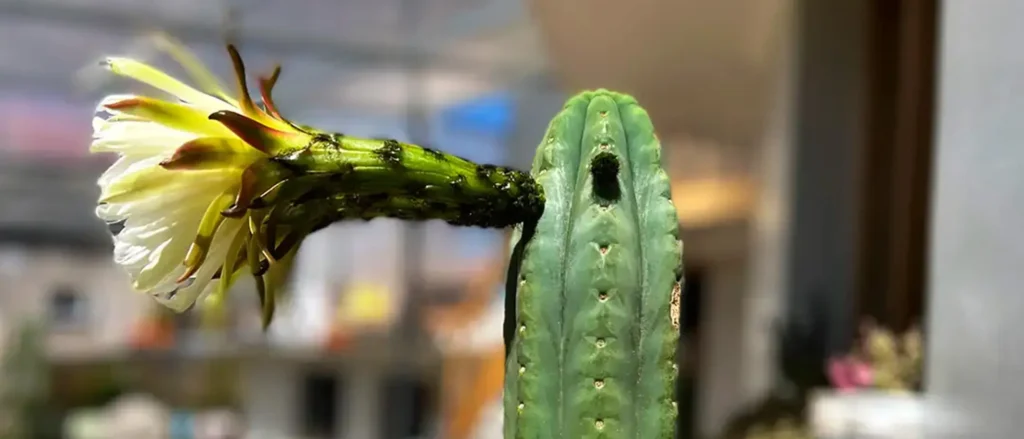
| Huchuy Qosqo (2 days) | ~4,300 m | 2 days | Wachuma, then ayahuasca |
| Lares (4 days) | ~4,400 m | 2–3 days | Wachuma, then ayahuasca |
| Classic Inca Trail (4 days) | 4,215 m | 3 days | Ayahuasca — you’ll want to sit still |
| Salkantay (5 days) | ~4,650 m | 3 days | Ayahuasca first choice; wachuma only if legs allow |
| Ausangate (3 days) | 4,600 m+ | 3 days | Wachuma — see the dedicated article below |
| Rainbow Mountain (day) | 5,020 m | 1–2 days | Either, after a clear day |
| Ausangate 7 Lakes (day) | 4,620 m | 1–2 days | Either, after a clear day |
The pattern worth noticing: the harder the descent, the more you want ayahuasca rather than wachuma afterwards. Ayahuasca is a night sitting or lying down. Wachuma is a day on your feet. After Salkantay’s 2,000 m drop, that difference decides the experience.
The short Inca Trail is the most combinable thing we run. It tops out below 2,800 m, involves one walking day and a hotel night, and leaves you neither wrecked nor deconditioned. If you want both a walk to Machu Picchu and serious ceremony time in a single week, that’s the pairing that fits.
Ausangate with wachuma is its own case, and we’ve written about it separately — the argument there is cosmological rather than logistical, since the Apu the medicine addresses is physically in front of you. Our article on the Ausangate trek and wachuma ceremony covers that pairing properly. The spacing advice in this article still applies to it.
Undecided on the trek itself? Our guide to which trek in Cusco to choose compares them all, and the full range is on the treks page.
The Non-Psychoactive Ceremonies Are a Different Case
Everything above concerns plant medicine. The other ceremonies follow entirely different rules, and this is where most people are leaving value on the table.
A coca leaf reading is an hour, seated, indoors, from $70. A Pachamama offering is two to three hours in Chinchero, from $350. Neither is psychoactive. Neither has contraindications worth speaking of. Neither requires recovery time.
Which means they can go anywhere in your itinerary — including the acclimatisation days before a trek, which otherwise get spent wandering the Plaza de Armas.
And they’re genuinely better placed before. A coca reading on day two sharpens the question you’ll be carrying up the mountain. A despacho before you set out means that when your guide offers a k’intu at the pass, you know what that gesture is because you’ve made one. Our piece on the Inca Trail as pilgrimage goes into why that recognition changes the walk.
So the fullest version of a trip is not ceremony or trek. It is: non-psychoactive ceremony before, trek in the middle, plant medicine after.
What the Clear Days Are Actually For
People treat the gap days as dead time. They are the part of the plan doing the most work, and there’s a way to use them.
Rehydrate deliberately, not casually. You are probably down a couple of litres and you will not feel thirsty, so drink on a schedule rather than on thirst for the first day. Add electrolytes; plain water alone on top of days of sweating doesn’t restore much.
Eat properly, and eat early. Appetite takes a day or two to come back after altitude and exertion. Get real meals in on the first clear day, because the ceremony will ask you to fast and you don’t want to arrive at that already depleted. Soups, quinoa, cooked vegetables, some protein.
Drop altitude if you can. Spending the clear days in the Sacred Valley at around 2,870 m rather than Cusco at 3,399 m gives you noticeably better sleep, which is the single best recovery tool available. It’s a half-hour drive and it’s worth it.
Move gently rather than resting completely. A flat walk of an hour does more for stiff legs than a day horizontal. Don’t climb anything.
Sleep, and don’t apologise for it. Three nights in a tent above 3,000 m leaves a real deficit, and ayahuasca runs through the night.
Keep the diet in mind. If ayahuasca is coming, the preparation asks you to drop alcohol, red meat, pork, fermented foods, caffeine and sugar — and the clear days are when that starts to matter rather than the morning of.
And don’t book anything. No Machu Picchu, no Rainbow Mountain, no market tour at 4 AM. The whole value of these days is that nothing is scheduled.
When Ceremony Before the Trek Is the Right Call
Everything above argues for trekking first. It isn’t an absolute, and here are the cases where we’d flip it.
When the trek is the short one. The short Inca Trail tops out below 2,800 m and asks one walking day of you. There’s no meaningful recovery cost, so the order barely matters — and a ceremony beforehand can sharpen what you carry up to the Sun Gate.
When the ceremony is the reason you came. Some people book a trek because they have a spare four days, not because the mountain is the point. If the medicine work is the trip and the walk is the addition, do the medicine while you’re fresh and rested, take your clear days, then walk.
When you’re staying three weeks. With that much time the constraint disappears. Ceremony, recover properly, trek, recover properly, ceremony again if you want it.
When the trek is a day trip. Rainbow Mountain or the Ausangate 7 Lakes are single days. Either side works, with a clear day between.
What we would not do in any of these cases is compress the gaps. Ceremony first still means two clear days before you start walking — a wachuma day leaves most people tired into the following afternoon, and beginning a 4,000 m trek in that state is the same mistake in reverse.
Four Itineraries That Work
Seven days — one plant medicine
Arrive. Acclimatise two nights, with a coca reading on day two. Short Inca Trail on days four and five with Machu Picchu. One clear day. Wachuma or ayahuasca on the last full day. Fly out the following morning.
Tight, but it holds. The short trail is what makes it possible.
Ten days — trek plus both medicines
Arrive, two acclimatisation nights, coca reading and despacho. Classic Inca Trail or Salkantay. Two clear days — genuinely empty, not Machu Picchu. Wachuma. One clear day. Ayahuasca with the integration circle the next morning. Fly out the day after.
This is the version we’d build if someone gave us ten days and no other constraints.
Fourteen days — unhurried
The same shape with breathing room: more acclimatisation, the Sacred Valley, a longer trek, and three clear days between each ceremony rather than the minimum. The difference between the ten-day and fourteen-day versions is not more activities. It’s more nothing, and the nothing is what does the work.
Five days — pick one
You cannot do a high trek and a plant medicine ceremony properly in five days. You can do one, well.
Our honest recommendation at that length: skip the plant medicine, do the short Inca Trail, and take a coca reading and a despacho. You’ll come home with a real experience rather than two compressed ones.
Screening Doesn’t Pause for Your Itinerary
The health section, because sequencing is not the only thing that decides whether this works.
- Plant medicine ceremonies require individual screening, and completing a trek does not change the answer. Wachuma and ayahuasca are excluded for cardiac conditions, uncontrolled hypertension, epilepsy, pregnancy and breastfeeding, and a personal or family history of psychosis or bipolar disorder, among others. Wachuma is not offered to women who are menstruating. Serotonergic medications — SSRIs and others — are a hard contraindication with ayahuasca.
- Tell us everything at booking, not at the trailhead. People conceal medications because they’ve travelled a long way and are afraid of being turned away, and that is the single most dangerous thing you can do in this context.
- And if you feel wrong after the trek, say so. A guest who finishes Salkantay with a lingering headache, a cough or persistent exhaustion should not be sitting in ceremony two days later regardless of what the itinerary says. We will move it or refund it. That decision is ours to support, not yours to push through.
Altitude is the other constant. Our guide to altitude and acclimatisation for Cusco treks covers preparation in detail, and applies before both halves of a trip like this.
Full details of each ceremony — durations, prices, what’s included — are on our ceremonies page, with the wachuma ceremony at $250 and the ayahuasca ceremony at $350.
Mistakes We See
- Booking the ceremony for the day after the trek finishes. The most common, and the reason this article exists.
- Putting the ceremony first to “set an intention.” Understandable, and it wastes your acclimatisation.
- Scheduling Machu Picchu the morning after a ceremony. A 4 AM alarm, a train and a bus up switchbacks is close to the worst possible day-after.
- Treating the clear days as spare capacity. They are not slack in the schedule; they are the schedule.
- Doing wachuma after ayahuasca. Wrong order, pharmacologically.
- Both medicines in a five-day trip. Not possible done properly.
- Flying out the morning after the last ceremony. Give yourself a day.
- Hiding a medication because you’ve already paid for the trek.
Frequently Asked Questions
Should I do the ceremony before or after the trek?
After, in almost every case. You’ll be fully acclimatised, mentally settled, and you’ll understand the gestures you saw on the trail.
How many days between a trek and a plant medicine ceremony?
Two clear days minimum, three preferred. Longer after Salkantay or Ausangate.
Can I do wachuma the day after finishing a trek?
No. You’ll be under-hydrated, your legs peak at 24–72 hours, and wachuma is eight to twelve hours on your feet.
Can I combine a trek with ayahuasca?
Yes, with two to three clear days in between. Ayahuasca suits post-trek better than wachuma because it doesn’t ask your legs for anything.
Can I do both wachuma and ayahuasca on one trip?
Yes, with at least 48 hours between them — 72 is better — and wachuma first. Never consecutive days.
Why wachuma before ayahuasca?
Pharmacology. Ayahuasca’s alkaloids inhibit MAO-A; mescaline is metabolised by the same enzyme. Running wachuma first avoids that overlap.
Can I do a coca leaf reading before a trek?
Yes, and it’s the best place for it. Non-psychoactive, no contraindications, no recovery needed.
What’s the minimum trip length for a trek plus one ceremony?
Seven days, using the short Inca Trail. Ten if you want a high trek and a ceremony done properly.
Which trek combines most easily with ceremony?
The short Inca Trail. Below 2,800 m, one walking day, minimal recovery.
What if I get sick on the trek?
Tell us. We move the ceremony rather than run it on someone who isn’t recovered.
What We’d Build for You
Walk first. Let the mountain empty you out and acclimatise you at the same time. Take two days doing nothing much in the Sacred Valley. Then sit down with someone in Chinchero.
Put the coca reading and the despacho at the front, where they cost you nothing and sharpen everything after them.
And protect the empty days from yourself. Everyone tries to fill them, and they are the reason the rest of it works.
Tell us your dates and how long you have and we’ll sequence it properly — including telling you when what you’re asking for doesn’t fit the time you’ve got.
Plant medicine ceremonies require individual health screening and are not suitable for everyone; contraindications include cardiac conditions, uncontrolled hypertension, epilepsy, pregnancy and breastfeeding, psychiatric history and a range of medications, notably serotonergic antidepressants. No ceremony described here is a treatment for any condition. High-altitude trekking carries a real risk of altitude illness regardless of fitness. Consult your physician before travelling to high altitude or participating in any ceremony. Physiological background on altitude and fluid balance from the NCBI Bookshelf and on high-altitude exposure; general altitude guidance from the CDC Yellow Book.