Andean Cosmovision: How the Andes See the World
 By PumAdventures
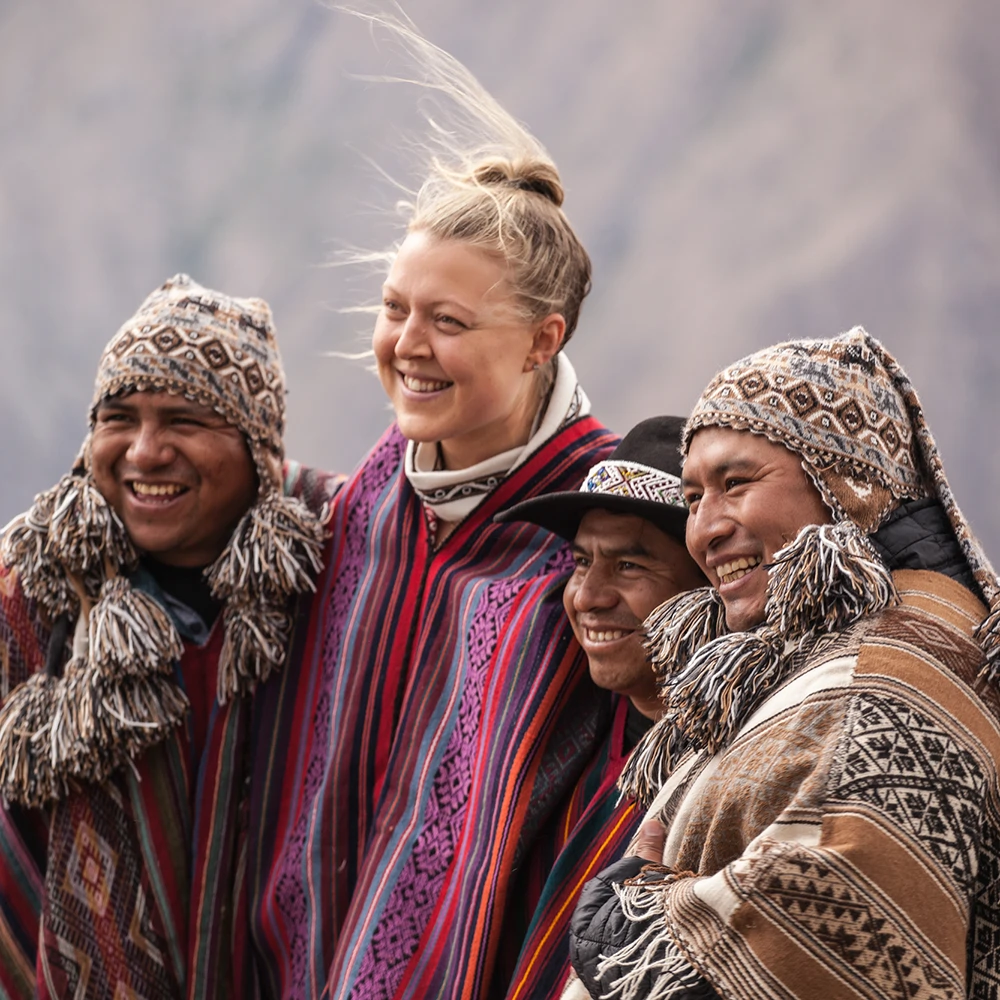
Watch a farmer in Chinchero open a bottle of beer at the end of a working day. Before anyone drinks, he tips the bottle and lets a small splash fall on the ground. He does not announce it or explain it. If you ask, he will shrug and say Pachamamapaq: for the earth. She worked too.
That small splash holds most of what people mean by Andean cosmovision: a way of understanding the world in which the earth is alive, mountains are powerful neighbours, every gift creates a debt, and the boundary between the practical and the sacred is very thin. It is not a set of beliefs you sign up to. It is a way of living that shapes how people farm, marry, heal, settle arguments and walk up a hill.
This guide is our attempt to explain it properly, from Cusco, where we have worked with maestros from Chinchero and the surrounding communities since 2013. We will cover the big ideas, show where you can still see them today, and be honest about one thing that most writing on the subject skips: a lot of what is sold to visitors as “ancient Andean wisdom” was put together in the last fifty years. Some of it is beautiful. It is still worth knowing which part is which.
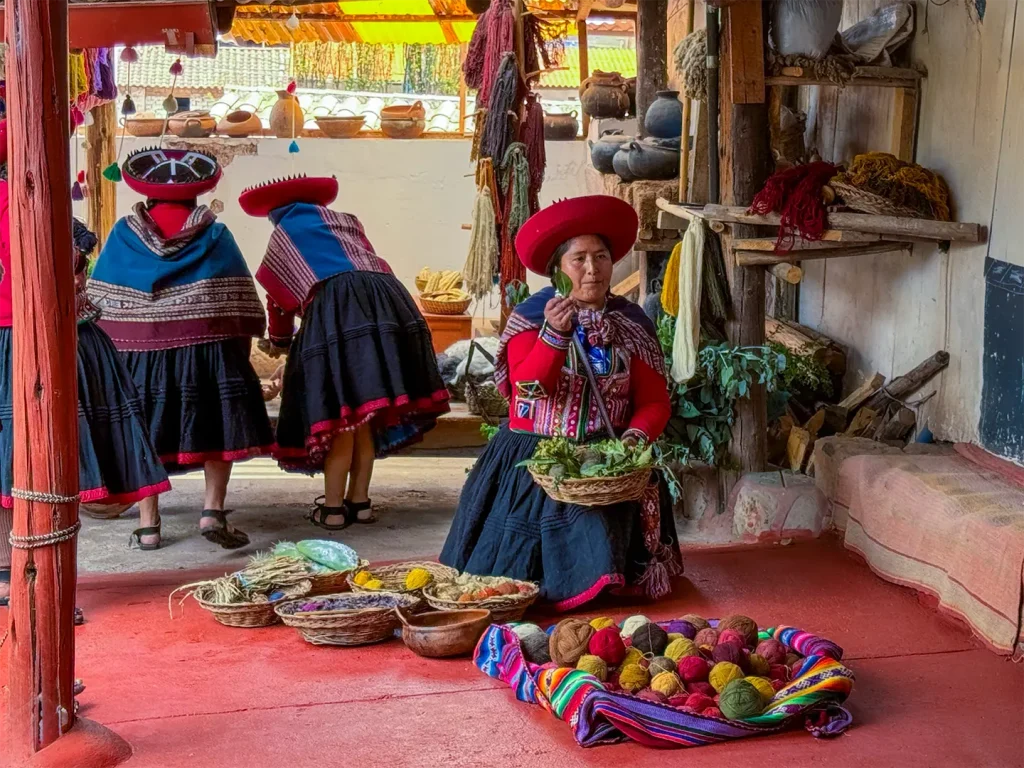
Table of Contents
What “Andean Cosmovision” Means (and What It Is Not)
Cosmovisión is the Spanish word for worldview. In Peru it has come to mean, specifically, the worldview of the Quechua and Aymara peoples of the highlands: their understanding of how the world is made, who lives in it and how people should behave towards it.
Three things it is not.
It is not a religion with a book. There is no scripture, no creed and no central authority. Knowledge passes from parent to child, from teacher to apprentice, and through practice. What a paqo in Q’ero says may differ from what a paqo in Chinchero says, and both will be right for their own mountains.
It is not a museum piece. The Andean worldview has lived alongside Catholicism for nearly five hundred years, and the two have soaked into each other. A family may make a despacho to Pachamama in the morning and attend Mass in the afternoon without any sense of contradiction.
It is not purely Inca. The Incas ruled for about a century before the Spanish arrived. Many of the ideas below are far older, shared by peoples who lived in the Andes for thousands of years before Cusco became a capital. Calling everything “Inca” flatters the tourist and shortchanges the communities.
Three layers you will meet in Cusco
It helps to think of Andean cosmovision as three layers sitting on top of each other.
- Community practice. What families in highland villages actually do: feeding the earth in August, naming the mountains, reading coca, sharing labour. Anthropologists have documented this carefully for decades, from Catherine Allen’s study of coca and identity in the community of Sonqo to Gary Urton’s work on astronomy in Misminay, a village near Moray.
- Colonial blending. Catholic saints mapped onto mountains, crosses planted on peaks, pilgrimages like Qoyllur Rit’i that join both traditions.
- Modern Andean mysticism. A body of teaching developed from the 1970s onward, largely in Cusco, to explain Andean spirituality to outsiders. It introduced much of the vocabulary visitors hear today: kawsay pacha, sami and hucha, the three principles of munay, yachay and llank’ay.
None of these layers is fake. But they are different things, and we think you deserve to know which one you are standing in.
A Living World: Everything Has Kawsay
The starting point of the Andean worldview is that the world is alive. Not metaphorically, and not in a vague “nature is sacred” way.
Kawsay means life, and it runs through mountains, springs, maize, potatoes, stones, the wind and the dead. Maize has a mother, Mama Sara. Potatoes have a mother, Mama Axu. Coca has one too. Highland farmers can name dozens of potato varieties by sight, and many talk about them almost the way they talk about relatives, with characters and preferences of their own.
People, in this view, are one kind of being among many. The Quechua word runa means a person, a human being, but the world is crowded with other persons: the Apus, Pachamama, the ancestors, the lakes. Living well means keeping good relations with all of them.
This explains something visitors often find puzzling. When a paqo asks permission before a ceremony, or a hiker adds a stone to a cairn at a pass, it is not superstition in the Western sense. It is manners. You are entering someone else’s home.
Pacha: Where Space and Time Are One Word
Pacha is perhaps the most important word in the Andean vocabulary, and the hardest to translate. It means world, earth, place, time and era, all at once. Kay pacha is “this world”, but it is also “this time”. The idea that space and time are aspects of one thing is not a later philosophical gloss; it is built into the language.
The three worlds
The Andean cosmos is often described as three worlds, or three levels of one world.
| World | Quechua | What lives there | Animal often associated |
| Upper world | Hanan Pacha | Sun, moon, stars, lightning, rain | Condor |
| This world | Kay Pacha | People, animals, plants, mountains | Puma |
| Inner world | Ukhu Pacha | Seeds, springs, ancestors, the dead | Serpent |
Two corrections are worth making straight away.
Ukhu Pacha is not hell. Spanish priests translated Hanan Pacha as heaven and Ukhu Pacha as hell, and that translation has stuck in many guidebooks. In the older sense, Ukhu Pacha is where seeds germinate, where water flows underground and where the ancestors rest. It is a place of fertility as well as of the dead, and it is not a punishment.
The three animals are partly a modern simplification. Condors, pumas and serpents are real and important in Andean imagery: you can see them carved in stone at sites across the Cusco region. Their neat assignment to three worlds, however, is mostly a teaching device of recent decades. It is a useful way in, not a rule.
Pachakuti: when the world turns over
Pachakuti means the overturning of the world. In Andean thinking, time moves in great cycles, and at the turning point between them everything is reversed: what was above goes below. The Spanish conquest was understood by many as a pachakuti. The word was also the name taken by the ruler Pachacuteq, who rebuilt Cusco in the fifteenth century.
You will hear predictions that a new pachakuti is under way now. Most of these are part of the modern layer, popular since the 1990s, and you are free to take them or leave them.
Two Halves Make a Whole: Duality and Meeting
If kawsay is the first principle of Andean cosmovision, complementary pairing is the second. The world is made of pairs that need each other.
Yanantin
Yanantin describes two different things that together make one complete thing. Right and left hands. Sun and moon. Man and woman. Upper and lower. Neither half is better; each is incomplete alone.
You can hear yanantin in music. Andean panpipes, sikus, are traditionally split into two halves with alternating notes, so that two players must play together, weaving one melody between them. No single player can perform the tune.
Hanan and Urin: a city built in halves
Inca Cusco itself was divided into two halves: Hanan Qosqo (upper Cusco) and Urin Qosqo (lower Cusco), each with its own lineages and responsibilities. Many highland communities around Cusco are still organised in two halves today, and rivalries between them can be friendly or fierce.
The Inca state, Tawantinsuyu, extended the same logic outward: “the four parts together”, four regions radiating from Cusco and meeting in its central square.
Chachawarmi
In Aymara communities around Lake Titicaca, authority is held by a couple rather than an individual: chachawarmi, man-woman. A man becomes a full adult member of the community when he marries, because only as a pair do people complete each other. Quechua communities near Cusco have similar ideas, and you will meet them in an Andean wedding.
Tinkuy
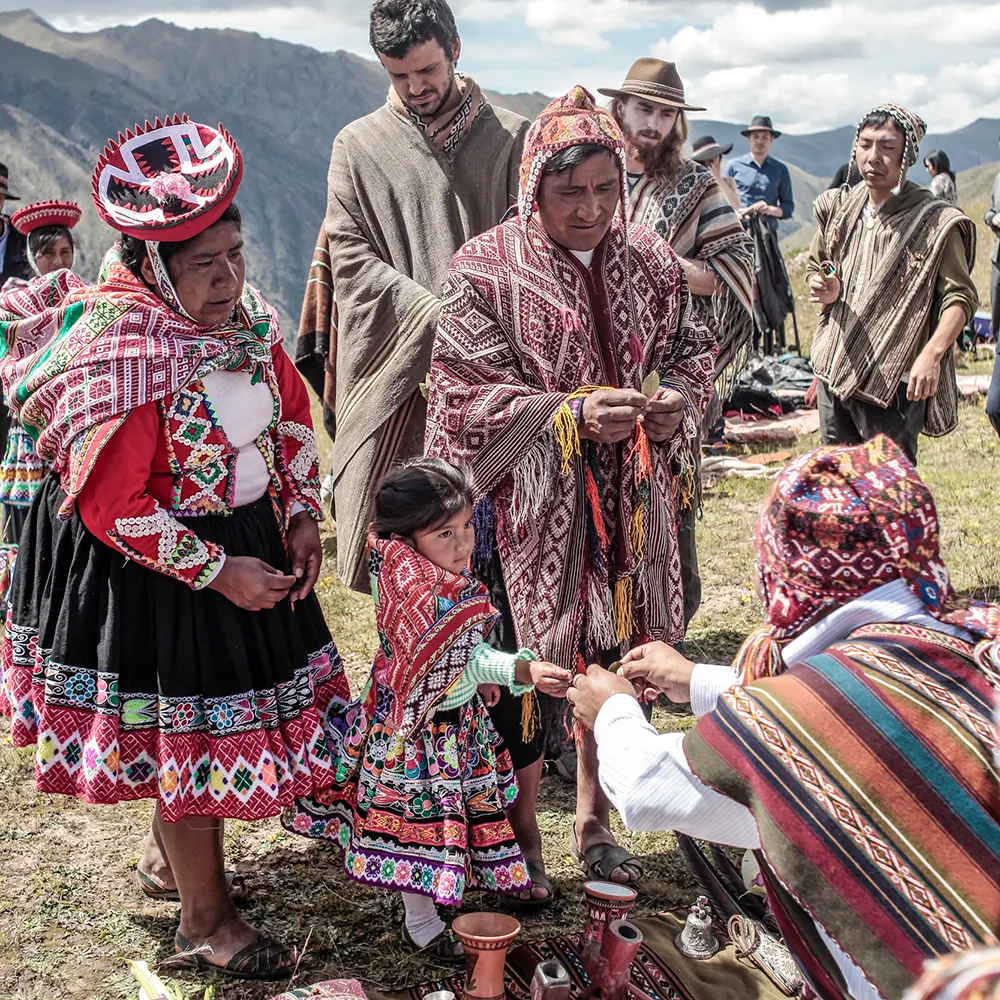
Where two opposites meet, something happens. Tinkuy is the meeting point: two rivers joining, two communities at their boundary, two people at a ceremony. A tinkuy can create something new or it can be violent; the word covers both. Ritual is often about guiding the meeting so that it is fruitful.
Reciprocity: The Rule Behind Every Ritual
If you remember one idea from Andean cosmovision, make it ayni.
Ayni is reciprocity: you give, you receive, you give back. In daily life it is very practical. Families exchange labour at planting and harvest, and they keep track. If you helped me with my potato field for three days, I owe you three days. The debt is remembered for years.
Mink’a extends the same principle to the whole community: collective work for a shared good, such as cleaning irrigation channels or rebuilding a bridge. The best-known example near Cusco is the annual renewal of the Q’eswachaka bridge over the Apurímac river, rebuilt every year by four Quechua communities using fibres twisted by every household.
Reciprocity with the land
Here is where Andean cosmovision becomes ritual. The same logic of ayni applies between people and the living world. Pachamama feeds us; therefore we feed her. The Apus protect the herds; therefore they are given their share.
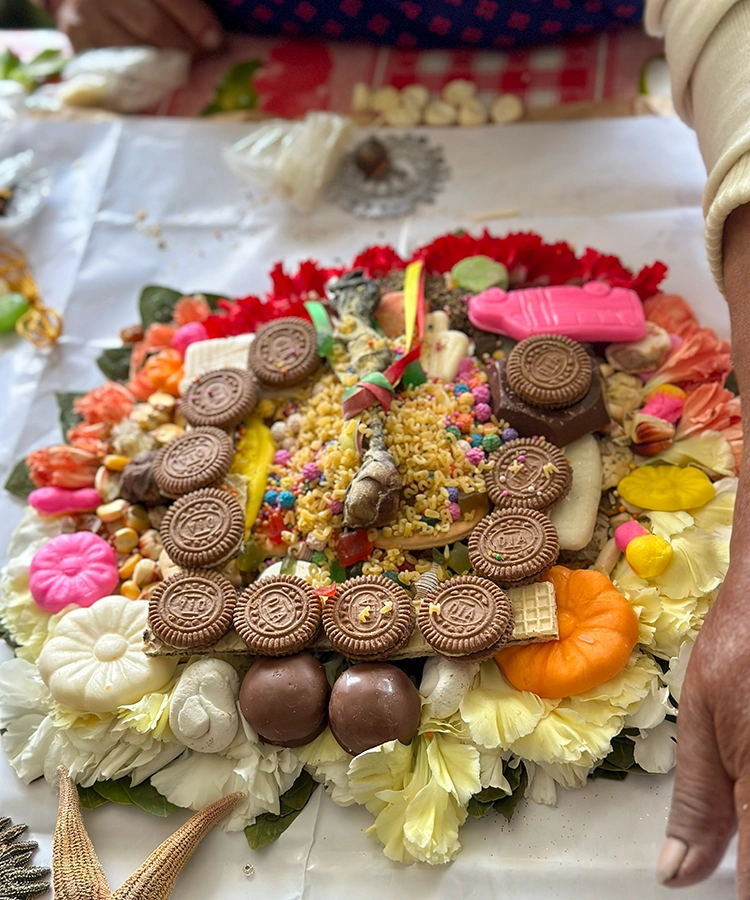
A despacho, the offering bundle at the centre of most Andean ceremony, is ayni made visible. Coca, seeds, sweets, llama fat, wool and flowers are arranged with great care and then given to fire or buried. Spanish-speaking families often call it a pago, a payment, which says it plainly. Our guide to despacho ceremony ingredients explains each element.
When reciprocity breaks
This is also how many highland families understand misfortune. A sick animal, a failed harvest or a run of bad luck may be read as a sign that a relationship has been neglected: an Apu has not been greeted, the earth has not been fed, a debt has gone unpaid. The first response is not guilt but repair. Someone consults a paqo, the leaves are read, and an offering is made.
The Sacred Landscape: Apus, Pachamama and Huacas
In Andean cosmovision the landscape is not scenery. It is a community of powerful beings with names, personalities and territories.
Pachamama
Pachamama, the Earth Mother, is the living earth under your feet: the soil that feeds, holds and receives. She is not distant or abstract. She is especially “open” in August, when fields are prepared for planting, and that is when families across the region feed her most generously. Read more about Pachamama Raymi, the August festival, or join an offering to Pachamama at any time of year.
The Apus
The great mountains are Apus, lords. Each protects a territory, and they are ranked. Around Cusco the most powerful is Ausangate, the 6,384-metre peak whose glaciers feed the region’s rivers. Then come Salkantay, Pachatusan (whose name means “crossbeam of the world”) above the Huatanay valley, Apu Picol watching over the eastern edge of the city, and the Inca sacred hill of Huanacaure, which features in the origin story of the Inca dynasty.
Every ceremony begins by calling them, from the highest down to the hill you are standing on. Our guide to the Apus and Andean mountain spirits explains the hierarchy in detail.
Huacas and ceques
A huaca (wak’a) is anything sacred: a rock outcrop, a spring, a cave, a carved stone, a tomb. Inca Cusco was surrounded by hundreds of them, organised along ceques, lines radiating from the Qorikancha temple. The Jesuit chronicler Bernabé Cobo, writing in the seventeenth century, recorded around 328 shrines on 41 lines, each cared for by a particular lineage.
This system is the real Andean equivalent of what modern teaching sometimes calls “ley lines”. It was not a network of mysterious energy but a carefully organised map of sacred obligations, water rights and kinship. Our list of power places in Cusco includes several huacas you can visit.
Water and origins
Mama Qocha, Mother Sea, includes lakes and lagoons. Water is understood to circulate between the sea, the earth and the sky, rising through springs and falling as rain. Every people has a paqarina, a place of origin; for the Incas it was Lake Titicaca and the cave of Tambo T’oqo at Pacaritambo.
Sky and Time: Reading the Calendar
Andean cosmovision is a farmer’s worldview, and farmers watch the sky.
The river in the sky
The Milky Way is Mayu, the celestial river, mirroring the Vilcanota river in the Sacred Valley below. Andean astronomers read it in an unusual way: not only for stars but for the dark patches between them. These “dark cloud” constellations include a llama (Yacana), with two bright stars for eyes, as well as a toad, a serpent and a fox. Gary Urton documented these in Misminay, close to Moray, where farmers still use them.
Forecasting with the Pleiades
One example shows how practical this knowledge is. In late June, farmers in parts of the Peruvian and Bolivian highlands watch the Pleiades rise before dawn. If the cluster looks bright and clear, they expect good rains and plant on time. If it looks dim, they delay planting. A study published in Nature in 2000 found that the dimming corresponds to high, thin clouds associated with El Niño years, which bring poor rains to the southern Andes. Farmers had been forecasting El Niño for centuries.
The ritual year
The Andean calendar ties ritual to the agricultural cycle. A simplified version of what you will find around Cusco today:
| Season | What happens | Ritual moments |
| August | Fields are opened for planting | Pachamama Raymi, despachos, cleansing of homes |
| September–November | Planting, first rains | Equinox, Todos Santos (1–2 November), offerings to the dead |
| December–March | Rainy season, growth | Carnival (pukllay, play) in February, blessing of fields and animals |
| April–June | Harvest | Qoyllur Rit’i (late May or June), Corpus Christi, Inti Raymi (24 June) |
| July | Dry, cold season | Virgen del Carmen in Paucartambo, preparation for August |
November, when this article was written, is the month of the dead. The chronicler Guaman Poma called it Aya Marq’ay Killa, “the month of carrying the dead”. On 1 and 2 November, Cusco families visit cemeteries with food, music and t’anta wawas, bread shaped like babies, to share a meal with their ancestors. It is one of the clearest places to see Andean and Catholic ideas sitting together.
For festival details see our pages on Inti Raymi, the most important festivities in Cusco, the June solstice and the equinox.
Health and Healing in the Andean Worldview
Andean healing follows directly from Andean cosmovision. If health means good relations with the living world, then illness often means that something in those relations has gone wrong.
Before anything else. Traditional Andean healing is a cultural and spiritual practice. It is not a substitute for medical diagnosis or treatment. If you have a health condition, keep seeing your doctor, keep taking prescribed medication unless your doctor advises otherwise, and tell any healer about it.
Illness as imbalance
In highland communities, illness is understood on several levels at once. A fever may have a physical cause and also a relational one. Healers ask not only what is wrong but why now, and with whom the balance has broken: with the earth, a mountain, an ancestor, another person or oneself.
Some illnesses are specifically Andean in their description:
- Mancharisqa (in Spanish, susto): fright sickness. After a sudden shock, part of a person’s spirit, their animu, is believed to leave the body and stay where the fright happened. The person becomes listless, sleeps badly and loses appetite. The healer calls the animu back, often using the person’s name and clothing, sometimes at the very spot where the shock occurred.
- Wayra, “wind”: illness carried by bad air, often linked to certain places at certain hours.
- Being caught by the earth: illness believed to come from having slept, sat or urinated in a place belonging to Pachamama or the ancestors without asking permission. The remedy is an offering.
Western writing about Andean healing often uses imported phrases like “soul retrieval”. The idea is close, but the Andean version is more specific and more social. It is about a frightened person, a particular place and a relationship that needs repair, rather than a generic spiritual technique.
How healing is done
The tools are simple and local: coca leaves to diagnose, a mesa (a bundle of sacred stones called khuyas) to focus and protect, eggs, candles, flowers, herbs, florida water and, in some families, a guinea pig passed over the body. A limpia (cleansing) draws out what is heavy. A florecimiento (flowering) restores what is fresh. A despacho repairs the relationship with the land.
Healing does not stop with the person. A good healer will often say that the family, the house and even the animals need attention too, because the imbalance belongs to all of them. This community dimension is easy to lose when Andean healing is packaged for individual visitors.
Recent academic work supports this picture. A 2026 study of pampapu, an Andean healing ritual, published in the journal Religions, describes it as an expression of a symbolic and spiritual relationship with the earth and Andean deities, still practised alongside modern medicine.
Our page What Is a Mesa? explains the healer’s bundle, and a coca leaf reading is the most common way visitors first experience Andean diagnosis. The coca leaf reading meaning guide explains how the leaves are read.

The People Who Carry the Tradition
Andean cosmovision is not held by a priesthood. Most of it lives in ordinary families: in how a grandmother plants, how a father greets the mountain on the way to the fields, how a weaver chooses her designs. Some people, though, carry special responsibility.
Paqos are ritual specialists who make offerings, read coca and heal. In Cusco you will hear two main levels: the pampamisayoq, who works mainly with Pachamama, and the rarer altomisayoq, understood to speak directly with the Apus. Many paqos are farmers and herders too.
Varayoq, “staff holders”, are traditional community authorities who carry a decorated staff of office. Their role combines civil and ritual duties, and in some communities they still lead offerings on behalf of everyone.
Women carry much of the tradition, even when men are more visible in ceremonies offered to visitors. Weavers in Chinchero hold an enormous vocabulary of designs that encode landscape and myth, and many women are respected healers and paqos in their own right.
The Q’ero, a Quechua-speaking people of the Paucartambo province who live high under Ausangate, became famous after an expedition in 1955 as keepers of particularly old traditions. Their weaving and ritual are distinctive. The name is also used heavily in marketing, so it is reasonable to ask any provider which community their paqos come from.
For more on these roles, see our Andean spiritual glossary, which defines 84 terms you are likely to hear.
Five Centuries of Catholicism
When the Spanish arrived in the 1530s, they tried to destroy Andean religion. Campaigns to “extirpate idolatry” smashed huacas, burned ancestral mummies and punished paqos. In the 1560s a movement called Taki Onqoy, the “dancing sickness”, spread through the central highlands, calling people back to the huacas. It was suppressed.
What happened next was not erasure but blending. Crosses were planted on mountain tops, and people continued to climb those mountains to pray. Saints and Virgins took on the roles of local powers. Catholic feast days fell close to old agricultural rituals and absorbed them.
The best example is Qoyllur Rit’i, the “Snow Star” pilgrimage to the Sinakara valley beneath Ausangate, held in late May or June. Tens of thousands walk up to a sanctuary at around 4,700 metres. UNESCO, which added it to its Representative List of Intangible Cultural Heritage in 2011, describes it as combining Catholicism with the worship of pre-Hispanic nature deities. Our article on the Snow Star pilgrimage describes it in more detail, and the festival of the Virgin of Carmen in Paucartambo is another place where the two traditions meet.
People in Cusco rarely see this as a contradiction, and we would gently suggest visitors stop looking for a “pure” Andean tradition untouched by Christianity. It does not exist, and the living tradition is more interesting than the imagined one.
Andean Cosmovision and Modern “Andean Mysticism”
This is the section most guides leave out.
From the 1970s onward, a small group of teachers in Cusco began to explain Andean spirituality to foreign students. The anthropologist Juan Núñez del Prado, son of the man who led the 1955 Q’ero expedition, was central to this, together with others who trained with paqos from Q’ero and nearby communities. Their aim was to translate a practice rooted in specific villages into something that people from other cultures could understand and use.
They gave us much of the language you will hear today:
- Kawsay pacha, “the world of living energy”
- Sami and hucha, light and heavy energy, and the practice of exchanging them
- Munay, yachay and llank’ay as three guiding principles: love, wisdom and work
- Structured initiations such as the hatun karpay
Since then, further layers have been added abroad: the Munay-Ki, nine rites popularised by a US-based school in the 2000s; the Eagle and Condor prophecy, circulating widely since the 1990s; and phrases like “soul retrieval” and “ley lines” borrowed from other traditions.
Our view is simple. These teachings are often sincere and some people find them deeply useful. They are built from real Andean words and ideas. But they are a modern interpretation, not what you will find in a highland village, and they should be presented that way. When our maestros teach, they say which is which.
How to Meet Andean Cosmovision Respectfully
You do not have to join a ceremony to meet Andean cosmovision. It is all around you in Cusco. A few ways to engage with it well:
- Accept coca when it is offered. Choose three good leaves, hold them together and, if you like, blow gently over them before chewing. That is a k’intu, and it is understood everywhere.
- Spill a little before you drink. At a meal with a family, let a few drops of chicha or beer fall to the ground. Nobody will expect it, and everybody will notice.
- Add a stone at an apacheta. At high passes on the Salkantay or Ausangate treks, add a stone to the cairn. Do not take one away.
- Leave stones and offerings where they are. If you see coca leaves, sweets or wool at a rock or spring, that is an offering. Do not move or photograph it up close.
- Ask before photographing people in ceremony. And accept no for an answer.
- Ask providers which community their maestros come from. A clear answer, with names, is a good sign. Read our guide to private vs group ceremonies for more on choosing.
- Pay fairly. Reciprocity applies to you too. Cheap ceremonies usually mean someone further down the chain is not being paid properly.
If you want to go further, our ceremonies in Cusco are led by maestros from Chinchero, and our Pachamama Immersion spends several days on these ideas in the landscape where they belong.
Andean Cosmovision: Frequently Asked Questions
What is Andean cosmovision in simple terms?
It is the worldview of the Quechua and Aymara peoples of the Andes. It sees the world as alive, made of complementary pairs and held together by reciprocity between people, the earth, the mountains and the ancestors.
What are the three worlds in Andean cosmology?
Hanan Pacha, the upper world of sun, moon and stars; Kay Pacha, this world of people, animals and plants; and Ukhu Pacha, the inner world of seeds, water and ancestors. They are levels of one connected world, not separate places.
What is the most important principle of the Andean worldview?
Most people would say ayni, reciprocity. Every gift creates an obligation, between people and between people and the land. Offerings to Pachamama and the Apus are reciprocity in ritual form.
Is Andean cosmovision the same as Inca religion?
No. The Inca state had its own official religion centred on the Sun, which was dismantled after the conquest. Andean cosmovision is older, broader and more local, and it has been shaped by five centuries of Catholicism.
Do people in Cusco still live by Andean cosmovision?
Yes, especially in rural communities. Offerings in August, coca in daily life, naming the mountains, shared labour and visits to the dead in November are all common practice.
What is the difference between Andean cosmovision and Andean mysticism?
Andean cosmovision is the worldview lived in communities. Andean mysticism usually means the teaching developed since the 1970s to explain it to outsiders, with concepts like kawsay pacha, sami and hucha. The second draws on the first but is a modern interpretation.
Is Andean healing a replacement for medical treatment?
No. Andean healing is a cultural and spiritual practice that many people value alongside conventional medicine. Keep seeing your doctor and taking prescribed medication, and tell any healer about your health conditions.
What is the role of Pachamama in Andean cosmovision?
Pachamama is the living earth that feeds and receives. She is fed in return, especially in August, and is acknowledged at the start of almost every ceremony and every shared drink.
Can visitors take part in ceremonies based on Andean cosmovision?
Yes. Most paqos welcome respectful visitors. The best way in is a coca leaf reading or a despacho offering, led by someone who can explain what is happening and why.
Where can I learn the Quechua terms used in Andean ceremonies?
Our Andean spiritual glossary defines 84 terms, from ayni and Apu to wachuma and yanantin, and marks which are modern interpretations.
Where to Go From Here
The quickest way to understand Andean cosmovision is to sit down with someone who lives it. A despacho takes a couple of hours and explains more than this whole article. A walk to a huaca with a good guide changes how you see the hills around Cusco for the rest of your stay.
Start with the Apus, then the despacho, and when you are ready, ask us about a ceremony. We will tell you honestly which one fits what you are looking for, and which one does not.
Apu Ausangate rising above the high puna south-east of Cusco, the most powerful mountain in Andean cosmovision around Cusco Alt text: Apu Ausangate above the high puna south-east of Cusco, the most powerful mountain in the Andean cosmovision of the region