Which Trek to Machu Picchu Should You Choose?
 By PumAdventures
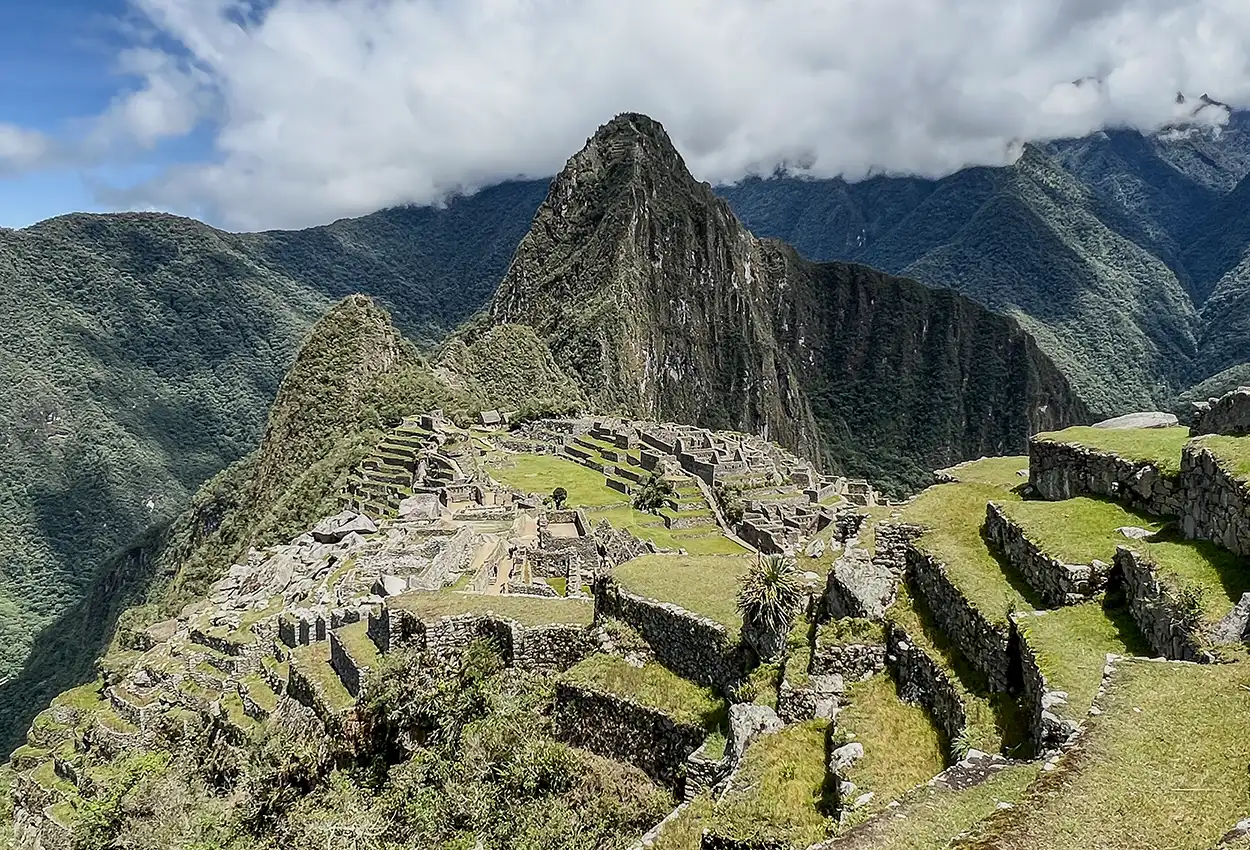
Start with the fact that decides more than difficulty, price or scenery, and that almost nobody states plainly.
Only two of these treks actually walk you into Machu Picchu.
The Classic Inca Trail and the short Inca Trail from KM 104 both finish by climbing through the Intipunku — the Sun Gate — and looking down on the citadel from the angle its builders designed the approach for. Every other trek around Cusco finishes somewhere else, and you reach Machu Picchu the next morning by train and bus like everyone who didn’t walk.
That is not a criticism of the alternatives. Salkantay is a better walk than the Inca Trail by most measures. But if the arrival is the thing you are imagining, there are two options, not seven, and it is worth knowing that before you compare prices.
So: which trek to Machu Picchu should you take? Here is the honest comparison, using the altitudes from our own itineraries rather than the round numbers that get repeated across the industry.
Table of Contents
The Six Options, Side by Side – Which Trek to Machu Picchu
| Trek | Days | Highest point | Permit | Walks into MP | From |
| Short Inca Trail | 2 | ~2,750 m at the Sun Gate | Yes | Yes | $900 |
| Huchuy Qosqo | 3 | 4,230 m at Rumicruz | No | No | $850 |
| Ausangate | 3 | up to 5,100 m | No | Doesn’t go | $900 |
| Classic Inca Trail | 4 | 4,215 m at Warmiwañusca | Yes | Yes | $1,500 |
| Lares | 4 | 4,780 m | No | No | On request |
| Salkantay | 5 | 4,650 m at the Salkantay pass | No | No | $1,499 |
Two things in that table surprise people, and both are worth sitting with.
The short Inca Trail is the lowest-altitude trek we sell, by a long way. It starts at Chachabamba, around 2,180 m, and tops out at the Sun Gate at roughly 2,750 m. That is below Cusco, which sits at 3,399 m. For anyone worried about altitude, this is the single most important line in the article, and it tends to get buried because two days sounds like the consolation prize. It isn’t. Our comparison of the two-day versus the four-day Inca Trail goes through the trade in detail.
Ausangate goes higher than anything else and doesn’t visit Machu Picchu at all. People book it anyway, and we’ll come to why.
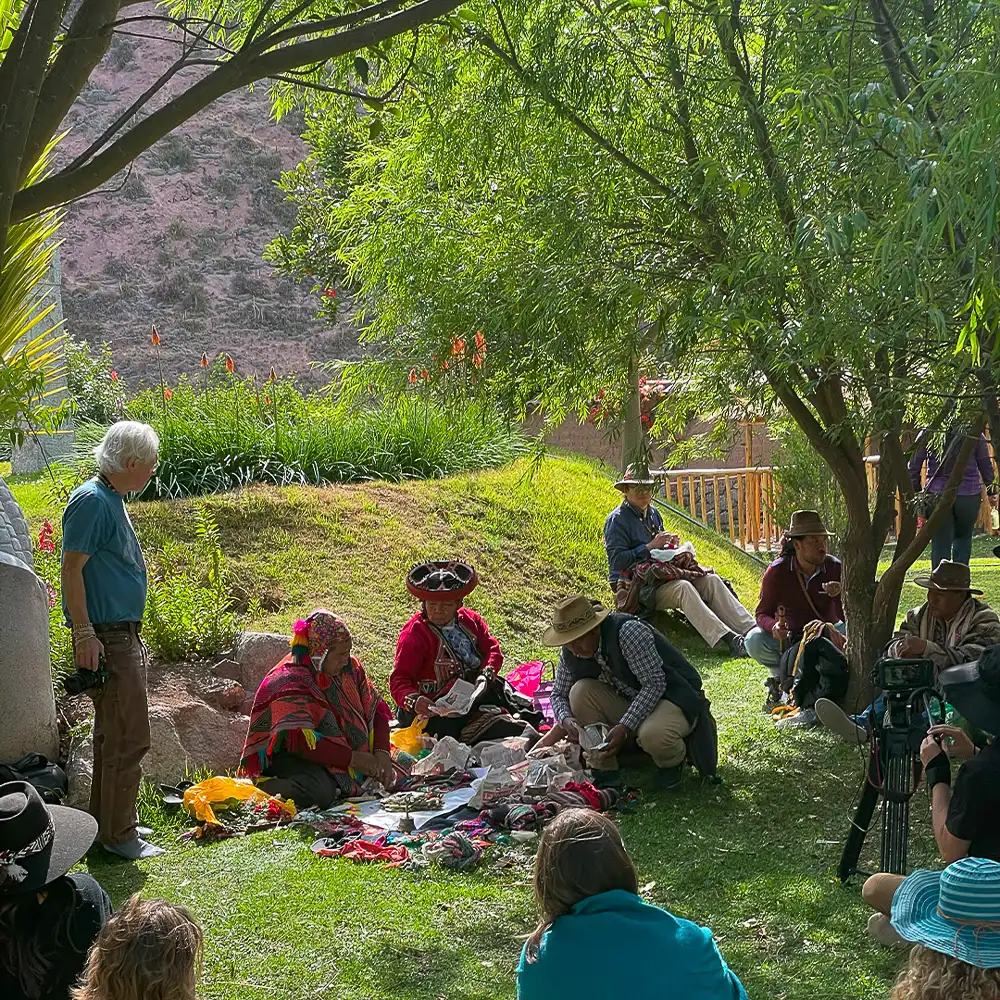
Why the Difficulty Labels Don’t Track Altitude
Look at the table again. Ausangate reaches 5,100 m and Lares 4,780 m, both higher than Salkantay’s 4,650 m pass — and yet Salkantay is the one everyone calls hard.
That is not an error. Difficulty on an Andean trek is made of four things, and pass height is only one of them.
- Consecutive days of effort. Five days of walking with full days back to back is a different proposition from three. Fatigue accumulates, sleep at altitude is poor, and day four is where people discover what their legs actually have.
- Distance and descent. Salkantay drops from 4,650 m to the cloud forest around 2,000 m over the following days. Long descents wreck quadriceps and knees far more reliably than climbs do, and the delayed soreness peaks a day or two later — which on a five-day trek is while you are still walking.
- Where you sleep. The number that matters is not the pass you cross for twenty minutes but the altitude you spend the night at. Salkantay’s first camp at Soraypampa sits at roughly 3,850 m — higher than Cusco, on your first night out.
- Terrain and footing. Inca stone steps, wet or dry, are a specific kind of hard that a gradient profile doesn’t show. The Classic Inca Trail’s third day is mostly steps.
So the labels are rough. Read the altitude you sleep at, the number of consecutive days, and the total descent — those three predict how you will feel far better than a word like “moderate.”
Permits: The Thing That Decides for You
Before any of your preferences matter, there is availability.
Both Inca Trail routes require a permit, and the alternatives require none. That single difference resolves more bookings than scenery ever does.
The cap is 500 permits per day, and that figure includes guides, cooks and porters — Intrepid’s permit guidance puts the traveller share at roughly 200 of the 500. For June to August they advise booking five to six months ahead, and in practice popular dates go earlier than that.
The trail closes for the whole of February for maintenance and conservation. Not a reduced service — closed. The train to Machu Picchu runs as normal, and the non-permit treks run as normal.
Permits are issued in your name against your passport. Bring the original document you booked with; a renewed passport with a different number is a problem you want to discover at home rather than at the control point.
The archaeological network and the trail itself are administered by the Dirección Desconcentrada de Cultura de Cusco, and the rules have changed more than once in recent years. Confirm current conditions rather than trusting any blog, this one included.
The practical upshot. If your dates are fixed and inside high season, and you haven’t booked half a year out, you are probably choosing between Salkantay, Lares and Huchuy Qosqo whether you meant to or not. All three are good trips. None of them needs anyone’s permission.
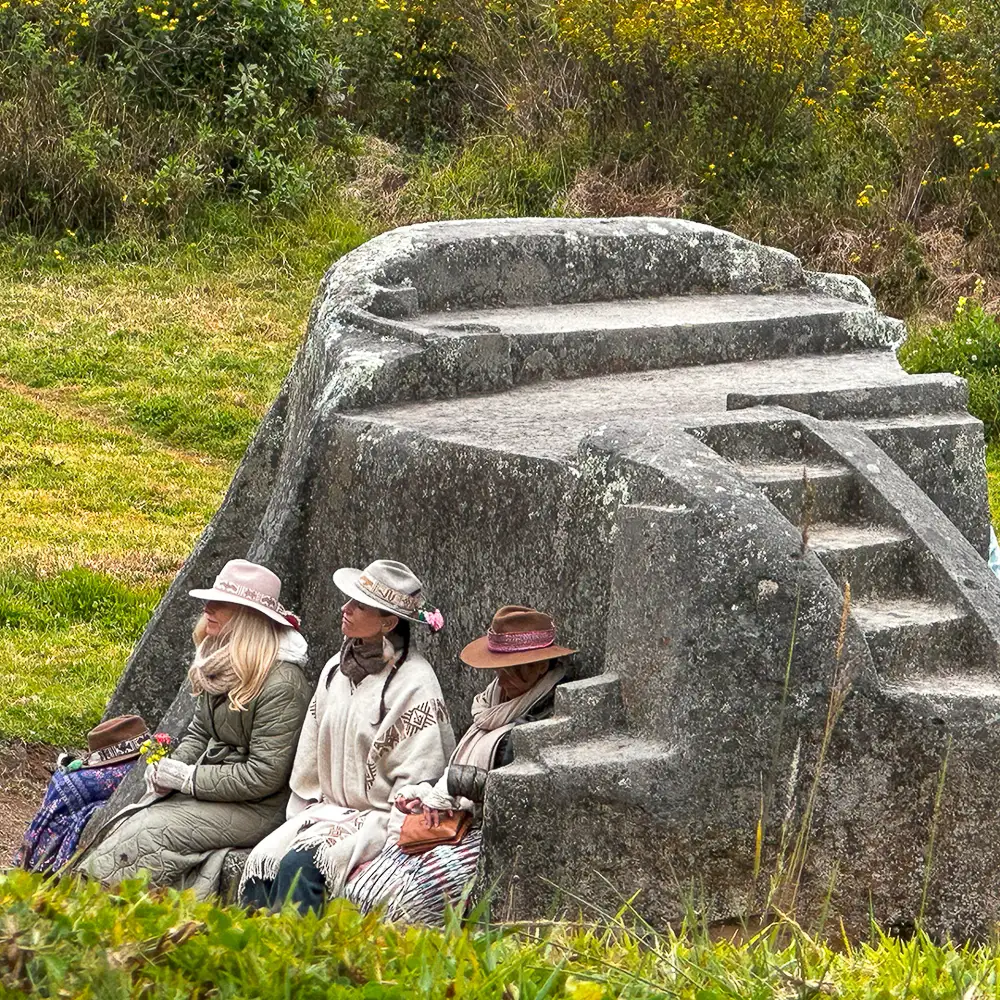
Which Trek to Machu Picchu Fits Which Traveller
The useful part. These are the recommendations we actually give.
If you’re worried about altitude
Take the short Inca Trail. Two days, highest point around 2,750 m, and you still walk in through the Sun Gate. You spend the night in a hotel in Aguas Calientes rather than a tent at 3,850 m.
This is also the right answer for anyone with a cardiac or respiratory condition who has cleared trekking with their doctor but should not be sleeping above 3,500 m, and for travellers over about seventy who want the arrival without the exposure.
If it’s your first multi-day trek above 4,000 m
Take Huchuy Qosqo. Three days, a high point of 4,230 m at Rumicruz, moderate throughout, from $850, and it runs in small groups of up to eight. It visits Machu Picchu on the third day by train.
A note here, because the easy advice gets this wrong. Lares is often recommended as the gentle four-day option, and our own itinerary tops out at 4,780 m — higher than Salkantay’s pass. It is a beautiful route through herding country with hot springs and the lakes around Yanacocha, and “moderate” is a fair label for the walking. But if your reason for avoiding Salkantay is the altitude, Lares does not solve that problem. Huchuy Qosqo does.
If you want the best walk and don’t need the Sun Gate
Take Salkantay. Five days, the pass at 4,650 m beneath one of the two great Apus of the Cusco region, and then a descent through an ecosystem change so abrupt it feels like a different country. No permit, so you can book it late.
It is harder than the Inca Trail. It is also, for most people who have done both, the better trip. Our Salkantay trek guide covers the route day by day, and we compare it directly with Ausangate in Ausangate trek vs Salkantay trek.
If the arrival is the whole point
Take the Classic Inca Trail, and book it six months out. Four days, Warmiwañusca at 4,215 m on day two, the stone sections on day three, and the Sun Gate at dawn on day four.
What you are paying for is not scenery — Salkantay wins on scenery. You are paying to arrive the way the route was built to be arrived at, which was as a ceremonial approach rather than a hike. We go into that in the Inca Trail was a pilgrimage, not a hike.
If you want nobody else on the trail
Take Ausangate, and accept that it does not go to Machu Picchu. Three days at up to 5,100 m in the Vilcanota range, among turquoise lakes and herding families, with a fraction of the traffic of any route west of Cusco.
This is the serious-altitude option and it should not be anyone’s first trek. Our complete Ausangate trek guide sets out what the days involve, and the seven lakes day tour is a way to see the territory without camping at 4,800 m.
If you have four days and want culture over summits
Take Lares. Herding communities, hot springs, mountain lakes, and far more contact with people living at altitude than the Inca Trail offers — the Inca Trail passes ruins, Lares passes households.
The Two That Don’t Go to Machu Picchu
Worth a section, because people book them deliberately and the reasons are good ones.
Ausangate is the region’s greatest Apu, and walking beneath it is a different category of experience from walking to a monument. People who have already seen Machu Picchu, or who never especially wanted to, come for this.
Rainbow Mountain is a day hike rather than a trek — our Rainbow Mountain and Red Valley hike — and it deserves one warning repeated as often as possible: Vinicunca sits above 5,000 m and is sold as an easy day trip from a city at 3,399 m. It is one of the most demanding things an unacclimatised visitor can do in Peru. Our guide to Rainbow Mountain and the three colour-mountain options explains why Palccoyo is often the smarter choice.
If Machu Picchu is non-negotiable but you’d rather not walk to it, the full-day visit by train exists and there is no shame in it. Which circuit you book then matters a great deal — see the Machu Picchu circuits explained.
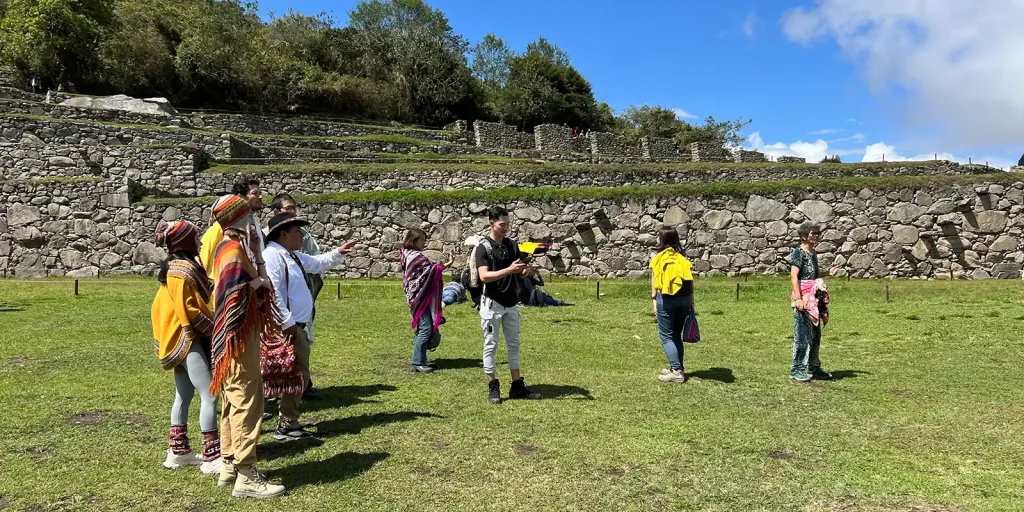
What the Nights Are Actually Like
The brochures compare scenery. People’s memories are mostly made of the nights, so compare those.
The short Inca Trail is the only route with a bed. You sleep in a hotel in Aguas Calientes, at around 2,040 m, with a shower and a restaurant. Everything longer means a tent.
On the Inca Trail your bags are carried by porters, working under a regulated weight system, and campsites are fixed by the permit — you camp where you are allocated, alongside other groups, in designated areas with basic toilet blocks. It is the most crowded of the routes at night.
On Salkantay, Lares and Ausangate the loads go on horses and mules, which changes the maths of what you can bring and means the day’s pace is partly the animals’. Camps are in open country rather than in a queue, and that solitude is one of the real arguments for the non-permit routes.
The cold is the thing people underestimate. Soraypampa at roughly 3,850 m and the Ausangate camps above 4,500 m drop well below freezing after dark in dry season — the clear skies that give you the views are the same clear skies that let the heat go. A sleeping bag rated for comfort at −10 °C is not excessive on Ausangate, and hiring a better one locally is cheaper than being awake all night.
Showers are rare and should not drive the decision. Some Salkantay operators offer them at the lodges on the lower days. Nobody is showering at 4,500 m on Ausangate.
Season: When the Route Matters More Than the Month
Dry season, roughly May to September, is the straightforward answer: reliable weather, hard-frozen nights, the clearest views, and the most people.
Wet season, November to March, is not a write-off, but it hits the routes unequally. Salkantay’s long descent into the cloud forest turns genuinely muddy and the river crossings matter. Ausangate carries a real snow risk on the high passes. The Inca Trail is closed throughout February. Lares and Huchuy Qosqo cope best.
The shoulder months are the sweet spot — late April and early May, late September into October. Thinner crowds, decent conditions, and the landscape still green from the rains rather than bleached.
One practical note on the wet months: afternoon rain is the pattern, not all-day drizzle. Early starts get you over the high ground before the weather builds, which is why trek days begin at an hour that feels unreasonable.
Altitude: The Part That Actually Hurts People
This matters more than fitness, and fit young travellers are over-represented among the people it catches.
Cusco sits at 3,399 m. The CDC’s guidance on high-altitude travel treats sleeping altitudes above 3,400 m as high risk for unacclimatised travellers, with symptoms typically appearing between two and twelve hours after arrival. Flying from Lima puts you there in about ninety minutes from sea level.
Allow two to three nights in the Cusco area before any trek starts, and more before Ausangate. Sleeping lower, in the Sacred Valley around 2,800–2,900 m, is a smarter first two nights than Cusco itself.
The warning signs that mean descend, not push on: worsening headache that painkillers don’t touch, vomiting, confusion, loss of coordination, breathlessness at rest, or a cough with frothy sputum. Those last ones are not altitude grumbles; they are reasons to go down immediately and get medical help.
Coca tea helps with the mild stuff and does not acclimatise you. Acetazolamide is a conversation with your own doctor before you travel, not a decision to make in a pharmacy on Avenida El Sol.
And be honest on the booking form. Cardiac conditions, uncontrolled hypertension, respiratory disease, pregnancy and recent surgery all change what we would recommend, and sometimes change it to “not this trek.” We would rather move you to the short Inca Trail than carry you off a pass.
If You Want Ceremony as Well as Walking
A good number of our guests come for both, and the sequencing is not casual.
Ceremony after the trek, not before. By then you are acclimatised, your head has emptied out over several days of walking, and you are not asking your body to absorb a plant medicine and a 4,600 m pass in the same week. Our article on combining a trek with ceremony sets out the spacing, including why wachuma and ayahuasca should never sit on consecutive days.
Plant ceremonies carry real risk and are not for everyone. Cardiac and psychiatric conditions, and serotonergic antidepressants above all, are genuine contraindications. Any medication change must be planned and supervised by your prescribing doctor months in advance, never by us. Tell us what you take.
If you want the mountains’ own frame rather than a plant, the gentler route is a despacho or a coca reading, and understanding the Apus before you walk changes what the apachetas on the passes look like.
Frequently Asked Questions
Which trek to Machu Picchu is the easiest?
The short Inca Trail from KM 104 — two days, a high point of around 2,750 m at the Sun Gate, and a hotel night rather than a camp. For a multi-day trek, Huchuy Qosqo at 4,230 m is the gentlest.
Which treks actually arrive at Machu Picchu on foot?
Only the Classic Inca Trail and the short Inca Trail. Every other route finishes elsewhere and you visit the citadel by train and bus.
Do I need a permit?
For both Inca Trail routes, yes. Salkantay, Lares, Huchuy Qosqo and Ausangate need none, which is why they are the answer for late bookers.
How far ahead should I book the Inca Trail?
Five to six months for June to August, and earlier for the most popular dates. The cap is 500 permits a day including crew.
Is the Inca Trail closed at any point?
Yes — the whole of February, for maintenance. The train and the alternative treks run normally.
Lares or Salkantay?
Lares is shorter and gentler to walk but our itinerary reaches 4,780 m, higher than Salkantay’s pass. Salkantay is the bigger walk and the better one. If altitude is your concern, neither — take Huchuy Qosqo.
Which trek is hardest?
Salkantay for sustained effort over five days and a punishing descent. Ausangate for pure altitude, reaching up to 5,100 m.
Which is quietest?
Ausangate, comfortably. Lares next.
Can I do a trek with no camping?
The short Inca Trail uses a hotel in Aguas Calientes. Everything longer involves camping.
How fit do I need to be?
Fitness helps and does not protect you from altitude illness, which is the actual risk. Be able to walk six to eight hours on consecutive days on uneven ground; then worry about acclimatising.
I’ve already seen Machu Picchu. What should I walk?
Ausangate. It is the best walking in the region and it goes nowhere near the citadel.
What if I book a trek and then can’t do it?
Tell us early. We can usually move you to a shorter or lower route — but Inca Trail permits are issued in your name and are not simply transferable, which is one more reason the non-permit treks suit uncertain plans.
How We’d Choose
Fixed dates in high season and no permit booked: Salkantay, and don’t feel you’ve settled.
First time on a multi-day trek at altitude: Huchuy Qosqo, three days, and you’ll finish wanting more rather than less.
Worried about altitude, or travelling with someone who should be: the short Inca Trail, which gives you the Sun Gate at a height below Cusco.
The arrival above everything else, and six months of notice: the Classic Inca Trail.
Already been, or never cared about the citadel: Ausangate, and bring a warmer sleeping bag than you think you need.
Our full trek collection has the itineraries. Tell us your dates and what you’re worried about and we’ll tell you which one we’d put you on — including when the answer is the cheaper or shorter one.
Altitudes quoted are taken from our own trek itineraries and may differ from round figures published elsewhere; where a route’s high point is disputed we have used the itinerary value. Prices are starting rates per person at the time of writing, in several cases based on two travellers, and change by season. Permit rules, availability and the February closure are set by the authorities administering the route and should be confirmed through the Dirección Desconcentrada de Cultura de Cusco or your operator. Trekking in the Cusco region takes place at altitudes where altitude illness is a real risk regardless of fitness; allow time to acclimatise, descend if symptoms worsen, and consult your physician before travelling to high altitude, particularly with any cardiac or respiratory condition. Plant ceremonies carry additional physical and psychological risks and medical contraindications, and participation is undertaken on the basis of informed personal responsibility.